Books like The pattern on the stone by W. Daniel Hillis
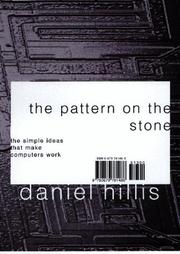

W. Daniel Hillis explains the fundamentals of computing in an approachable manner, starting with basic logic and progressing to programming languages, algorithms, and memory management. He gradually expands the discussion to contemporary topics such as quantum computing, parallel computing, neural networks, and self‑organizing systems, illustrating how modern developments extend foundational principles. This book serves as a bridge between introductory computer science and cutting‑edge research, making complex ideas understandable for readers with modest technical background. The title references J. R. L. Allen's metaphor of a pattern on a stone, suggesting that the basic laws of computation are etched in the fabric of reality. Hillis offers mnemonic devices and analogies that help demystify computer architecture, algorithmic thinking, and information theory.
First publish date: 1998
Genre: Technology & Computing/Computer Science
Authors: W. Daniel Hillis
★ ★ ★ ★ ★ 4.4 (5 community ratings)

The pattern on the stone by W. Daniel Hillis

How are these books recommended?

The books recommended for The pattern on the stone by W. Daniel Hillis are shaped by reader interaction. Votes on how closely books relate, user ratings, and community comments all help refine these recommendations and highlight books readers genuinely find similar in theme, ideas, and overall reading experience.


Have you read any of these books?
Your votes, ratings, and comments help improve recommendations and make it easier for other readers to discover books they’ll enjoy.

Books similar to The pattern on the stone (7 similar books)
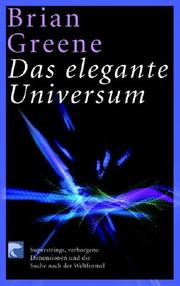
The elegant universe by 6936184|Brian Greene book cover

πŸ“˜ The elegant universe

Explains the vision of the universe behind string theory, including new dimensions, black holes, and mysterious phenomena in the cosmos.

β˜…β˜…β˜…β˜…β˜…β˜…β˜…β˜…β˜…β˜… 4.0 (23 ratings)
Similar? ✓ Yes 0 ✗ No 0
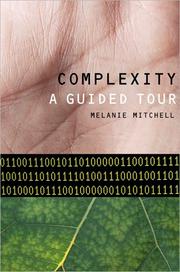
Complexity: A Guided Tour by 8776148|Melanie Mitchell book cover

πŸ“˜ Complexity: A Guided Tour


β˜…β˜…β˜…β˜…β˜…β˜…β˜…β˜…β˜…β˜… 4.3 (3 ratings)
Similar? ✓ Yes 0 ✗ No 0
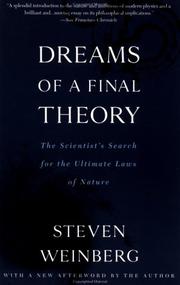
Dreams of a final theory by 9877706|Steven Weinberg book cover

πŸ“˜ Dreams of a final theory


β˜…β˜…β˜…β˜…β˜…β˜…β˜…β˜…β˜…β˜… 3.0 (1 rating)
Similar? ✓ Yes 0 ✗ No 0
Sorting and searching by 6627783|Donald Knuth book cover

πŸ“˜ Sorting and searching


β˜…β˜…β˜…β˜…β˜…β˜…β˜…β˜…β˜…β˜… 0.0 (0 ratings)
Similar? ✓ Yes 0 ✗ No 0
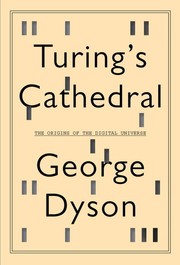
Turing's cathedral by 6805658|George Dyson book cover

πŸ“˜ Turing's cathedral

Legendary historian and philosopher of science George Dyson vividly re-creates the scenes of focused experimentation, incredible mathematical insight, and pure creative genius that gave us computers, digital television, modern genetics, models of stellar evolution--in other words, computer code. In the 1940s and '50s, a group of eccentric geniuses--led by John von Neumann--gathered at the newly created Institute for Advanced Study in Princeton, New Jersey. Their joint project was the realization of the theoretical universal machine, an idea that had been put forth by mathematician Alan Turing. This group of brilliant engineers worked in isolation, almost entirely independent from industry and the traditional academic community. But because they relied exclusively on government funding, the government wanted its share of the results: the computer that they built also led directly to the hydrogen bomb. George Dyson has uncovered a wealth of new material about this project, and in bringing the story of these men and women and their ideas to life, he shows how the crucial advancements that dominated twentieth-century technology emerged from one computer in one laboratory, where the digital universe as we know it was born.

β˜…β˜…β˜…β˜…β˜…β˜…β˜…β˜…β˜…β˜… 0.0 (0 ratings)
Similar? ✓ Yes 0 ✗ No 0
Handbook of applied cryptography by 6973919|Alfred J. Menezes book cover

πŸ“˜ Handbook of applied cryptography


β˜…β˜…β˜…β˜…β˜…β˜…β˜…β˜…β˜…β˜… 0.0 (0 ratings)
Similar? ✓ Yes 0 ✗ No 0
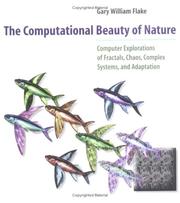
The Computational Beauty of Nature by 8379076|Gary William Flake book cover

πŸ“˜ The Computational Beauty of Nature

Gary William Flake explores how simple, recurrent rules in computational systems generate rich, complex behaviors and explains their role in phenomena like fractals, chaos, complex systems, and adaptation.

β˜…β˜…β˜…β˜…β˜…β˜…β˜…β˜…β˜…β˜… 0.0 (0 ratings)
Similar? ✓ Yes 0 ✗ No 0

Some Other Similar Books

Godel, Escher, Bach: An Eternal Golden Bleece by Douglas Hofstadter
The Art of Computer Programming by Donald E. Knuth
The Logic of Science by Timothy C. Brock
Chaos: Making a New Science by James Gleick
The Information: A History, a Theory, a Flood by James Gleick
Generators of Creativity by Michel Gelfand

Have a similar book in mind? Let others know!

Please login to submit books!