Books like Slavery's Capitalism by Sven Beckert


First publish date: 2016
Authors: Sven Beckert
★ ★ ★ ★ ★ 4.0 (1 community ratings)

Slavery's Capitalism by Sven Beckert

How are these books recommended?

The books recommended for Slavery's Capitalism by Sven Beckert are shaped by reader interaction. Votes on how closely books relate, user ratings, and community comments all help refine these recommendations and highlight books readers genuinely find similar in theme, ideas, and overall reading experience.


Have you read any of these books?
Your votes, ratings, and comments help improve recommendations and make it easier for other readers to discover books they’ll enjoy.

Books similar to Slavery's Capitalism (5 similar books)
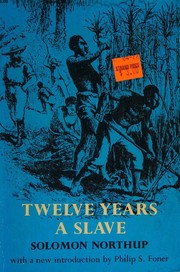
Twelve years a slave by 8326061|Solomon Northup book cover

📘 Twelve years a slave

A chilling memoir detailing Solomon Northup's harrowing experience as a captive on a Louisiana plantation for twelve years, from 1841 to 1853.

★★★★★★★★★★ 4.6 (7 ratings)
Similar? ✓ Yes 0 ✗ No 0
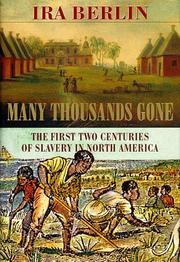
Many thousands gone by 6583477|Ira Berlin book cover

📘 Many thousands gone
 by Ira Berlin

Ira Berlin traces the evolution of African‑American life from the first enslaved arrivals in the early 1600s through the American Revolution, revealing how slavery, labor, and race were continually redefined in the shaping of the United States.

★★★★★★★★★★ 3.0 (2 ratings)
Similar? ✓ Yes 0 ✗ No 0
Capitalism & Slavery by 8994063|Eric Eustace Williams book cover

📘 Capitalism & Slavery

Eric Williams’s Capitalism & Slavery examines how the trans‑Atlantic slave trade, organized by Europeans from the 16th to 19th centuries, was a foundational element of early global capitalism and Britain’s economic rise.

★★★★★★★★★★ 5.0 (1 rating)
Similar? ✓ Yes 0 ✗ No 0
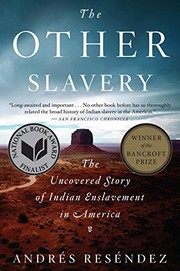
The other slavery by 7057758|Andrés Reséndez book cover

📘 The other slavery

A landmark history: the sweeping story of the enslavement of tens of thousands of Indians across America, from the time of the conquistadors up to the early 20th century. Since the time of Columbus, Indian slavery was illegal in much of the American continent. Yet, as Andrés Reséndez illuminates, it was practiced for centuries as an open secret. There was no abolitionist movement to protect the tens of thousands of natives who were kidnapped and enslaved by the conquistadors, then forced to descend into the "mouth of hell" of eighteenth-century silver mines or, later, made to serve as domestics for Mormon settlers and rich Anglos. Reséndez builds the case that it was mass slavery--more than epidemics--that decimated Indian populations across North America. New evidence, including testimonies of courageous priests, rapacious merchants, Indian captives, and Anglo colonists, sheds light too on Indian enslavement of other Indians--as what started as a European business passed into the hands of indigenous operators and spread like wildfire across vast tracts of the American Southwest. The Other Slavery reveals nothing less than a key missing piece of American history. For over two centuries we have fought over, abolished, and tried to come to grips with African-American slavery. It is time for the West to confront an entirely separate, equally devastating enslavement we have long failed to see truly.--Adapted from dust jacket.

★★★★★★★★★★ 0.0 (0 ratings)
Similar? ✓ Yes 0 ✗ No 0
Rivers of Empire by 11569723|Donald Worster book cover

📘 Rivers of Empire

When Henry David Thoreau went for his daily walk, he would consult his instincts on which direction to follow. More often than not his inner compass pointed west or southwest. "The future lies that way to me," he explained, "and the earth seems more unexhausted and richer on that side." In his own imaginative way, Thoreau was imitating the countless young pioneers, prospectors, and entrepreneurs who were zealously following Horace Greeley's famous advice to "go west." Yet while the epic chapter in American history opened by these adventurous men and women is filled with stories of frontier hardship, we rarely think of one of their greatest problems--the lack of water resources. And the same difficulty that made life so troublesome for early settlers remains one of the most pressing concerns in the western states of the late-twentieth century.^ The American West, blessed with an abundance of earth and sky but cursed with a scarcity of life's most fundamental need, has long dreamed of harnessing all its rivers to produce unlimited wealth and power. In Rivers of Empire, award-winning historian Donald Worster tells the story of this dream and its outcome. He shows how, beginning in the mid-nineteenth century, Mormons were the first attempting to make that dream a reality, damming and diverting rivers to irrigate their land. He follows this intriguing history through the 1930s, when the federal government built hundreds of dams on every major western river, thereby laying the foundation for the cities and farms, money and power of today's West. Yet while these cities have become paradigms of modern American urban centers, and the farms successful high-tech enterprises, Worster reminds us that the costs have been extremely high.^ Along with the wealth has come massive ecological damage, a redistribution of power to bureaucratic and economic elites, and a class conflict still on the upswing. As a result, the future of this "hydraulic West" is increasingly uncertain, as water continues to be a scarce resource, inadequate to the demand, and declining in quality. Rivers of Empire represents a radically new vision of the American West and its historical significance. Showing how ecological change is inextricably intertwined with social evolution, and reevaluating the old mythic and celebratory approach to the development of the West, Worster offers the most probing, critical analysis of the region to date.^ He shows how the vast region encompassing our western states, while founded essentially as colonies, have since become the true seat of the American "Empire." How this imperial West rose out of desert, how it altered the course of nature there, and what it has meant for Thoreau's (and our own) mythic search for freedom and the American Dream, are the central themes of this eloquent and thought-provoking story--a story that begins and ends with water.

★★★★★★★★★★ 0.0 (0 ratings)
Similar? ✓ Yes 0 ✗ No 0

Some Other Similar Books

The Half Has Never Been Told: Slavery and the Making of American Capitalism by Edward E. Baptist
Necessity’s Children: Histories of Poverty and Hunger in Mexico and the United States by John T. Rury
The Domestic Slave Trade by James H. Harris
The Business of Slavery: The Export of American Cotton, 1789–1840 by Michael D. Guasco
The Market Revolution: Jacksonian America, 1815-1846 by Charles G. Sellers
Unfree Labor: Contemporary Perspectives by Sally Humeniuk
The Color of Money: Black Banks and the Racial Wealth Gap by Mehrsa Baradaran
American Capitalism: New Histories by Naomi R. Lamoreaux and William J. Novak
Slavery and the American West: The Eclipse of Manifest Destiny by George R. Stewart
The Political Economy of Slavery by Thomas R. Dye

Have a similar book in mind? Let others know!

Please login to submit books!