Books like The selfish brain by Robert L. DuPont

First publish date: 1997
Authors: Robert L. DuPont
★ ★ ★ ★ ★ 0.0 (0 community ratings)

The selfish brain by Robert L. DuPont

How are these books recommended?

The books recommended for The selfish brain by Robert L. DuPont are shaped by reader interaction. Votes on how closely books relate, user ratings, and community comments all help refine these recommendations and highlight books readers genuinely find similar in theme, ideas, and overall reading experience.


Have you read any of these books?
Your votes, ratings, and comments help improve recommendations and make it easier for other readers to discover books they’ll enjoy.

Books similar to The selfish brain (11 similar books)

Thinking, fast and slow by 6390436|Daniel Kahneman book cover

πŸ“˜ Thinking, fast and slow

Daniel Kahneman's "Thinking, Fast and Slow" explains how two distinct mental systems shape our judgments and decisions, offering insights into the biases that influence everyday choices.

β˜…β˜…β˜…β˜…β˜…β˜…β˜…β˜…β˜…β˜… 4.1 (189 ratings)
Similar? ✓ Yes 0 ✗ No 0
The Power of Habit by 11345987|Charles Duhigg book cover

πŸ“˜ The Power of Habit

The Power of Habit shows how tiny habits shape our lives and how they can be transformed to achieve personal and organizational success.

β˜…β˜…β˜…β˜…β˜…β˜…β˜…β˜…β˜…β˜… 4.0 (105 ratings)
Similar? ✓ Yes 0 ✗ No 0
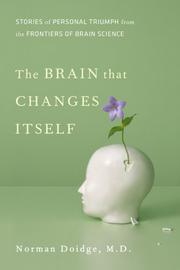
The Brain That Changes Itself by 7038154|Norman Doidge book cover

πŸ“˜ The Brain That Changes Itself

Explores the groundbreaking science of neuroplasticity, showing how the brain can recover from injury, learn new skills, and even rewire itself to overcome long‑standing mental limits.

β˜…β˜…β˜…β˜…β˜…β˜…β˜…β˜…β˜…β˜… 3.0 (9 ratings)
Similar? ✓ Yes 0 ✗ No 0
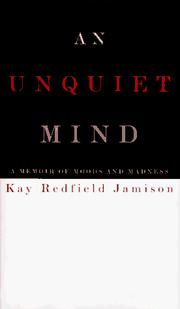
An unquiet mind by 8735115|Kay R. Jamison book cover

πŸ“˜ An unquiet mind

From Kay Redfield Jamison - an international authority on manic-depressive illness, and one of the few women who are full professors of medicine at American universities - a remarkable personal testimony: the revelation of her own struggle since adolescence with manic-depression, and how it has shaped her life. Vividly, directly, with candor, wit, and simplicity, she takes us into the fascinating and dangerous territory of this form of madness - a world in which one pole can be the alluring dark land ruled by what Byron called the "melancholy star of the imagination," and the other a desert of depression and, all too frequently, death. A moving and exhilarating memoir by a woman whose furious determination to learn the enemy, to use her gifts of intellect to make a difference, led her to become, by the time she was forty, a world authority on manic-depression, and whose work has helped save countless lives.

β˜…β˜…β˜…β˜…β˜…β˜…β˜…β˜…β˜…β˜… 5.0 (1 rating)
Similar? ✓ Yes 0 ✗ No 0
The brain's way of healing by 7038154|Norman Doidge book cover

πŸ“˜ The brain's way of healing

"The New York Times bestselling author of The Brain That Changes Itself presents astounding advances in the treatment of brain injury and illness. In The Brain That Changes Itself, Norman Doidge described the most important breakthrough in our understanding of the brain in four hundred years: the discovery that the brain can change its own structure and function in response to mental experience-what we call neuroplasticity. His revolutionary new book shows, for the first time, how the amazing process of neuroplastic healing really works. It describes natural, non-invasive avenues into the brain provided by the forms of energy around us-light, sound, vibration, movement-which pass through our senses and our bodies to awaken the brain's own healing capacities without producing unpleasant side effects. Doidge explores cases where patients alleviated years of chronic pain or recovered from debilitating strokes or accidents; children on the autistic spectrum or with learning disorders normalizing; symptoms of multiple sclerosis, Parkinson's disease, and cerebral palsy radically improved, and other near-miracle recoveries. And we learn how to vastly reduce the risk of dementia with simple approaches anyone can use. For centuries it was believed that the brain's complexity prevented recovery from damage or disease. The Brain's Way of Healing shows that this very sophistication is the source of a unique kind of healing. As he did so lucidly in The Brain That Changes Itself, Doidge uses stories to present cutting-edge science with practical real-world applications, and principles that everyone can apply to improve their brain's performance and health"-- "Norman Doidge's revolutionary new book shows, for the first time, how the amazing process of neuroplastic healing really works. It describes natural, non-invasive avenues into the brain provided by the forms of energy around us--light, sound, vibration, movement--which pass through our senses and our bodies to awaken the brain's own healing capacities without producing unpleasant side effects. Doidge explores cases where patients alleviated years of chronic pain or recovered from debilitating strokes or accidents; children on the autistic spectrum or with learning disorders normalizing; symptoms of multiple sclerosis, Parkinson's disease, and cerebral palsy radically improved, and other near-miracle recoveries. And we learn how to vastly reduce the risk of dementia with simple approaches anyone can use. For centuries it was believed that the brain's complexity prevented recovery from damage or disease. The Brain's Way of Healing shows that this very sophistication is the source of a unique kind of healing"--

β˜…β˜…β˜…β˜…β˜…β˜…β˜…β˜…β˜…β˜… 3.0 (1 rating)
Similar? ✓ Yes 0 ✗ No 0
Addiction and Change by 7383285|Carlo C. DiClemente book cover

πŸ“˜ Addiction and Change


β˜…β˜…β˜…β˜…β˜…β˜…β˜…β˜…β˜…β˜… 0.0 (0 ratings)
Similar? ✓ Yes 0 ✗ No 0
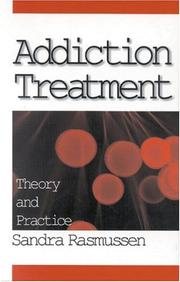
Addiction Treatment by 6360314|Sandra Rasmussen book cover

πŸ“˜ Addiction Treatment

"Developed by an author with work experience in both nursing and psychology environments, Addiction Treatment presents the caregiver with a brief global perspective of different types of addictions, techniques for identifying and assessing the addicted client, and strategies for effective change. The book utilizes assessment, planning, and intervention summaries to enable the reader to scan for immediate recall and application. Chapter objectives enable readers to use the book as a continuing education tool, and the appendix provides an overview of perspectives on addiction and its treatment by a variety of organizations heavily invested in the care of the addicted client. Illustrative cases (with both successful and unsuccessful outcomes) are included throughout."--BOOK JACKET.

β˜…β˜…β˜…β˜…β˜…β˜…β˜…β˜…β˜…β˜… 0.0 (0 ratings)
Similar? ✓ Yes 0 ✗ No 0
The Emotional Brain by 7052618|Joseph Ledoux book cover

πŸ“˜ The Emotional Brain

What happens in our brains to make us feel fear, love, hate, anger, joy? do we control our emotions, or do they control us? Do animals have emotions? How can traumatic experiences in early childhood influence adult behavior, even though we have no conscious memory of them? In The Emotional Brain, Joseph LeDoux investigates the origins of human emotions and explains that many exist as part of complex neural systems that evolved to enable us to survive. Unlike conscious feelings, emotions originate in the brain at a much deeper level, says LeDoux, a leading authority in the field of neural science and one of the principal researchers profiled in Daniel Goleman's Emotional Intelligence. In this provocative book, LeDoux explores the underlying brain mechanisms responsible for our emotions, mechanisms that are only now being revealed. The Emotional Brain presents some fascinating findings about our familiar yet little understood emotions. For example, our brains can detect danger before we even experience the feeling of being afraid. The brain also begins to initiate physical responses (heart palpitations, sweaty palms, muscle tension) before we become aware of an associated feeling of fear. Conscious feelings, says LeDoux, are somewhat irrelevant to the way the emotional brain works. He points out that emotional responses are hard-wired into the brain's circuitry, but the things that make us emotional are learned through experience. And this may be the key to understanding, even changing, our emotional makeup. Many common psychiatric problems - such as phobias or posttraumatic stress disorder - involve malfunctions in the way emotion systems learn and remember. Understanding how these mechanisms normally work will have important consequences for how we view ourselves and how we treat emotional disorders.

β˜…β˜…β˜…β˜…β˜…β˜…β˜…β˜…β˜…β˜… 0.0 (0 ratings)
Similar? ✓ Yes 0 ✗ No 0
Drugs and addictive behaviour by 10191654|Hamid Ghodse book cover

πŸ“˜ Drugs and addictive behaviour

A comprehensive guide to drug abuse, dependence, and treatment, covering WHO definitions, genetic factors, theoretical models, and practical assessment and management strategies.

β˜…β˜…β˜…β˜…β˜…β˜…β˜…β˜…β˜…β˜… 0.0 (0 ratings)
Similar? ✓ Yes 0 ✗ No 0
Addiction Recovery Tools by 7028310|Robert Holman Coombs book cover

πŸ“˜ Addiction Recovery Tools


β˜…β˜…β˜…β˜…β˜…β˜…β˜…β˜…β˜…β˜… 0.0 (0 ratings)
Similar? ✓ Yes 0 ✗ No 0
The biology of desire by 9545724|Marc David Lewis book cover

πŸ“˜ The biology of desire

"Neuroscientist Lewis (Memoirs of an Addicted Brain) presents a strong argument against the disease model of addiction, which is currently predominant in medicine and popular culture alike, and bolsters it with informative and engaging narratives of addicts' lives ... Even when presenting more technical information, Lewis shows a keen ability to put a human face on the most groundbreaking research into addiction. Likewise, he manages to make complex findings and theories both comprehensible and interesting...This book, written with hopeful sincerity, will intrigue both those who accept its thesis and those who do not."--

β˜…β˜…β˜…β˜…β˜…β˜…β˜…β˜…β˜…β˜… 0.0 (0 ratings)
Similar? ✓ Yes 0 ✗ No 0

Some Other Similar Books

The Man Who Mistook His Wife for a Hat by Oliver Sacks
The Tell-Tale Brain by V.S. Ramachandran
The Developing Genome by Nessa Carey
The User’s Guide to the Brain by Bob Woodward

Have a similar book in mind? Let others know!

Please login to submit books!