Books like The Prism and the Pendulum by Robert Crease
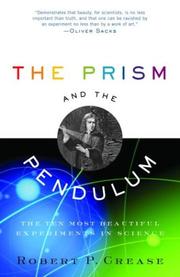

In *The Prism and the Pendulum*, historian of science Robert Crease argues that science’s most beautiful moments are its experiments. Tracing nearly 2,500 years of innovation, the book examines ten pivotal tests—from Eratosthenes’s measurement of Earth’s circumference using simple geometry, to Foucault’s pendulum that demonstrates Earth’s rotation, to Galileo’s experiments on falling bodies that blend physics and music, and culminating in the quantum experiments that reveal the structure of reality. Crease interweaves historical context with insights into the scientists’ personalities and inventive thinking. By revealing why these experiments continue to captivate our imagination, he shows how empirical inquiry clarifies the world and uncovers nature’s elegance. The book invites readers to appreciate science as a living, creative endeavor, and to recognize the enduring allure of experimental exploration.
First publish date: 2003
Genre: Science/Physics
Authors: Robert Crease
★ ★ ★ ★ ★ 3.0 (1 community ratings)

The Prism and the Pendulum by Robert Crease

How are these books recommended?

The books recommended for The Prism and the Pendulum by Robert Crease are shaped by reader interaction. Votes on how closely books relate, user ratings, and community comments all help refine these recommendations and highlight books readers genuinely find similar in theme, ideas, and overall reading experience.


Have you read any of these books?
Your votes, ratings, and comments help improve recommendations and make it easier for other readers to discover books they’ll enjoy.

Books similar to The Prism and the Pendulum (8 similar books)

A Brief History of Time by 6965847|Stephen Hawking book cover

📘 A Brief History of Time

Stephen Hawking explains the fundamental physics of the universe—space, time, cosmology, black holes, and the Big Bang—in clear, accessible language.

★★★★★★★★★★ 4.2 (203 ratings)
Similar? ✓ Yes 0 ✗ No 0
The elegant universe by 6936184|Brian Greene book cover

📘 The elegant universe

Explains the vision of the universe behind string theory, including new dimensions, black holes, and mysterious phenomena in the cosmos.

★★★★★★★★★★ 4.0 (23 ratings)
Similar? ✓ Yes 0 ✗ No 0
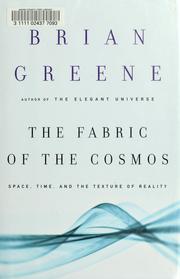
The fabric of the cosmos by 6936184|Brian Greene book cover

📘 The fabric of the cosmos

A thrilling exploration of the cosmos, brilliantly explained by a popular science master.

★★★★★★★★★★ 4.1 (21 ratings)
Similar? ✓ Yes 0 ✗ No 0
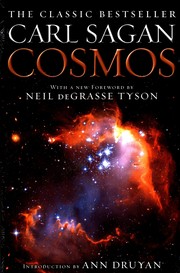
Cosmos by 8799977|Carl Sagan book cover

📘 Cosmos
 by Carl Sagan

Carl Sagan’s Cosmos traces the history of science and the universe’s evolution, from ancient philosophers to modern discoveries, and explores the quest to understand life beyond Earth.

★★★★★★★★★★ 4.6 (12 ratings)
Similar? ✓ Yes 0 ✗ No 0
Physics of the Future by 6429542|Michio Kaku book cover

📘 Physics of the Future

This book offers a stunning and provocative vision of the future, and explains how science will shape human destiny and everyone's daily life by the year 2100.

★★★★★★★★★★ 4.0 (1 rating)
Similar? ✓ Yes 0 ✗ No 0
The Pendulum Book by 1223983|Jack F. Chandu book cover

📘 The Pendulum Book


★★★★★★★★★★ 0.0 (0 ratings)
Similar? ✓ Yes 0 ✗ No 0
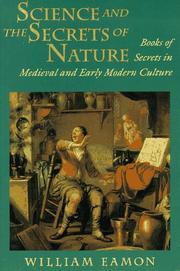
Science and the secrets of nature by 11574363|William Eamon book cover

📘 Science and the secrets of nature

By explaining how to sire multicolored horses, produce nuts without shells, and create an egg the size of a human head, Giambattista Della Porta's Natural Magic (1559) conveys a fascination with tricks and illusions that makes it a work difficult for historians of science to take seriously. Yet, according to William Eamon, it is in the "how-to" books written by medieval alchemists, magicians, and artisans that modern science has its roots. These compilations of recipes on everything from parlor tricks through medical remedies to wool-dyeing fascinated medieval intellectuals because they promised access to esoteric "secrets of nature." To popular readers of the early modern era, they offered a hands-on, experimental approach to nature that made scholastic natural philosophy seem abstract and sterile. In closely examining this rich but little-known source of literature, Eamon reveals that printing technology and popular culture had as great, if not stronger, an impact on early modern science as did the traditional academic disciplines. Medieval interest in the secrets of nature was spurred in part by ancient works such as Pliny's Natural History. As medieval experimenters adapted ancient knowledge to their changing needs, they created their own books of secrets, which expressed the uncritical, empiricist approach of popular culture rather than the subtle argumentation of scholastic science. The crude experimental methodology advanced by the "professors of secrets" became for the "new philosophers" of the seventeenth century a potent ideological weapon in the challenge of natural philosophy.

★★★★★★★★★★ 0.0 (0 ratings)
Similar? ✓ Yes 0 ✗ No 0
Six Easy Pieces by 3936160|Richard P. Feynman book cover

📘 Six Easy Pieces


★★★★★★★★★★ 0.0 (0 ratings)
Similar? ✓ Yes 0 ✗ No 0

Some Other Similar Books

Surely You're Joking, Mr. Feynman! by Richard P. Feynman
The Character of Physical Law by Richard P. Feynman
The Absolute Birth of the Universe by Marcelo Gleiser

Have a similar book in mind? Let others know!

Please login to submit books!