Leo Durocher is best remembered for saying, "Nice guys finish last." He never said it. What the Brooklyn Dodgers' manager did say, before a 1946 game with the New York Giants, was: "The nice guys are all over there. In seventh place." Durocher's words lacked pop. Sportswriters perked them up, and gave America one of its most familiar misquotations. Ralph Keyes points out in "Nice Guys Finish Seventh" that many of our best-known sayings, phrases, and quotations are.
Inaccurate, misattributed, or both. During two decades of research, he discovered that: "Any man who hates dogs and children can't be all bad" was said about W.C. Fields, not by him; "Winning isn't everything, it's the only thing" was the slogan of UCLA coach Red Sanders, not Vince Lombardi; "The opera ain't over 'til the fat lady sings" was adapted from an old saying: "Church ain't out 'til the fat lady sings"; and Winston Churchill did not originate the phrase "iron.
Curtain," and never said, "blood, sweat and tears." Hundreds of such examples illustrate Keyes's Immutable Law of Misquotation: Misquotes drive out real quotes. "Certain things demand to be said," he writes, "said in a certain way, and by the right person. Whether such comments are accurate is beside the point." Keyes confirms that William Tecumseh Sherman didn't say, "War is hell." Nor did he vow, "If nominated, I will not run. If elected, I will not serve." According.
To Keyes, such words voice observations we want made. Freud may never have said, "Sometimes a cigar is just a cigar," for example, but we certainly wish he had. For a misquote to become familiar it must come from a well-known mouth. Take "You can't trust anyone over thirty." Abbie Hoffman, right? Or was it Jerry Rubin? Mario Salvo? Mark Rudd? All have been given credit for this sixties catchphrase. Keyes discovered that its real originator was a student named Jack.
Weinberg. Remember him? Few do. That's why Weinberg's words were assigned to better-known mouths. Keyes calls this "the flypaper effect." Orphan quotes or comments by unknowns routinely stick to a Churchill, a Lincoln, or a Twain. Other syndromes Keyes discusses include bumper-stickering (condensing a long comment to make it more quotable), lip-syncing (mouthing someone else's words as if they were your own), and retroquoting (putting words in the mouths of famous dead.
People). Separate chapters focus on misquotes in history, politics, show business, sports, literature, and academia. "Nice Guys Finish Seventh" is a pleasure to read. It's also a first-rate argument-settler. By exhaustively researching the true origins of famous sayings, Ralph Keyes has produced a provocative, authoritative guide to who actually said what.
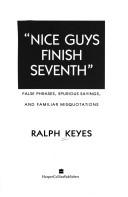
The books recommended for Nice Guys Finish Seventh by
Ralph Keyes are shaped by reader interaction.
Votes on how closely books relate, user ratings, and community comments all help
refine these recommendations and highlight books readers genuinely find similar
in theme, ideas, and overall reading experience.
Have you read any of these books?
Your votes, ratings, and comments help improve recommendations and make it easier
for other readers to discover books theyβll enjoy.
Books similar to Nice Guys Finish Seventh (9 similar books)

A timeless guide to improving interpersonal skills, communication, and personal success, based on Dale Carnegieβs classic principles of influence and effective relationships.
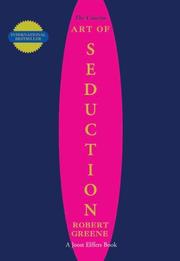
Robert Greeneβs The Art of Seduction examines the subtle psychology of attraction, outlining classic techniques and timeless profiles of seductive figures.
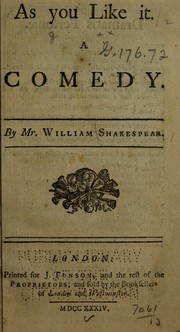
William Shakespeareβs comedy follows a usurped Duke and his court in exile as they seek refuge in the Forest of Arden, where humor and wisdom abound with characters such as the cynical Lord Jaques and the jester Touchstone.