Books like The reenchantment of the world by Morris Berman


First publish date: 1981
Genre: Philosophy/Metaphysics
Authors: Morris Berman
★ ★ ★ ★ ★ 0.0 (0 community ratings)

The reenchantment of the world by Morris Berman

How are these books recommended?

The books recommended for The reenchantment of the world by Morris Berman are shaped by reader interaction. Votes on how closely books relate, user ratings, and community comments all help refine these recommendations and highlight books readers genuinely find similar in theme, ideas, and overall reading experience.


Have you read any of these books?
Your votes, ratings, and comments help improve recommendations and make it easier for other readers to discover books they’ll enjoy.

Books similar to The reenchantment of the world (12 similar books)

The Power of Myth by 7823229|Joseph Campbell book cover

📘 The Power of Myth

Joseph Campbell explores mythology as the world’s song, discussing its relevance for modern life, faith, and culture with interviewer Bill Moyers in this engaging dialogue.

★★★★★★★★★★ 4.1 (13 ratings)
Similar? ✓ Yes 0 ✗ No 0
The Wisdom of Insecurity by 8533791|Alan Watts book cover

📘 The Wisdom of Insecurity
 by Alan Watts

Alan Watts examines the paradox of human insecurity, arguing that the pursuit of stability breeds anxiety. Drawing on philosophy, religion, and psychology, he invites Western readers to reconsider their relationship with time, pain, and the world.

★★★★★★★★★★ 3.4 (10 ratings)
Similar? ✓ Yes 0 ✗ No 0
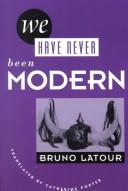
Nous n'avons jamais été modernes by 6743179|Bruno Latour book cover

📘 Nous n'avons jamais été modernes


★★★★★★★★★★ 3.5 (2 ratings)
Similar? ✓ Yes 0 ✗ No 0
Re-Enchanting the World by 3083680|Silvia Federici book cover

📘 Re-Enchanting the World

Silvia Federici is one of the most important contemporary theorists of capitalism and feminist movements. In this collection of her work spanning over twenty years, she provides a detailed history and critique of the politics of the commons from a feminist perspective. In her clear and combative voice, Federici provides readers with an analysis of some of the key issues and debates in contemporary thinking on this subject.Drawing on rich historical research, she maps the connections between the previous forms of enclosure that occurred with the birth of capitalism and the destruction of the commons and the "new enclosures" at the heart of the present phase of global capitalist accumulation. Considering the commons from a feminist perspective, this collection centers on women and reproductive work as crucial to both our economic survival and the construction of a world free from the hierarchies and divisions capital has planted in the body of the world proletariat. Federici is clear that the commons should not be understood as happy islands in a sea of exploitative relations but rather autonomous spaces from which to challenge the existing capitalist organization of life and labor.

★★★★★★★★★★ 5.0 (1 rating)
Similar? ✓ Yes 0 ✗ No 0
The future of an illusion by 919822|Sigmund Freud book cover

📘 The future of an illusion

"Sigmund Freud, the founder of psychoanalysis, declared that religion is a universal obsessional neurosis in his famous work of 1927, The Future of an Illusion. This work provoked immediate controversy and has continued to be an important reference for anyone interested in the intersection of philosophy, psychology, religion, and culture. Included in this volume is Oskar Pfister's critical engagement with Freud's views on religion. Pfister, a Swiss pastor and lay analyst, defends mature religion from Freud's "scientism." Freud's and Pfister's texts have been updated in Gregory C. Richter's translations from the original German."--Publisher's website.

★★★★★★★★★★ 0.0 (0 ratings)
Similar? ✓ Yes 0 ✗ No 0
The spirit of the liturgy by 6968334|Joseph Ratzinger book cover

📘 The spirit of the liturgy


★★★★★★★★★★ 0.0 (0 ratings)
Similar? ✓ Yes 0 ✗ No 0
Atom and void by 8886541|J. Robert Oppenheimer book cover

📘 Atom and void


★★★★★★★★★★ 0.0 (0 ratings)
Similar? ✓ Yes 0 ✗ No 0
Reason for Hope by 8249091|Jane Goodall book cover

📘 Reason for Hope

In this memoir, Jane Goodall recounts her pioneering work with chimpanzees in Gombe, Tanzania, while reflecting on her lifelong spiritual journey and the insights gained from the natural world.

★★★★★★★★★★ 0.0 (0 ratings)
Similar? ✓ Yes 0 ✗ No 0
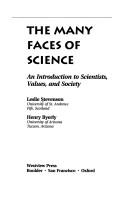
The many faces of science by 8349764|Leslie Forster Stevenson book cover

📘 The many faces of science


★★★★★★★★★★ 0.0 (0 ratings)
Similar? ✓ Yes 0 ✗ No 0
The Courage to Be by 6873679|Paul Tillich book cover

📘 The Courage to Be

In this classic and deeply insightful book, one of the world's most eminent philosophers describes the dilemma of modern man and points a way to the conquest of the problem of anxiety.

★★★★★★★★★★ 0.0 (0 ratings)
Similar? ✓ Yes 0 ✗ No 0
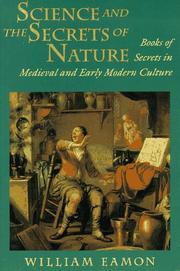
Science and the secrets of nature by 11574363|William Eamon book cover

📘 Science and the secrets of nature

By explaining how to sire multicolored horses, produce nuts without shells, and create an egg the size of a human head, Giambattista Della Porta's Natural Magic (1559) conveys a fascination with tricks and illusions that makes it a work difficult for historians of science to take seriously. Yet, according to William Eamon, it is in the "how-to" books written by medieval alchemists, magicians, and artisans that modern science has its roots. These compilations of recipes on everything from parlor tricks through medical remedies to wool-dyeing fascinated medieval intellectuals because they promised access to esoteric "secrets of nature." To popular readers of the early modern era, they offered a hands-on, experimental approach to nature that made scholastic natural philosophy seem abstract and sterile. In closely examining this rich but little-known source of literature, Eamon reveals that printing technology and popular culture had as great, if not stronger, an impact on early modern science as did the traditional academic disciplines. Medieval interest in the secrets of nature was spurred in part by ancient works such as Pliny's Natural History. As medieval experimenters adapted ancient knowledge to their changing needs, they created their own books of secrets, which expressed the uncritical, empiricist approach of popular culture rather than the subtle argumentation of scholastic science. The crude experimental methodology advanced by the "professors of secrets" became for the "new philosophers" of the seventeenth century a potent ideological weapon in the challenge of natural philosophy.

★★★★★★★★★★ 0.0 (0 ratings)
Similar? ✓ Yes 0 ✗ No 0

Some Other Similar Books

Dark Night of the Soul by St. John of the Cross
The Sacred and The Profane by Mircea Eliade
The Experience of Spirit by James Hillman
The Art of Happiness by Dalai Lama and Howard Cutler
The Myth of Sisyphus by Albert Camus

Have a similar book in mind? Let others know!

Please login to submit books!