Books like Origins by Lewis Dartnell


First publish date: 2019
Authors: Lewis Dartnell
★ ★ ★ ★ ★ 4.0 (1 community ratings)

Origins by Lewis Dartnell

How are these books recommended?

The books recommended for Origins by Lewis Dartnell are shaped by reader interaction. Votes on how closely books relate, user ratings, and community comments all help refine these recommendations and highlight books readers genuinely find similar in theme, ideas, and overall reading experience.


Have you read any of these books?
Your votes, ratings, and comments help improve recommendations and make it easier for other readers to discover books they’ll enjoy.

Books similar to Origins (9 similar books)

The Immense Journey by 6482199|Loren C. Eiseley book cover

πŸ“˜ The Immense Journey

A reflection on human evolution and the journey of man through time.

β˜…β˜…β˜…β˜…β˜…β˜…β˜…β˜…β˜…β˜… 4.0 (1 rating)
Similar? ✓ Yes 0 ✗ No 0
A brief history of everything by 7575928|Ken Wilber book cover

πŸ“˜ A brief history of everything
 by Ken Wilber


β˜…β˜…β˜…β˜…β˜…β˜…β˜…β˜…β˜…β˜… 4.0 (1 rating)
Similar? ✓ Yes 0 ✗ No 0
The origin of life by 3727698|J. D. Bernal book cover

πŸ“˜ The origin of life


β˜…β˜…β˜…β˜…β˜…β˜…β˜…β˜…β˜…β˜… 0.0 (0 ratings)
Similar? ✓ Yes 0 ✗ No 0
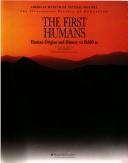
The First humans by 9615368|Göran Burenhult book cover

πŸ“˜ The First humans


β˜…β˜…β˜…β˜…β˜…β˜…β˜…β˜…β˜…β˜… 0.0 (0 ratings)
Similar? ✓ Yes 0 ✗ No 0
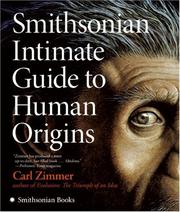
Smithsonian Intimate Guide to Human Origins by 8297388|Carl Zimmer book cover

πŸ“˜ Smithsonian Intimate Guide to Human Origins

New discoveries in the field of human evolution are changing our understanding of human origins almost daily. What does all this new knowledge about our species mean? Science journalist Zimmer offers an illuminating journey through our ancestry, beginning 65 million years ago with the first primates and ending today, as we enter a new phase of evolution. Along the way he re-examines the major steps in human evolution, as hominids began to stand upright, fashion tools and develop consciousness. What's most intriguing, he concludes, is that fossils are no longer the sole source of information about our origins--part of the story of where we came from turns out to be inscribed in our own DNA!--From publisher description.

β˜…β˜…β˜…β˜…β˜…β˜…β˜…β˜…β˜…β˜… 0.0 (0 ratings)
Similar? ✓ Yes 0 ✗ No 0
Life by 8370767|Richard A. Fortey book cover

πŸ“˜ Life

Richard Fortey traces the story of life from the first microbial traces in primordial hot springs to the emergence of humans, weaving paleontological evidence with scientific debates to reveal how our understanding of evolution has evolved.

β˜…β˜…β˜…β˜…β˜…β˜…β˜…β˜…β˜…β˜… 0.0 (0 ratings)
Similar? ✓ Yes 0 ✗ No 0
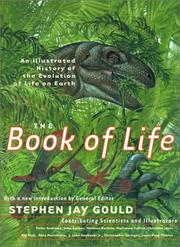
The Book of Life by 7087568|Stephen Jay Gould book cover

πŸ“˜ The Book of Life

Illustrated exploration of the origin and evolution of life on Earth, blending scientific insights with vivid reconstructions of extinct species.

β˜…β˜…β˜…β˜…β˜…β˜…β˜…β˜…β˜…β˜… 0.0 (0 ratings)
Similar? ✓ Yes 0 ✗ No 0
The invaders by 8289023|Pat Shipman book cover

πŸ“˜ The invaders

With their large brains, sturdy physique, sophisticated tools, and hunting skills, Neanderthals are the closest known relatives to humans. Approximately 200,000 years ago, as modern humans began to radiate out from their evolutionary birthplace in Africa, Neanderthals were already thriving in Europeβ€”descendants of a much earlier migration of the African genus Homo. But when modern humans eventually made their way to Europe 45,000 years ago, Neanderthals suddenly vanished. Ever since the first Neanderthal bones were identified in 1856, scientists have been vexed by the question, why did modern humans survive while their evolutionary cousins went extinct? The Invaders musters compelling evidence to show that the major factor in the Neanderthals’ demise was direct competition with newly arriving humans. Drawing on insights from the field of invasion biology, which predicts that the species ecologically closest to the invasive predator will face the greatest competition, Pat Shipman traces the devastating impact of a growing human population: reduction of Neanderthals’ geographic range, isolation into small groups, and loss of genetic diversity. But modern humans were not the only invaders who competed with Neanderthals for big game. Shipman reveals fascinating confirmation of humans’ partnership with the first domesticated wolf-dogs soon after Neanderthals first began to disappear. This alliance between two predator species, she hypothesizes, made possible an unprecedented degree of success in hunting large Ice Age mammalsβ€”a distinct and ultimately decisive advantage for humans over Neanderthals at a time when climate change made both groups vulnerable.

β˜…β˜…β˜…β˜…β˜…β˜…β˜…β˜…β˜…β˜… 0.0 (0 ratings)
Similar? ✓ Yes 0 ✗ No 0
Slave species of the gods by 7397576|Michael Tellinger book cover

πŸ“˜ Slave species of the gods

An exploration of human origins, focusing on the genetic legacy of ancient Anunnaki gods.

β˜…β˜…β˜…β˜…β˜…β˜…β˜…β˜…β˜…β˜… 0.0 (0 ratings)
Similar? ✓ Yes 0 ✗ No 0

Some Other Similar Books

The Knowledge: How to Rebuild Our World from Scratch by Lewis Dartnell
The Human Epoch: How Humanity Changed the World by Letters from the Earth
Sapiens: A Brief History of Humankind by Yuval Noah Harari
The Singularity Is Near: When Humans Transcend Biology by Ray Kurzweil
The Evolution of Everything: How Minor Changes Advance Culture and Society by Matt Ridley
Guns, Germs, and Steel: The Fates of Human Societies by Jared Diamond
The Social Conquest of Earth by Edward O. Wilson
Homo Deus: A Brief History of Tomorrow by Yuval Noah Harari
The Future of Life by Edward O. Wilson

Have a similar book in mind? Let others know!

Please login to submit books!