Books like Slave species of the gods by Michael Tellinger


The book delves into the origins of human beings, emphasizing their unique role as a slave species and the Anunnaki legacy in their genetic makeup. Through a blend of historical, religious, and scientific insights, it examines the connection between humans, gods, and the evolution of civilization.
First publish date: 2012
Genre: History/Ancient History
Authors: Michael Tellinger
★ ★ ★ ★ ★ 0.0 (0 community ratings)

Slave species of the gods by Michael Tellinger

How are these books recommended?

The books recommended for Slave species of the gods by Michael Tellinger are shaped by reader interaction. Votes on how closely books relate, user ratings, and community comments all help refine these recommendations and highlight books readers genuinely find similar in theme, ideas, and overall reading experience.


Have you read any of these books?
Your votes, ratings, and comments help improve recommendations and make it easier for other readers to discover books they’ll enjoy.

Books similar to Slave species of the gods (9 similar books)

The descent of man by 7910112|Charles Darwin book cover

📘 The descent of man

Charles Darwin’s *The Descent of Man* extends his theory of natural selection to human evolution, arguing that language, morality and other human traits arise from the same biological processes that shape the natural world.

★★★★★★★★★★ 3.5 (2 ratings)
Similar? ✓ Yes 0 ✗ No 0
The Ancient Secret of the Flower of Life by 7376925|Drunvalo Melchizedek book cover

📘 The Ancient Secret of the Flower of Life

A definitive and essential guide to the New Age creation theory, utilising ancient knowledge and groundbreaking scientific discovery to bring light onto the truth about our universe, and what events are in store. Melchizedek takes the reader on a phenomenal spiritual journey through Atlantis, Ancient Egypt and modern day society in a way that continues to inspire countless readers today.

★★★★★★★★★★ 5.0 (1 rating)
Similar? ✓ Yes 0 ✗ No 0
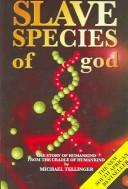
Slave Species of God by 7397576|Michael Tellinger book cover

📘 Slave Species of God

Our origins as a slave species and the Anunnaki legacy in our DNA • Reveals compelling new archaeological and genetic evidence for the engineered origins of the human species, first proposed by Zecharia Sitchin in The 12th Planet • Shows how the Anunnaki created us using pieces of their own DNA, controlling our physical and mental capabilities by inactivating their more advanced DNA • Identifies a recently discovered complex of sophisticated ruins in South Africa as the city of the Anunnaki leader Enki Scholars have long believed that the first civilization on Earth emerged in Sumer some 6,000 years ago. However, as Michael Tellinger reveals, the Sumerians and Egyptians inherited their knowledge from an earlier civilization that lived at the southern tip of Africa and began with the arrival of the Anunnaki more than 200,000 years ago. Sent to Earth in search of life-saving gold, these ancient Anunnaki astronauts from the planet Nibiru created the first humans as a slave race to mine gold--thus beginning our global traditions of gold obsession, slavery, and god as dominating master. Revealing new archaeological and genetic evidence in support of Zecharia Sitchin’s revolutionary work with pre-biblical clay tablets, Tellinger shows how the Anunnaki created us using pieces of their own DNA, controlling our physical and mental capabilities by inactivating their more advanced DNA--which explains why less than 3 percent of our DNA is active. He identifies a recently discovered complex of sophisticated ruins in South Africa, complete with thousands of mines, as the city of Anunnaki leader Enki and explains their lost technologies that used the power of sound as a source of energy. Matching key mythologies of the world’s religions to the Sumerian clay tablet stories on which they are based, he details the actual events behind these tales of direct physical interactions with “god,” concluding with the epic flood--a perennial theme of ancient myth--that wiped out the Anunnaki mining operations. Tellinger shows that, as humanity awakens to the truth about our origins, we can overcome our programmed animalistic and slave-like nature, tap in to our dormant Anunnaki DNA, and realize the longevity and intelligence of our creators as well as learn the difference between the gods of myth and the true loving God of our universe.

★★★★★★★★★★ 5.0 (1 rating)
Similar? ✓ Yes 0 ✗ No 0
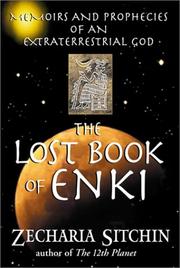
The Lost Book of Enki by 10077715|Zecharia Sitchin book cover

📘 The Lost Book of Enki

First Trade Paperback edition 2004-08-16

★★★★★★★★★★ 0.0 (0 ratings)
Similar? ✓ Yes 0 ✗ No 0
The source field investigations by 11322450|David Wilcock book cover

📘 The source field investigations

Based on a hugely popular Internet documentary, this exploration of historic signs and symbolism determines what the future holds for humanity come 2012.

★★★★★★★★★★ 0.0 (0 ratings)
Similar? ✓ Yes 0 ✗ No 0
The First humans by 9615368|Göran Burenhult book cover

📘 The First humans


★★★★★★★★★★ 0.0 (0 ratings)
Similar? ✓ Yes 0 ✗ No 0
The Anunnaki chronicles by 10077715|Zecharia Sitchin book cover

📘 The Anunnaki chronicles

An insider look at Zecharia Sitchin’s decades of research and his theories on the Anunnaki, Nibiru, and humanity’s origins, featuring selected chapters from the Earth Chronicles, unpublished letters, and lectures.

★★★★★★★★★★ 0.0 (0 ratings)
Similar? ✓ Yes 0 ✗ No 0
DNA of the gods by 6558866|Christine Hardy book cover

📘 DNA of the gods

"An in-depth study of humanity's Anunnaki origins and the Anunnaki battle for an intelligent versus enslaved humanity Explains the genetic engineering of humanity by an Anunnaki scientist Ninmah Shows how the concepts of sin and the inferiority of women arose from Enlil's will to keep humanity underdeveloped, clashing with Enki's and Ninmah's plan to make us equal in intelligence Reveals how humanity's long history of conflict was shaped by the battle between Enki and his brother Enlil Further developing the revolutionary work of Zecharia Sitchin, Chris Hardy shows that the "gods" of ancient myth, visitors from the planet Nibiru, created us using their own "divine" DNA--first through DNA extraction from their own ribs' marrow and later by direct relations with early human females. Drawing upon multiple sacred texts, Hardy details the genetic engineering of humanity by Anunnaki scientist Ninmah, with the help of Enki and Hermes. She reveals how Ninmah's first female human creation, Tiamat/Eve, contained more alien DNA than the earlier male one, Adamu, and how the biblical Noah represents the perfection of her work. Examining the war between Anunnaki brothers Enki and Enlil, Hardy reveals how the concepts of sin and the inferiority of women were born out of Enlil's attempts to enslave and then wipe out humanity, repeatedly thwarted by Enki and Ninmah. The author further explains how the sacred sexuality taught to humans--still seen in Tantric practice--became suppressed millennia later by the patriarchal concept of original sin and how innocent Eve took the blame for the expulsion from Eden and fall from Grace. Showing that the god who created us was not the same god who expelled us from Eden, Hardy explains that there will be no apocalypse because the Good/Evil duality has never truly existed--it has been only enemy gods fighting and implicating humanity in the wake of their own competition for power. With a full psychological understanding of how the ancient "gods" have shaped humanity's ongoing history of conflict, we can move beyond the framework of "(my) Good versus (your) Evil" imposed by Enlil and begin to steer our own planetary destiny"-- ""An in-depth study of humanity's Anunnaki origins and the Anunnaki battle for an intelligent versus enslaved humanity"--Provided by publisher"--

★★★★★★★★★★ 0.0 (0 ratings)
Similar? ✓ Yes 0 ✗ No 0
The invaders by 8289023|Pat Shipman book cover

📘 The invaders

With their large brains, sturdy physique, sophisticated tools, and hunting skills, Neanderthals are the closest known relatives to humans. Approximately 200,000 years ago, as modern humans began to radiate out from their evolutionary birthplace in Africa, Neanderthals were already thriving in Europe—descendants of a much earlier migration of the African genus Homo. But when modern humans eventually made their way to Europe 45,000 years ago, Neanderthals suddenly vanished. Ever since the first Neanderthal bones were identified in 1856, scientists have been vexed by the question, why did modern humans survive while their evolutionary cousins went extinct? The Invaders musters compelling evidence to show that the major factor in the Neanderthals’ demise was direct competition with newly arriving humans. Drawing on insights from the field of invasion biology, which predicts that the species ecologically closest to the invasive predator will face the greatest competition, Pat Shipman traces the devastating impact of a growing human population: reduction of Neanderthals’ geographic range, isolation into small groups, and loss of genetic diversity. But modern humans were not the only invaders who competed with Neanderthals for big game. Shipman reveals fascinating confirmation of humans’ partnership with the first domesticated wolf-dogs soon after Neanderthals first began to disappear. This alliance between two predator species, she hypothesizes, made possible an unprecedented degree of success in hunting large Ice Age mammals—a distinct and ultimately decisive advantage for humans over Neanderthals at a time when climate change made both groups vulnerable.

★★★★★★★★★★ 0.0 (0 ratings)
Similar? ✓ Yes 0 ✗ No 0

Some Other Similar Books

The Shift of the Ages by Carl Sanders
The Giza Power Plant by Christopher P. Dunn
The Lost Technologies of Ancient Egypt by Schiener and Vlahos
The Universe in a Single Atom by Dalai Lama
Forbidden Archaeology by Michael A. Cremo and Richard L. Thompson
Chariots of the Gods? by Erich von Däniken
The Christ Conspiracy by Acharya S.
The Ancient Code by E. M. Josone
The Ringmakers of Saturn by Tom Van Flanders
The Cosmic Web by Judith Kusiak
The Earth Chronicles by Zecharia Sitchin
The Lost Civilizations by Andrew Collins
The Giza Power Plant by Christopher Dunn
Forbidden Archaeology by Michael A. Cremo & Richard L. Thompson
Chariots of the Gods by Erich von Däniken

Have a similar book in mind? Let others know!

Please login to submit books!