Books like Economics for Everyone by Jim Stanford
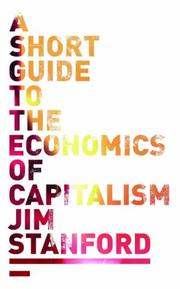

First publish date: June 28, 2008
Subjects: Economics, Capitalism, Economic policy, Free enterprise, Business & Economics
Authors: Jim Stanford
5.0 (2 community ratings)

Economics for Everyone by Jim Stanford

How are these books recommended?

The books recommended for Economics for Everyone by Jim Stanford are shaped by reader interaction. Votes on how closely books relate, user ratings, and community comments all help refine these recommendations and highlight books readers genuinely find similar in theme, ideas, and overall reading experience.


Have you read any of these books?
Your votes, ratings, and comments help improve recommendations and make it easier for other readers to discover books they’ll enjoy.

Books similar to Economics for Everyone (11 similar books)
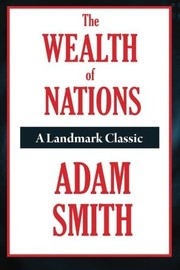
The Wealth of Nations

πŸ“˜ The Wealth of Nations
 by Adam Smith

Adam Smith's The Wealth of Nations was recognized as a landmark of human thought upon its publication in 1776. As the first scientific argument for the principles of political economy, it is the point of departure for all subsequent economic thought. Smith's theories of capital accumulation, growth, and secular change, among others, continue to be influential in modern economics. This reprint of Edwin Cannan's definitive 1904 edition of The Wealth of Nations includes Cannan's famous introduction, notes, and a full index, as well as a new preface written especially for this edition by the distinguished economist George J. Stigler. Mr. Stigler's preface will be of value for anyone wishing to see the contemporary relevance of Adam Smith's thought.

β˜…β˜…β˜…β˜…β˜…β˜…β˜…β˜…β˜…β˜… 4.1 (29 ratings)
Similar? ✓ Yes 0 ✗ No 0
The Wealth of Nations

πŸ“˜ The Wealth of Nations
 by Adam Smith

Adam Smith's The Wealth of Nations was recognized as a landmark of human thought upon its publication in 1776. As the first scientific argument for the principles of political economy, it is the point of departure for all subsequent economic thought. Smith's theories of capital accumulation, growth, and secular change, among others, continue to be influential in modern economics. This reprint of Edwin Cannan's definitive 1904 edition of The Wealth of Nations includes Cannan's famous introduction, notes, and a full index, as well as a new preface written especially for this edition by the distinguished economist George J. Stigler. Mr. Stigler's preface will be of value for anyone wishing to see the contemporary relevance of Adam Smith's thought.

β˜…β˜…β˜…β˜…β˜…β˜…β˜…β˜…β˜…β˜… 4.1 (29 ratings)
Similar? ✓ Yes 0 ✗ No 0
The Undercover Economist

πŸ“˜ The Undercover Economist

Critically acclaimed as one of the most successful economy books of all time, and a 'must-read' for those of us in the general public who want to understand how society works, but do not want this information to be conveyed in an Oxbridge multipolysyllabic tone, Tim Harford's book gives us an insight into the relevance of the economy to our everyday lives. It begins humbly with the author's relatable bemoaning of coffee and its prices, which is cleverly analogized in the simple, but brilliant and still-relevant ideas of nineteenth-century economist David Ricardo. Organized into clear chapters which target different aspects of the economy's impacts on our life, the book later progresses onto more developed concepts such as the reasons (sub-prime mortgages!) behind the banking collapse of Lehman Brothers in 2008. Written in an aware style from an economist's perspective, this book is thoroughly worthwhile reading.

β˜…β˜…β˜…β˜…β˜…β˜…β˜…β˜…β˜…β˜… 4.1 (14 ratings)
Similar? ✓ Yes 0 ✗ No 0
The Undercover Economist

πŸ“˜ The Undercover Economist

Critically acclaimed as one of the most successful economy books of all time, and a 'must-read' for those of us in the general public who want to understand how society works, but do not want this information to be conveyed in an Oxbridge multipolysyllabic tone, Tim Harford's book gives us an insight into the relevance of the economy to our everyday lives. It begins humbly with the author's relatable bemoaning of coffee and its prices, which is cleverly analogized in the simple, but brilliant and still-relevant ideas of nineteenth-century economist David Ricardo. Organized into clear chapters which target different aspects of the economy's impacts on our life, the book later progresses onto more developed concepts such as the reasons (sub-prime mortgages!) behind the banking collapse of Lehman Brothers in 2008. Written in an aware style from an economist's perspective, this book is thoroughly worthwhile reading.

β˜…β˜…β˜…β˜…β˜…β˜…β˜…β˜…β˜…β˜… 4.1 (14 ratings)
Similar? ✓ Yes 0 ✗ No 0
Basic economics

πŸ“˜ Basic economics

"Why are homeless people sleeping on the sidewalks of New York in the winter, when the abandoned apartment buildings in the city have four times as many dwelling units as there are homeless people in the city? Why are people hungry in Moscow when there are vast amounts of some of the richest farmland on the continent of Europe within easy driving distance? Why did unemployment reach 25 percent and American corporations as a whole operate in the red for two years in a row during the Great Depression of the 1930s?". "All these very different - but equally puzzling and needless - tragedies grew out of a failure to understand and apply basic economic principles. Explaining these principles for the general public in plain English, with neither graphs nor equations nor jargon, is the goal and the achievement of Basic Economics by Thomas Sowell. Professor Sowell has taught economics at leading colleges and universities across the country and now uses his years of experience to bring economics to light in a way that is both easy to absorb and hard to forget.". "His lively examples are drawn from around the world and from centuries of history, because the basic principles of economics are not limited to modern capitalist societies and apply even to situations where no money changes hands, such as caring for wounded soldiers on a battlefield. The focus of Basic Economics is not on how individuals make money but on how whole societies create prosperity or poverty for their peoples by the way they organize their economies. Prosperous countries with few natural resources, such as Japan and Switzerland, are as common as poor countries with rich resources, such as Russia or Mexico."--BOOK JACKET.

β˜…β˜…β˜…β˜…β˜…β˜…β˜…β˜…β˜…β˜… 3.5 (8 ratings)
Similar? ✓ Yes 0 ✗ No 0
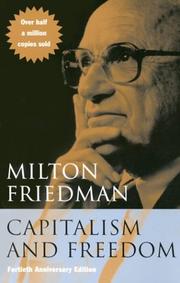
Capitalism and freedom

πŸ“˜ Capitalism and freedom

Selected by the Times Literary Supplement as one of the "hundred most influential books since the war"How can we benefit from the promise of government while avoiding the threat it poses to individual freedom? In this classic book, Milton Friedman provides the definitive statement of his immensely influential economic philosophyβ€”one in which competitive capitalism serves as both a device for achieving economic freedom and a necessary condition for political freedom. The result is an accessible text that has sold well over half a million copies in English, has been translated into eighteen languages, and shows every sign of becoming more and more influential as time goes on.

β˜…β˜…β˜…β˜…β˜…β˜…β˜…β˜…β˜…β˜… 3.8 (6 ratings)
Similar? ✓ Yes 0 ✗ No 0
The undercover economist strikes back

πŸ“˜ The undercover economist strikes back

"A provocative and lively exploration of the increasingly important world of macroeconomics, by the author of the bestselling The Undercover Economist. Thanks to the worldwide financial upheaval, economics is no longer a topic we can ignore. From politicians to hedge-fund managers to middle-class IRA holders, everyone must pay attention to how and why the global economy works the way it does. Enter Financial Times columnist and bestselling author Tim Harford. In this new book that demystifies macroeconomics, Harford strips away the spin, the hype, and the jargon to reveal the truth about how the world's economy actually works. With the wit of a raconteur and the clear grasp of an expert, Harford explains what's really happening beyond today's headlines, why all of us should care, and what we can do about it to understand it better. "--

β˜…β˜…β˜…β˜…β˜…β˜…β˜…β˜…β˜…β˜… 3.2 (5 ratings)
Similar? ✓ Yes 0 ✗ No 0
Economics in One Lesson

πŸ“˜ Economics in One Lesson

An introduction to free-market economics.

β˜…β˜…β˜…β˜…β˜…β˜…β˜…β˜…β˜…β˜… 4.0 (1 rating)
Similar? ✓ Yes 0 ✗ No 0
Economics in One Lesson

πŸ“˜ Economics in One Lesson

An introduction to free-market economics.

β˜…β˜…β˜…β˜…β˜…β˜…β˜…β˜…β˜…β˜… 4.0 (1 rating)
Similar? ✓ Yes 0 ✗ No 0
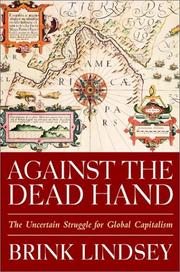
Against the dead hand

πŸ“˜ Against the dead hand

A refreshing, insightful look into the political and economic dynamics driving globalization today Globalization: it's earlier than you think. That's the provocative message of Against the Dead Hand, which traces the rise and fall of the century-long dream of central planning and top-down control and its impact on globalization-revealing the extent to which the "dead hand" of the old collectivist dream still shapes the contours of today's world economy. Mixing historical narrative, thought-provoking arguments, and on-the-scene reporting and interviews, Brink Lindsey shows how the economy has grown up amidst the wreckage of the old regime-detailing how that wreckage constrains the present and obscures the future. He conveys a clearer picture of globalization's current state than the current conventional wisdom, providing a framework for anticipating the future direction of the world economy.

β˜…β˜…β˜…β˜…β˜…β˜…β˜…β˜…β˜…β˜… 0.0 (0 ratings)
Similar? ✓ Yes 0 ✗ No 0
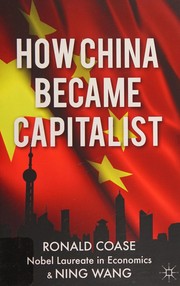
How China became capitalist

πŸ“˜ How China became capitalist

"How China Became Capitalist details the extraordinary, and often accidental, journey that China has taken over the past thirty years in transforming itself from a closed agrarian socialist economy to an indomitable force in the international arena. The authors revitalize the debate around the development of the Chinese system through the use of primary sources. They persuasively argue that the reforms implemented by the Chinese leaders did not represent a concerted attempt to create a capitalist economy, but that the ideas from the West eventually culminated in a fundamental change to their socialist model, forming an accidental path to capitalism. Coase and Wang argue that the pragmatic approach of "seeking truth from fact" is in fact much more in line with Chinese culture. How China Became Capitalist challenges the received wisdom about the future of the Chinese economy, arguing that while China has enormous potential for growth, this could be hampered by the leaders' propensity for control, both in terms of economics and their monopoly of ideas and power"--

β˜…β˜…β˜…β˜…β˜…β˜…β˜…β˜…β˜…β˜… 0.0 (0 ratings)
Similar? ✓ Yes 0 ✗ No 0

Some Other Similar Books

Freakonomics: A Rogue Economist Explores the Hidden Side of Everything by Steven D. Levitt and Stephen J. Dubner
Capital in the Twenty-First Century by Thomas Piketty
Naked Economics: Undressing the Dismal Science by Charles Wheelan
The Armchair Economist: Economics and Everyday Life by Steven E. Landsburg
Economics: Making Sense of the Modern Economy by Travis Oddone
Poor Economics: A Radical Rethinking of the Way to Fight Global Poverty by Abhijit V. Banerjee and Esther Duflo
Freakonomics: A Rogue Economist Explores the Hidden Side of Everything by Steven D. Levitt and Stephen J. Dubner
The Ascent of Money: A Financial History of the World by Niall Ferguson
Poor Economics: A Radical Rethink of the Way to Fight Global Poverty by Abhijt Banerjee and Esther Duflo
Capital in the Twenty-First Century by Thomas Piketty
Naked Economics: Undressing the Dismal Science by Charles Wheelan
Debt: The First 5,000 Years by David Graeber

Have a similar book in mind? Let others know!

Please login to submit books!