Books like Learn You Some Erlang For Great Good! by Fred Hebert

First publish date: 2012
Subjects: Programming languages (Electronic computers), ERLANG (Computer program language)
Authors: Fred Hebert
3.0 (1 community ratings)

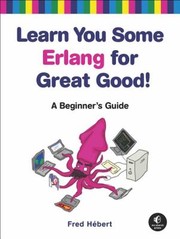
Learn You Some Erlang For Great Good! by Fred Hebert

How are these books recommended?

The books recommended for Learn You Some Erlang For Great Good! by Fred Hebert are shaped by reader interaction. Votes on how closely books relate, user ratings, and community comments all help refine these recommendations and highlight books readers genuinely find similar in theme, ideas, and overall reading experience.


Have you read any of these books?
Your votes, ratings, and comments help improve recommendations and make it easier for other readers to discover books they’ll enjoy.

Books similar to Learn You Some Erlang For Great Good! (3 similar books)
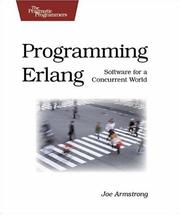
Programming Erlang

πŸ“˜ Programming Erlang

A multi-user game, web site, cloud application, or networked database can have thousands of users all interacting at the same time. You need a powerful, industrial-strength tool to handle the really hard problems inherent in parallel, concurrent environments. You need Erlang. In this second edition of the bestselling Programming Erlang, you'll learn how to write parallel programs that scale effortlessly on multicore systems. Using Erlang, you'll be surprised at how easy it becomes to deal with parallel problems, and how much faster and more efficiently your programs run. That's because Erlang uses sets of parallel processes-not a single sequential process, as found in most programming languages. Joe Armstrong, creator of Erlang, introduces this powerful language in small steps, giving you a complete overview of Erlang and how to use it in common scenarios. You'll start with sequential programming, move to parallel programming and handling errors in parallel programs, and learn to work confidently with distributed programming and the standard Erlang/Open Telecom Platform (OTP) frameworks. You need no previous knowledge of functional or parallel programming. The chapters are packed with hands-on, real-world tutorial examples and insider tips and advice, and finish with exercises for both beginning and advanced users. The second edition has been extensively rewritten. New to this edition are seven chapters covering the latest Erlang features: maps, the type system and the Dialyzer, WebSockets, programming idioms, and a new stand-alone execution environment. You'll write programs that dynamically detect and correct errors, and that can be upgraded without stopping the system. There's also coverage of rebar (the de facto Erlang build system), and information on how to share and use Erlang projects on github, illustrated with examples from cowboy and bitcask. Erlang will change your view of the world, and of how you program.

β˜…β˜…β˜…β˜…β˜…β˜…β˜…β˜…β˜…β˜… 4.7 (3 ratings)
Similar? ✓ Yes 0 ✗ No 0
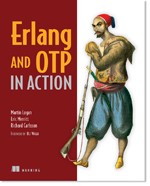
Erlang and OTP in Action

πŸ“˜ Erlang and OTP in Action

Erlang is an adaptable and fault tolerant functional programming language originally designed for the unique demands of the telecom industry. With Erlang/OTP's interpreter, compiler, database server, and libraries, developers are finding they can satisfy tough uptime and performance requirements in all kinds of other industries. Erlang and OTP in Action teaches you the concepts of concurrent programming and the use of Erlang's message-passing model. It walks you through progressively more interesting examples, building systems in Erlang and integrating them with C/C++, Java, and .NET applications, including SOA and web architectures. This book is written for readers new to Erlang and interested in creating practical applications.

β˜…β˜…β˜…β˜…β˜…β˜…β˜…β˜…β˜…β˜… 5.0 (2 ratings)
Similar? ✓ Yes 0 ✗ No 0
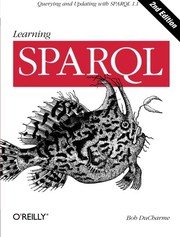
Learning SPARQL

πŸ“˜ Learning SPARQL

"More and more people are using the query language SPARQL (pronounced 'sparkle') to pull data from a growing collection of public and private data. Whether this data is part of a semantic web project or an integration of two inventory databases on different platforms behind the same firewall, SPARQL is making it easier to access this data using both open source and commercial software. In the words of W3C Director and web inventor Tim Berners-Lee, 'Trying to use the Semantic Web without SPARQL is like trying to use a relational database without SQL. SPARQL lets them query information from databases and other diverse sources in the wild, across the Web.'"--Resource description page.

β˜…β˜…β˜…β˜…β˜…β˜…β˜…β˜…β˜…β˜… 1.0 (1 rating)
Similar? ✓ Yes 0 ✗ No 0

Some Other Similar Books

Erlang Programming by Joe Armstrong
Introducing Erlang by Simon St. Laurent
Erlang and OTP in Action by Mikael Stolarz
Programming Erlang: Software for a Concurrent World by Joe Armstrong
Concurrency in Erlang by Steve Vinoski
Erlang and Friends by BjΓΈrn Gustavsen
Designing for Scalability with Erlang/OTP by Simon St. Laurent
Erlang: The Movie by Frank Buschmann
Distributed Systems with Erlang by Joe Armstrong, Robert Virding
Mastering Erlang by Brian H. W. O'Sullivan

Have a similar book in mind? Let others know!

Please login to submit books!