Books like Erlang and OTP in Action by Eric Merritt


Erlang is an adaptable and fault tolerant functional programming language originally designed for the unique demands of the telecom industry. With Erlang/OTP's interpreter, compiler, database server, and libraries, developers are finding they can satisfy tough uptime and performance requirements in all kinds of other industries. Erlang and OTP in Action teaches you the concepts of concurrent programming and the use of Erlang's message-passing model. It walks you through progressively more interesting examples, building systems in Erlang and integrating them with C/C++, Java, and .NET applications, including SOA and web architectures. This book is written for readers new to Erlang and interested in creating practical applications.
First publish date: 2010
Subjects: Programming languages (Electronic computers), ERLANG (Computer program language)
Authors: Eric Merritt
5.0 (2 community ratings)

Erlang and OTP in Action by Eric Merritt

How are these books recommended?

The books recommended for Erlang and OTP in Action by Eric Merritt are shaped by reader interaction. Votes on how closely books relate, user ratings, and community comments all help refine these recommendations and highlight books readers genuinely find similar in theme, ideas, and overall reading experience.


Have you read any of these books?
Your votes, ratings, and comments help improve recommendations and make it easier for other readers to discover books they’ll enjoy.

Books similar to Erlang and OTP in Action (4 similar books)
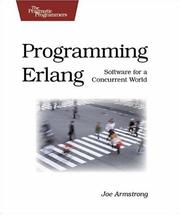
Programming Erlang

📘 Programming Erlang

A multi-user game, web site, cloud application, or networked database can have thousands of users all interacting at the same time. You need a powerful, industrial-strength tool to handle the really hard problems inherent in parallel, concurrent environments. You need Erlang. In this second edition of the bestselling Programming Erlang, you'll learn how to write parallel programs that scale effortlessly on multicore systems. Using Erlang, you'll be surprised at how easy it becomes to deal with parallel problems, and how much faster and more efficiently your programs run. That's because Erlang uses sets of parallel processes-not a single sequential process, as found in most programming languages. Joe Armstrong, creator of Erlang, introduces this powerful language in small steps, giving you a complete overview of Erlang and how to use it in common scenarios. You'll start with sequential programming, move to parallel programming and handling errors in parallel programs, and learn to work confidently with distributed programming and the standard Erlang/Open Telecom Platform (OTP) frameworks. You need no previous knowledge of functional or parallel programming. The chapters are packed with hands-on, real-world tutorial examples and insider tips and advice, and finish with exercises for both beginning and advanced users. The second edition has been extensively rewritten. New to this edition are seven chapters covering the latest Erlang features: maps, the type system and the Dialyzer, WebSockets, programming idioms, and a new stand-alone execution environment. You'll write programs that dynamically detect and correct errors, and that can be upgraded without stopping the system. There's also coverage of rebar (the de facto Erlang build system), and information on how to share and use Erlang projects on github, illustrated with examples from cowboy and bitcask. Erlang will change your view of the world, and of how you program.

4.7 (3 ratings)
Similar? ✓ Yes 0 ✗ No 0
Designing Data-Intensive Applications

📘 Designing Data-Intensive Applications

全书分为三大部分: 第一部分,主要讨论有关增强数据密集型应用系统所需的若干基本原则。首先开篇第1章即瞄准目标:可靠性、可扩展性与可维护性,如何认识这些问题以及如何达成目标。第2章我们比较了多种不同的数据模型和查询语言,讨论各自的适用场景。接下来第3章主要针对存储引擎,即数据库是如何安排磁盘结构从而提高检索效率。第4章转向数据编码(序列化)方面,包括常见模式的演化历程。 第二部分,我们将从单机的数据存储转向跨机器的分布式系统,这是扩展性的重要一步,但随之而来的是各种挑战。所以将依次讨论数据远程复制(第5章)、数据分区(第6章)以及事务(第7章)。接下来的第8章包括分布式系统的更多细节,以及分布式环境如何达成一致性与共识(第9章)。 第三部分,主要针对产生派生数据的系统,所谓派生数据主要指在异构系统中,如果无法用一个数据源来解决所有问题,那么一种自然的方式就是集成多个不同的数据库、缓存模块以及索引模块等。首先第10章以批处理开始来处理派生数据,紧接着第11章采用流式处理。第12章总结之前介绍的多种技术,并分析讨论未来构建可靠、可扩展和可维护应用系统可能的新方向或方法。

5.0 (2 ratings)
Similar? ✓ Yes 0 ✗ No 0
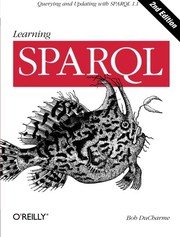
Learning SPARQL

📘 Learning SPARQL

"More and more people are using the query language SPARQL (pronounced 'sparkle') to pull data from a growing collection of public and private data. Whether this data is part of a semantic web project or an integration of two inventory databases on different platforms behind the same firewall, SPARQL is making it easier to access this data using both open source and commercial software. In the words of W3C Director and web inventor Tim Berners-Lee, 'Trying to use the Semantic Web without SPARQL is like trying to use a relational database without SQL. SPARQL lets them query information from databases and other diverse sources in the wild, across the Web.'"--Resource description page.

1.0 (1 rating)
Similar? ✓ Yes 0 ✗ No 0
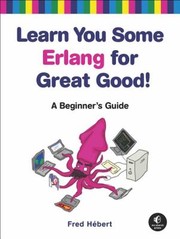
Learn You Some Erlang For Great Good!

📘 Learn You Some Erlang For Great Good!


3.0 (1 rating)
Similar? ✓ Yes 0 ✗ No 0

Some Other Similar Books

Programming Erlang: Software for a Concurrent World by Joe Armstrong
Erlang Programming by Steve Vinoski
Distributed Systems with Erlang by Brother Jørgen Søndergaard
Erlang and OTP in Practice by Frank Hunleth
Concurrency with Erlang by Practical Guide
Mastering Elixir: Discover pragmatic techniques for building scalable and fault tolerant systems by Andrea Leopardi
Architecting for Scale: High Availability for Your Growing Applications by Lee Atchison
Building Microservices with Node.js by Girish Malhotra

Have a similar book in mind? Let others know!

Please login to submit books!