Books like Bound for Canaan by Fergus M. Bordewich
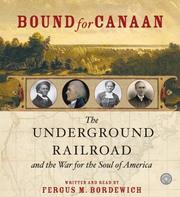

Bound for Canaan traces the clandestine collaboration of black and white abolitionists with enslaved people, detailing how their united efforts in the Underground Railroad freed tens of thousands. Spanning sixty years, the book chronicles the escalating anti‑slavery movement that culminated in the Civil War, offering deep insight into the people and events that shaped this pivotal period of American history.
First publish date: March 29, 2005
Genre: History/Modern History
Authors: Fergus M. Bordewich
★ ★ ★ ★ ★ 4.0 (1 community ratings)

Bound for Canaan by Fergus M. Bordewich

How are these books recommended?

The books recommended for Bound for Canaan by Fergus M. Bordewich are shaped by reader interaction. Votes on how closely books relate, user ratings, and community comments all help refine these recommendations and highlight books readers genuinely find similar in theme, ideas, and overall reading experience.


Have you read any of these books?
Your votes, ratings, and comments help improve recommendations and make it easier for other readers to discover books they’ll enjoy.

Books similar to Bound for Canaan (11 similar books)
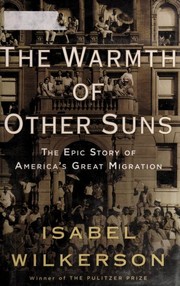
The Warmth of Other Suns by 7877632|Isabel Wilkerson book cover

📘 The Warmth of Other Suns

The Warmth of Other Suns is a non‑fiction study of the Great Migration, tracing the journey of nearly six million African Americans from the South to northern and western cities between 1915 and 1970.

★★★★★★★★★★ 4.4 (9 ratings)
Similar? ✓ Yes 0 ✗ No 0
Devil in the grove by 5896217|Gilbert King book cover

📘 Devil in the grove


★★★★★★★★★★ 4.7 (3 ratings)
Similar? ✓ Yes 0 ✗ No 0
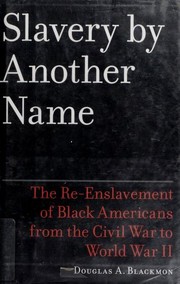
Slavery by another name by 7695600|Douglas A. Blackmon book cover

📘 Slavery by another name

Douglas A. Blackmon exposes a hidden chapter of American history—an "Age of Neoslavery" that subjected African Americans to forced labor and debt slavery from the late 19th century through the 1940s.

★★★★★★★★★★ 5.0 (3 ratings)
Similar? ✓ Yes 0 ✗ No 0
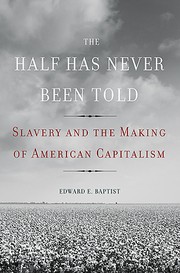
The Half Has Never Been Told by 5895198|Edward E. Baptist book cover

📘 The Half Has Never Been Told

Edward E. Baptist shows how slavery’s expansion from 1777 to 1847 powered America’s shift to industrial capitalism, turning the South into a cotton empire and reshaping the nation’s economy.

★★★★★★★★★★ 5.0 (2 ratings)
Similar? ✓ Yes 0 ✗ No 0
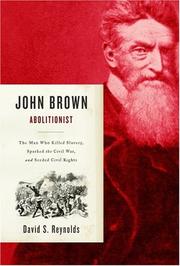
John Brown, abolitionist by 10113427|David S. Reynolds book cover

📘 John Brown, abolitionist

David S. Reynolds’ biography of John Brown (1800–1859) examines the abolitionist’s violent battle against slavery, his impact on the Civil War, and his lasting influence on the future civil rights movement.

★★★★★★★★★★ 5.0 (2 ratings)
Similar? ✓ Yes 0 ✗ No 0
The Other Wes Moore by 11181003|Wes Moore book cover

📘 The Other Wes Moore
 by Wes Moore

Two boys named Wes Moore, raised in Baltimore’s same streets, choose starkly different paths—one a Rhodes Scholar and business leader, the other a life‑sentenced murderer. The memoir chronicles their coincidental lives, letters, and profound reflections on choice and destiny.

★★★★★★★★★★ 0.0 (0 ratings)
Similar? ✓ Yes 0 ✗ No 0
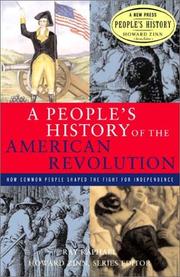
A people's history of the American Revolution by 11501602|Ray Raphael book cover

📘 A people's history of the American Revolution

Raphael explains the central purpose of his "people's history" thusly: "By uncovering the stories of farmers, artisans, and laborers, we discern how plain folk helped create a revolution strong enough to evict the British Empire from the thirteen colonies. And by digging deeper still, we learn how people with no political standing -- women, Native Americans, African Americans -- altered the shape of a war conceived by others." After carefully reconstructing the histories of all these groups, he concludes: "The story of our nation's founding, told so often from the perspective of the 'founding fathers,' will never ring true unless it can take some account of the Massachusetts farmers who closed the courts, the poor men and boys who fought the battles, the women who followed the troops, the loyalists who viewed themselves as rebels, the pacifists who refused to sign oaths of allegiance, the Native Americans who struggled for their own independence, the southern slaves who fled to the British, the northern slaves who negotiated their freedom by joining the Continental Army". Raphael's account rings true: these people made the American Revolution. - Marcus Rediker, University of Pittsburgh.

★★★★★★★★★★ 0.0 (0 ratings)
Similar? ✓ Yes 0 ✗ No 0
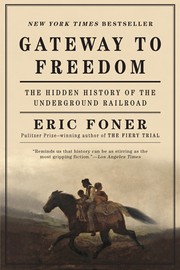
Gateway to Freedom by 6493781|Eric Foner book cover

📘 Gateway to Freedom
 by Eric Foner

This book tells the dramatic story of fugitive slaves and the antislavery activists who defied the law to help them reach freedom. More than any other scholar, Eric Foner has influenced our understanding of America's history. Now, making brilliant use of extraordinary evidence, the Pulitzer Prize–winning historian once again reconfigures the national saga of American slavery and freedom. A deeply entrenched institution, slavery lived on legally and commercially even in the northern states that had abolished it after the American Revolution. Slaves could be found in the streets of New York well after abolition, traveling with owners doing business with the city's major banks, merchants, and manufacturers. New York was also home to the North’s largest free black community, making it a magnet for fugitive slaves seeking refuge. Slave catchers and gangs of kidnappers roamed the city, seizing free blacks, often children, and sending them south to slavery. To protect fugitives and fight kidnappings, the city's free blacks worked with white abolitionists to organize the New York Vigilance Committee in 1835. In the 1840s vigilance committees proliferated throughout the North and began collaborating to dispatch fugitive slaves from the upper South, Washington, and Baltimore, through Philadelphia and New York, to Albany, Syracuse, and Canada. These networks of antislavery resistance, centered on New York City, became known as the underground railroad. Forced to operate in secrecy by hostile laws, courts, and politicians, the city’s underground-railroad agents helped more than 3,000 fugitive slaves reach freedom between 1830 and 1860. Until now, their stories have remained largely unknown, their significance little understood. Building on fresh evidence -- including a detailed record of slave escapes secretly kept by Sydney Howard Gay, one of the key organizers in New York -- Foner elevates the underground railroad from folklore to sweeping history. The story is inspiring -- full of memorable characters making their first appearance on the historical stage -- and significant -- the controversy over fugitive slaves inflamed the sectional crisis of the 1850s. It eventually took a civil war to destroy American slavery, but here at last is the story of the courageous effort to fight slavery by "practical abolition," person by person, family by family. - Publisher.

★★★★★★★★★★ 0.0 (0 ratings)
Similar? ✓ Yes 0 ✗ No 0
The underground rail road by 11348459|William Still book cover

📘 The underground rail road

The Underground Railroad (1872) is a book by African-American abolitionist and Father of the Underground Railroad, William Still. The book is a collection of testimonies from nearly 650 slaves who escaped to freedom via the Underground Railroad.
The Underground Railroad (1872) is a book by African-American abolitionist and Father of the Underground Railroad, William Still. The book is a collection of testimonies from nearly 650 slaves who escaped to freedom via the Underground Railroad.

★★★★★★★★★★ 0.0 (0 ratings)
Similar? ✓ Yes 0 ✗ No 0
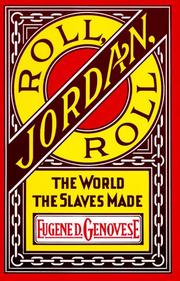
Roll, Jordan, Roll by 6584331|Eugene D. Genovese book cover

📘 Roll, Jordan, Roll

This landmark history of slavery in the South -- a winner of the Bancroft Prize -- challenged conventional views of slaves by illuminating the many forms of resistance to dehumanization that developed in slave society. Rather than emphasizing the cruelty and degradation of slavery, historian Eugene Genovese investigates the ways that slaves forced their owners to acknowledge their humanity through culture, music, and religion. Not merely passive victims, the slaves in this account actively engaged with the paternalism of slaveholding culture in ways that supported their self-respect and aspirations for freedom. Roll, Jordan, Roll covers a vast range of subjects, from slave weddings and funerals, to the language, food, clothing, and labor of slaves, and places particular emphasis on religion as both a major battleground for psychological control and a paradoxical source of spiritual strength. Displaying keen insight into the minds of both slaves and slaveholders, Roll, Jordan, Roll is a testament to the power of the human spirit under conditions of extreme oppression. - Publisher.

★★★★★★★★★★ 0.0 (0 ratings)
Similar? ✓ Yes 0 ✗ No 0
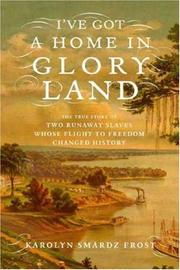
I've got a home in glory land by 6965263|Karolyn Smardz Frost book cover

📘 I've got a home in glory land

Thornton and Lucie Blackburn’s daring 1833 escape from Kentucky to Canada became a landmark case on the Underground Railroad, inspiring future fugitive‑slave legal battles and shaping Toronto’s early history.

★★★★★★★★★★ 0.0 (0 ratings)
Similar? ✓ Yes 0 ✗ No 0

Some Other Similar Books

The Promised Land: The Great Black Migration and How It Changed America by Nicholas Lemann
American Tapestry: The Story of the Black, White, and Multiracial Ancestors of Michelle Obama by Rachel L. Swarns
Black Flags: The Rise of ISIS by Joby Warrick
A People’s History of the United States by Howard Zinn
Caged Bird: A Portrait of Maya Angelou by Yannick Murphy
Lincoln and the Power of the Past by Lemay, J. J.
The Age of Lincoln by Doris Kearns Goodwin
Freedom's Dawn by James M. McPherson
American Slavery, American Freedom by Edwin S. Gaustad
Brothers and Keepers by Alex Kotlowitz

Have a similar book in mind? Let others know!

Please login to submit books!