Books like Cheap by Ellen Ruppel Shell


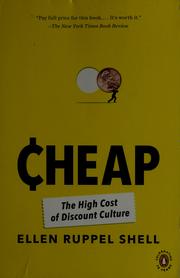
An Atlantic correspondent uncovers the true cost—in economic, political, and psychic terms—of our penchant for making and buying things as cheaply as possibleFrom the shuttered factories of the rust belt to the look-alike strip malls of the sun belt—and almost everywhere in between—America has been transformed by its relentless fixation on low price. This pervasive yet little examined obsession is arguably the most powerful and devastating market force of our time—the engine of globalization, outsourcing, planned obsolescence, and economic instability in an increasingly unsettled world.Low price is so alluring that we may have forgotten how thoroughly we once distrusted it. Ellen Ruppel Shell traces the birth of the bargain as we know it from the Industrial Revolution to the assembly line and beyond, homing in on a number of colorful characters, such as Gene Verkauf (his name is Yiddish for "to sell"), founder of E. J. Korvette, the discount chain that helped wean customers off traditional notions of value. The rise of the chain store in post-Depression America led to the extolling of convenience over quality, and big-box retailers completed the reeducation of the American consumer by making them prize low price in the way they once prized durability and craftsmanship.The effects of this insidious perceptual shift are vast: a blighted landscape, escalating debt (both personal and national), stagnating incomes, fraying communities, and a host of other socioeconomic ills. That’s a long list of charges, and it runs counter to orthodox economics which argues that low price powers productivity by stimulating a brisk free market. But Shell marshals evidence from a wide range of fields—history, sociology, marketing, psychology, even economics itself—to upend the conventional wisdom. Cheap also unveils the fascinating and unsettling illogic that underpins our bargain-hunting reflex and explains how our deep-rooted need for bargains colors every aspect of our psyches and social lives. In this myth-shattering, closely reasoned, and exhaustively reported investigation, Shell exposes the astronomically high cost of cheap.
First publish date: 2009
Subjects: Consumer behavior, Business, Nonfiction, Verbraucherverhalten, Discount houses (retail trade)
Authors: Ellen Ruppel Shell
3.8 (5 community ratings)

Cheap by Ellen Ruppel Shell

How are these books recommended?

The books recommended for Cheap by Ellen Ruppel Shell are shaped by reader interaction. Votes on how closely books relate, user ratings, and community comments all help refine these recommendations and highlight books readers genuinely find similar in theme, ideas, and overall reading experience.


Have you read any of these books?
Your votes, ratings, and comments help improve recommendations and make it easier for other readers to discover books they’ll enjoy.

Books similar to Cheap (9 similar books)

The Wealth of Nations

📘 The Wealth of Nations
 by Adam Smith

Adam Smith's The Wealth of Nations was recognized as a landmark of human thought upon its publication in 1776. As the first scientific argument for the principles of political economy, it is the point of departure for all subsequent economic thought. Smith's theories of capital accumulation, growth, and secular change, among others, continue to be influential in modern economics. This reprint of Edwin Cannan's definitive 1904 edition of The Wealth of Nations includes Cannan's famous introduction, notes, and a full index, as well as a new preface written especially for this edition by the distinguished economist George J. Stigler. Mr. Stigler's preface will be of value for anyone wishing to see the contemporary relevance of Adam Smith's thought.

4.1 (29 ratings)
Similar? ✓ Yes 0 ✗ No 0
Nudge

📘 Nudge

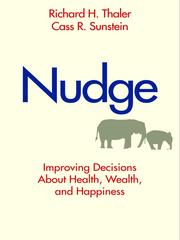
Thaler and Sunstein develop libertarian paternalism as a middle path between command-and-control and strict-neutrality choice architectures. Libertarian paternalism protects humans against their damaging psychological traits (inertia, bounded rationality, undue influence) by exploiting those habits to nudge people into making better choices.

3.7 (22 ratings)
Similar? ✓ Yes 0 ✗ No 0
The Undercover Economist

📘 The Undercover Economist

Critically acclaimed as one of the most successful economy books of all time, and a 'must-read' for those of us in the general public who want to understand how society works, but do not want this information to be conveyed in an Oxbridge multipolysyllabic tone, Tim Harford's book gives us an insight into the relevance of the economy to our everyday lives. It begins humbly with the author's relatable bemoaning of coffee and its prices, which is cleverly analogized in the simple, but brilliant and still-relevant ideas of nineteenth-century economist David Ricardo. Organized into clear chapters which target different aspects of the economy's impacts on our life, the book later progresses onto more developed concepts such as the reasons (sub-prime mortgages!) behind the banking collapse of Lehman Brothers in 2008. Written in an aware style from an economist's perspective, this book is thoroughly worthwhile reading.

4.1 (14 ratings)
Similar? ✓ Yes 0 ✗ No 0
Predictably Irrational

📘 Predictably Irrational
 by Dan Ariely

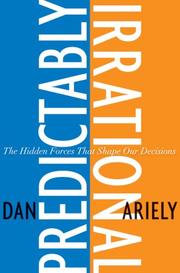
How do we think about money?What caused bankers to lose sight of the economy?What caused individuals to take on mortgages that were not within their means?What irrational forces guided our decisions?And how can we recover from an economic crisis? In this revised and expanded edition of the New York Times and Wall Street Journal bestseller Predictably Irrational, Duke University's behavioral economist Dan Ariely explores the hidden forces that shape our decisions, including some of the causes responsible for the current economic crisis. Bringing a much-needed dose of sophisticated psychological study to the realm of public policy, Ariely offers his own insights into the irrationalities of everyday life, the decisions that led us to the financial meltdown of 2008, and the general ways we get ourselves into trouble.Blending common experiences and clever experiments with groundbreaking analysis, Ariely demonstrates how expectations, emotions, social norms, and other invisible, seemingly illogical forces skew our reasoning abilities. As he explains, our reliance on standard economic theory to design personal, national, and global policies may, in fact, be dangerous. The mistakes that we make as individuals and institutions are not random, and they can aggregate in the market—with devastating results. In light of our current economic crisis, the consequences of these systematic and predictable mistakes have never been clearer.Packed with new studies and thought-provoking responses to readers' questions and comments, this revised and expanded edition of Predictably Irrational will change the way we interact with the world—from the small decisions we make in our own lives to the individual and collective choices that shape our economy.

4.3 (10 ratings)
Similar? ✓ Yes 0 ✗ No 0
Basic economics

📘 Basic economics

"Why are homeless people sleeping on the sidewalks of New York in the winter, when the abandoned apartment buildings in the city have four times as many dwelling units as there are homeless people in the city? Why are people hungry in Moscow when there are vast amounts of some of the richest farmland on the continent of Europe within easy driving distance? Why did unemployment reach 25 percent and American corporations as a whole operate in the red for two years in a row during the Great Depression of the 1930s?". "All these very different - but equally puzzling and needless - tragedies grew out of a failure to understand and apply basic economic principles. Explaining these principles for the general public in plain English, with neither graphs nor equations nor jargon, is the goal and the achievement of Basic Economics by Thomas Sowell. Professor Sowell has taught economics at leading colleges and universities across the country and now uses his years of experience to bring economics to light in a way that is both easy to absorb and hard to forget.". "His lively examples are drawn from around the world and from centuries of history, because the basic principles of economics are not limited to modern capitalist societies and apply even to situations where no money changes hands, such as caring for wounded soldiers on a battlefield. The focus of Basic Economics is not on how individuals make money but on how whole societies create prosperity or poverty for their peoples by the way they organize their economies. Prosperous countries with few natural resources, such as Japan and Switzerland, are as common as poor countries with rich resources, such as Russia or Mexico."--BOOK JACKET.

3.5 (8 ratings)
Similar? ✓ Yes 0 ✗ No 0
Buyology

📘 Buyology

How much do we know about why we buy? What truly influences our decisions in today's message-cluttered world? An eye-grabbing advertisement, a catchy slogan, an infectious jingle? Or do our buying decisions take place below the surface, so deep within our subconscious minds, we're barely aware of them?In BUYOLOGY, Lindstrom presents the astonishing findings from his groundbreaking, three-year, seven-million-dollar neuromarketing study, a cutting-edge experiment that peered inside the brains of 2,000 volunteers from all around the world as they encountered various ads, logos, commercials, brands, and products. His startling results shatter much of what we have long believed about what seduces our interest and drives us to buy. Among the questions he explores:Does sex actually sell? To what extent do people in skimpy clothing and suggestive poses persuade us to buy products? Despite government bans, does subliminal advertising still surround us -- from bars to highway billboards to supermarket shelves? Can "Cool" brands, like iPods, trigger our mating instincts? Can other senses -- smell, touch, and sound - be so powerful as to physically arouse us when we see a product? Do companies copy from the world of religion and create rituals -- like drinking a Corona with a lime -- to capture our hard-earned dollars? Filled with entertaining inside stories about how we respond to such well-known brands as Marlboro, Nokia, Calvin Klein, Ford, and American Idol, BUYOLOGY is a fascinating and shocking journey into the mind of today's consumer that will captivate anyone who's been seduced -- or turned off -- by marketers' relentless attempts to win our loyalty, our money, and our minds.

3.0 (3 ratings)
Similar? ✓ Yes 0 ✗ No 0
Spent

📘 Spent

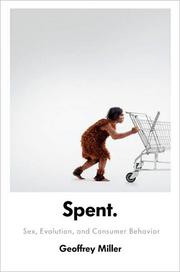
A leading evolutionary psychologist probes the hidden instincts behind our working, shopping, and spendingEvolutionary psychologythe compelling science of human naturehas clarified the prehistoric origins of human behavior and influenced many fields ranging from economics to personal relationships. In Spent Geoffrey Miller applies this revolutionary sciences principles to a new domain: the sensual wonderland of marketing and status seeking that we call American consumer culture. Starting with the basic notion that the goods and services we buy unconsciously advertise our biological potential as mates and friends, Miller examines the hidden factors that dictate our choices in everything from lipstick to cars, from the magazines we read to the music we listen to. With humor and insight, Miller analyzes an array of product choices and deciphers what our decisions say about ourselves, giving us access to a new way of understandingand improvingour behaviors. Like Freakonomics or The Tipping Point, Spent is a bold and revelatory book that illuminates the unseen logic behind the chaos of consumerism and suggests new ways we can become happier consumers and more responsible citizens.

4.5 (2 ratings)
Similar? ✓ Yes 0 ✗ No 0
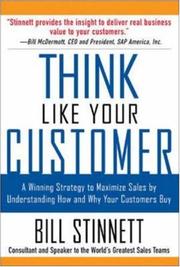
Think Like Your Customer

📘 Think Like Your Customer

How to capture customers by learning to think the way they doThe most common complaint Bill Stinnett hears from his corporate clients is that would-be vendors and suppliers "just dont understand our business." In Think Like Your Customer, Stinnett explains why the key to landing corporate customers is to learn to think about the things executives and business owners think about and understand how they make complex buying decisions.Drawing upon his years of experience as a Fortune 500 consultant, he offers sales and marketing professionals a powerful framework for understanding the inner workings of a business; knowing what motivates its executives and influences their buying decisions; identifying a company's organizational structure and decision-making psychology; and using that information to develop a winning strategy for influencing how and why the customer buys.In addition, you receive:Solid marketing insights delivered in a ...'

0.0 (0 ratings)
Similar? ✓ Yes 0 ✗ No 0
The culture code

📘 The culture code

Why are people around the world so very different? What makes us live, buy, even love as we do? The answers are in the codes.In The Culture Code, internationally revered cultural anthropologist and marketing expert Clotaire Rapaille reveals for the first time the techniques he has used to improve profitability and practices for dozens of Fortune 100 companies. His groundbreaking revelations shed light not just on business but on the way every human being acts and lives around the world. Rapaille's breakthrough notion is that we acquire a silent system of codes as we grow up within our culture. These codes--the Culture Code--are what make us American, or German, or French, and they invisibly shape how we behave in our personal lives, even when we are completely unaware of our motives. What's more, we can learn to crack the codes that guide our actions and achieve new understanding of why we do the things we do. Rapaille has used the Culture Code to help Chrysler build the PT Cruiser--the most successful American car launch in recent memory. He has used it to help Procter & Gamble design its advertising campaign for Folger's coffee -- one of the longest lasting and most successful campaigns in the annals of advertising. He has used it to help companies as diverse as GE, AT&T, Boeing, Honda, Kellogg, and L'Oreal improve their bottom line at home and overseas. And now, in The Culture Code, he uses it to reveal why Americans act distinctly like Americans, and what makes us different from the world around us. In The Culture Code, Dr. Rapaille decodes two dozen of our most fundamental archetypes--ranging from sex to money to health to America itself--to give us "a new set of glasses" with which to view our actions and motivations. Why are we so often disillusioned by love? Why is fat a solution rather than a problem? Why do we reject the notion of perfection? Why is fast food in our lives to stay? The answers are in the Codes. Understanding the Codes gives us unprecedented freedom over our lives. It lets us do business in dramatically new ways. And it finally explains why people around the world really are different, and reveals the hidden clues to understanding us all.

0.0 (0 ratings)
Similar? ✓ Yes 0 ✗ No 0

Some Other Similar Books

Naked Economics: Undressing the Dismal Science by Charles Wheelan
Freakonomics: A Rogue Economist Explores the Hidden Side of Everything by Steven D. Levitt and Stephen J. Dubner
The Price of Everything: Finding Focus in a Fouled-Up World by Eduardo Porter
The Economics of Inequality by Gordon Clark
Debt: The First 5,000 Years by David Graeber
The Spirit Level: Why More Equal Societies Almost Always Do Better by Richard Wilkinson and Kate Pickett
The Economics of Good and Evil by Tom G. Palmer

Have a similar book in mind? Let others know!

Please login to submit books!