Books like The age of unreason by Charles Brian Handy

First publish date: 1989
Authors: Charles Brian Handy
★ ★ ★ ★ ★ 0.0 (0 community ratings)

The age of unreason by Charles Brian Handy

How are these books recommended?

The books recommended for The age of unreason by Charles Brian Handy are shaped by reader interaction. Votes on how closely books relate, user ratings, and community comments all help refine these recommendations and highlight books readers genuinely find similar in theme, ideas, and overall reading experience.


Have you read any of these books?
Your votes, ratings, and comments help improve recommendations and make it easier for other readers to discover books they’ll enjoy.

Books similar to The age of unreason (11 similar books)

Thinking, fast and slow by 6390436|Daniel Kahneman book cover

πŸ“˜ Thinking, fast and slow

Daniel Kahneman's "Thinking, Fast and Slow" explains how two distinct mental systems shape our judgments and decisions, offering insights into the biases that influence everyday choices.

β˜…β˜…β˜…β˜…β˜…β˜…β˜…β˜…β˜…β˜… 4.1 (189 ratings)
Similar? ✓ Yes 0 ✗ No 0
Images of organization by 6534463|Gareth Morgan book cover

πŸ“˜ Images of organization

A foundational text arguing that all organization and management theories are built on metaphors, offering managers new lenses to understand and reshape organizational practice.

β˜…β˜…β˜…β˜…β˜…β˜…β˜…β˜…β˜…β˜… 4.5 (2 ratings)
Similar? ✓ Yes 0 ✗ No 0
Originals: How Non-Conformists Move the World by 7584134|Adam Grant book cover

πŸ“˜ Originals: How Non-Conformists Move the World
 by Adam Grant


β˜…β˜…β˜…β˜…β˜…β˜…β˜…β˜…β˜…β˜… 5.0 (1 rating)
Similar? ✓ Yes 0 ✗ No 0
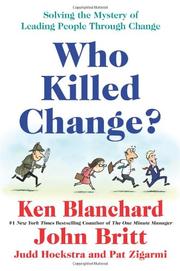
Who Killed Change? by 6916236|Ken Blanchard book cover

πŸ“˜ Who Killed Change?

Every day organizations around the world launch change initiatives--often big, expensive ones--designed to improve the status quo. Yet 50 to 70 percent fo these change efforts fail. A few perish suddenly, but many die painful, protracted deaths that drain the organizations’s resources, energy, moral.So, Who or what is killing change? That’s what you’ll find out in this delightful whodunit. The story features a Columbo-style detective named Agent who’s investigating the murder of yet another Change. One by one, Agent interviews thirteen prime suspects, including a myopic leader named Vision; a chronically tardy manager named Urgency; an executive named Communication whose laryngitis makes communication all but impossible; and several other dubious characters. The suspects are shure to sound familiar, and you’re bound to relate them to your own workplace. In the end, Agent solves the case in a way that will inspire you to become an effective Change Agent in your own organization.

β˜…β˜…β˜…β˜…β˜…β˜…β˜…β˜…β˜…β˜… 5.0 (1 rating)
Similar? ✓ Yes 0 ✗ No 0
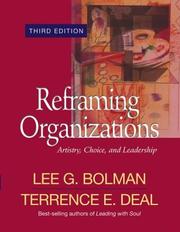
Reframing Organizations by 9760821|Lee G. Bolman book cover

πŸ“˜ Reframing Organizations

Reframing Organizations explains a practical framework that interprets workplaces through four lensesβ€”structural, human resource, political, and symbolicβ€”to help managers understand, diagnose, and improve organizational performance.

β˜…β˜…β˜…β˜…β˜…β˜…β˜…β˜…β˜…β˜… 0.0 (0 ratings)
Similar? ✓ Yes 0 ✗ No 0
Managing in a Time of Great Change by 8650470|Peter F. Drucker book cover

πŸ“˜ Managing in a Time of Great Change


β˜…β˜…β˜…β˜…β˜…β˜…β˜…β˜…β˜…β˜… 0.0 (0 ratings)
Similar? ✓ Yes 0 ✗ No 0
The change masters by 8167978|Rosabeth Moss Kanter book cover

πŸ“˜ The change masters


β˜…β˜…β˜…β˜…β˜…β˜…β˜…β˜…β˜…β˜… 0.0 (0 ratings)
Similar? ✓ Yes 0 ✗ No 0
Organizational cultures by 12690221|Diana C. Pheysey book cover

πŸ“˜ Organizational cultures

This concise new introductory text provides succinct analysis of organizational cultures and the types of change they can set in motion. 'Culture' is used in an original way to make sense of central issues of organizational behaviour.

β˜…β˜…β˜…β˜…β˜…β˜…β˜…β˜…β˜…β˜… 0.0 (0 ratings)
Similar? ✓ Yes 0 ✗ No 0
The age of paradox by 6732655|Charles Brian Handy book cover

πŸ“˜ The age of paradox

"Living with paradox is like riding a seesaw. If you know how the process works, and if the person at the other end also knows, the ride can be exhilarating. If, however, your opposite number does not understand, or willfully upsets the pattern, you can receive a very uncomfortable and unexpected shock.". As it is with seesaws, so it is with life. We live and work in an age of numbingly rapid change. If we are to cope with the turbulence of today, we must start by organizing it in our minds. Until we do, we will feel impotent, victims of events beyond our control or even our capacity to understand. As Charles Handy so eloquently explains, framing the confusion is the first step to doing something about it. In The Age of Paradox, one of the most brilliant and engaging thinkers of our day extends a guiding hand in the search for such a framework. In a book born of the compelling need to manage our lives in a sounder and more satisfying fashion, Handy ranges widely over business, family, education, citizenship, money, relationships, and myriad other subjects that touch the very core of our search for meaning. In 1989, Charles Handy's groundbreaking The Age of Unreason documented new developments in technology, global economics, and the intensifying pursuit of efficiency - and their impact on our organizations, careers, and lifestyles. Declared one of the best books of the year by Fortune and Business Week, The Age of Unreason offered profound observations about the world in which we live. Now, in this striking sequel, Handy proposes bold ideas for how individuals and organizations can navigate their way through this brave new world. Change is occurring more rapidly than ever, challenging the assumptions and traditions of previous decades. Fewer full-time positions create more flexibility - but put the responsibility on us to create job opportunities. The end of lifelong careers gives us the freedom to explore new organizations and industries - but provides us with less security and comfort. Knowledge as a commodity to be sold offers the possibility of a more egalitarian society - yet highlights the fact that few have access to good education. It is these unintended consequences of change - the paradoxes - that Handy confronts in The Age of Paradox. He argues that although the paradoxes of modern times cannot be solved, they can be managed. "There are pathways through the paradoxes if we can understand what is happening and are prepared to act differently." He shows us how we can accept and exploit the fuller responsibilities that today's workplace imposes; maintain our sense of continuity, connection, and direction; and balance our personal and professional commitments. In the same compelling style that captivated readers of The Age of Unreason, Handy describes the pathways to tomorrow.

β˜…β˜…β˜…β˜…β˜…β˜…β˜…β˜…β˜…β˜… 0.0 (0 ratings)
Similar? ✓ Yes 0 ✗ No 0
Imaginization by 6534463|Gareth Morgan book cover

πŸ“˜ Imaginization


β˜…β˜…β˜…β˜…β˜…β˜…β˜…β˜…β˜…β˜… 0.0 (0 ratings)
Similar? ✓ Yes 0 ✗ No 0
Managing transitions by 6805647|Bridges, William book cover

πŸ“˜ Managing transitions

A practical guide for managers on how to lead people through workplace change, offering clear purpose, planning, and roles to reduce disruption and maintain morale during layoffs, mergers, and restructuring.

β˜…β˜…β˜…β˜…β˜…β˜…β˜…β˜…β˜…β˜… 0.0 (0 ratings)
Similar? ✓ Yes 0 ✗ No 0

Some Other Similar Books

The Black Swan: The Impact of the Highly Improbable by Nassim Nicholas Taleb
Antifragile: Things That Gain from Disorder by Nassim Nicholas Taleb
The Innovator's Dilemma: When New Technologies Cause Great Firms to Fail by Clayton M. Christensen
Drive: The Surprising Truth About What Motivates Us by Daniel H. Pink
The Signal and the Noise: Why So Many Predictions Fail β€” but Some Don’t by Nate Silver
Out of Our Minds: Learning to be Creative by Sir Ken Robinson
Lying: The Sequel by Sam Harris
The Wisdom of Crowds by James Surowiecki

Have a similar book in mind? Let others know!

Please login to submit books!