Books like Does The Richness Of The Few Benefit Us All by Zygmunt Bauman


It is commonly assumed that the best way to help the poor out of their misery is to allow the rich to get richer, that if the rich pay less taxes then all the rest of us will be better off, and that in the final analysis the richness of the few benefits us all. And yet these commonly held beliefs are flatly contradicted by our daily experience, an abundance of research findings and, indeed, logic. Such bizarre discrepancy between hard facts and popular opinions makes one pause and ask: why are these opinions so widespread and resistant to accumulated and fast-growing evidence to the contrary?
First publish date: 2013
Authors: Zygmunt Bauman
★ ★ ★ ★ ★ 4.0 (1 community ratings)

Does The Richness Of The Few Benefit Us All by Zygmunt Bauman

How are these books recommended?

The books recommended for Does The Richness Of The Few Benefit Us All by Zygmunt Bauman are shaped by reader interaction. Votes on how closely books relate, user ratings, and community comments all help refine these recommendations and highlight books readers genuinely find similar in theme, ideas, and overall reading experience.


Have you read any of these books?
Your votes, ratings, and comments help improve recommendations and make it easier for other readers to discover books they’ll enjoy.

Books similar to Does The Richness Of The Few Benefit Us All (9 similar books)

The New Jim Crow by 11061674|Michelle Alexander book cover

πŸ“˜ The New Jim Crow

Michelle Alexander argues that mass incarceration has become a contemporary system of racial control, striking disproportionately at African‑American men and other disadvantaged groups while perpetuating a new form of Jim Crow.

β˜…β˜…β˜…β˜…β˜…β˜…β˜…β˜…β˜…β˜… 3.4 (14 ratings)
Similar? ✓ Yes 0 ✗ No 0
The Age of Surveillance Capitalism by 857852|Shoshana Zuboff book cover

πŸ“˜ The Age of Surveillance Capitalism

Shoshana Zuboff explains how digital data is turned into a new market formβ€”surveillance capitalismβ€”where corporations predict and shape behavior for profit, reshaping power, privacy, and democracy in the digital age.

β˜…β˜…β˜…β˜…β˜…β˜…β˜…β˜…β˜…β˜… 3.9 (11 ratings)
Similar? ✓ Yes 0 ✗ No 0
The racial contract by 8231764|Charles W. Mills book cover

πŸ“˜ The racial contract


β˜…β˜…β˜…β˜…β˜…β˜…β˜…β˜…β˜…β˜… 3.5 (2 ratings)
Similar? ✓ Yes 0 ✗ No 0
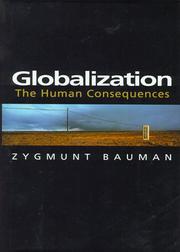
Globalization by 8044937|Zygmunt Bauman book cover

πŸ“˜ Globalization

i required Full Book for reading Thanks

β˜…β˜…β˜…β˜…β˜…β˜…β˜…β˜…β˜…β˜… 5.0 (1 rating)
Similar? ✓ Yes 0 ✗ No 0
Modernity and ambivalence by 8044937|Zygmunt Bauman book cover

πŸ“˜ Modernity and ambivalence


β˜…β˜…β˜…β˜…β˜…β˜…β˜…β˜…β˜…β˜… 0.0 (0 ratings)
Similar? ✓ Yes 0 ✗ No 0
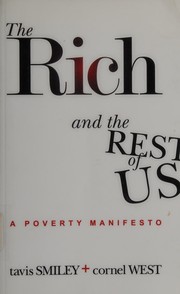
The rich and the rest of us by 7492289|Tavis Smiley book cover

πŸ“˜ The rich and the rest of us

Explores the real nature of poverty in America and proposes realistic policy solutions to eliminate it today.

β˜…β˜…β˜…β˜…β˜…β˜…β˜…β˜…β˜…β˜… 0.0 (0 ratings)
Similar? ✓ Yes 0 ✗ No 0
The divide by 12048583|Jason Hickel book cover

πŸ“˜ The divide

"More than four billion people--some 60 percent of humanity--live in debilitating poverty, on less than $5 per day. The standard narrative tells us this crisis is a natural phenomenon, having to do with climate, geography, and culture. It tells us all we have to do is give aid to help poor countries up the development ladder. If poor countries would only adopt the right institutions and economic policies, they could join the ranks of the rich world. Anthropologist Jason Hickel argues that this story ignores the broader political forces at play. Global poverty--and the growing inequality between the rich countries of Europe and North America and the poor ones of Africa, Asia, and South America--has come about because the global economy has been designed over the course of five centuries to favor the interests of the most powerful nations. Global inequality is not natural, inevitable, or accidental. To close the divide, Hickel proposes dramatic action rooted in real justice: abolishing debt burdens in the global South, democratizing the institutions of global governance, and rolling out an international minimum wage, among other steps. Only then will we have a chance at a world built on equal footing."--Jacket flap.

β˜…β˜…β˜…β˜…β˜…β˜…β˜…β˜…β˜…β˜… 0.0 (0 ratings)
Similar? ✓ Yes 0 ✗ No 0
The Ethics of What We Eat by 8672207|Jim Mason book cover

πŸ“˜ The Ethics of What We Eat
 by Jim Mason

*from the publisher:* Peter Singer, the groundbreaking ethicist whom The New Yorker calls the most influential philosopher alive teams up again with Jim Mason, his coauthor on the acclaimed Animal Factories, to set their critical sights on the food we buy and eat: where it comes from, how it is produced, and whether it was raised humanely. The Ethics of What We Eat explores the impact our food choices have on humans, animals, and the environment. Recognizing that not all of us will become vegetarians, Singer and Mason offer ways to make healthful, humane food choices. As they point out: You can be ethical without being fanatical. Praise β€œAn absolutely indispensable book for anyone who thinks about what they eat … I cannot recommend it highly enough.” β€”Jeffrey Moussaieff Masson, author of When Elephants Weep and Raising the Peaceable Kingdom β€œ. . . vital, urgent, and disturbing.” β€”Dorothy Kalins, New York Times β€œ. . . clear and persuasive.” β€”Susan Salter Reynolds, Los Angeles Times β€œA no-holds-barred treatise on ethical consumption.” β€”Publishers Weekly

β˜…β˜…β˜…β˜…β˜…β˜…β˜…β˜…β˜…β˜… 0.0 (0 ratings)
Similar? ✓ Yes 0 ✗ No 0
Liquid modernity by 8044937|Zygmunt Bauman book cover

πŸ“˜ Liquid modernity


β˜…β˜…β˜…β˜…β˜…β˜…β˜…β˜…β˜…β˜… 0.0 (0 ratings)
Similar? ✓ Yes 0 ✗ No 0

Some Other Similar Books

The Society of the Spectacle by Guy Debord
The Precariat: The New Dangerous Class by Guy Standing
Capital in the Twenty-First Century by Thomas Piketty
The Power of Alone by Bruno S. Frey
Post capitalism: A Guide to Our Future by Paul Mason

Have a similar book in mind? Let others know!

Please login to submit books!