Books like How Brains Think by William H. Calvin

First publish date: 1996
Genre: Psychology/Cognitive Psychology
Authors: William H. Calvin
★ ★ ★ ★ ★ 4.5 (2 community ratings)

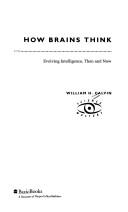
How Brains Think by William H. Calvin

How are these books recommended?

The books recommended for How Brains Think by William H. Calvin are shaped by reader interaction. Votes on how closely books relate, user ratings, and community comments all help refine these recommendations and highlight books readers genuinely find similar in theme, ideas, and overall reading experience.


Have you read any of these books?
Your votes, ratings, and comments help improve recommendations and make it easier for other readers to discover books they’ll enjoy.

Books similar to How Brains Think (13 similar books)

Thinking, fast and slow by 6390436|Daniel Kahneman book cover

πŸ“˜ Thinking, fast and slow

Daniel Kahneman's "Thinking, Fast and Slow" explains how two distinct mental systems shape our judgments and decisions, offering insights into the biases that influence everyday choices.

β˜…β˜…β˜…β˜…β˜…β˜…β˜…β˜…β˜…β˜… 4.1 (189 ratings)
Similar? ✓ Yes 0 ✗ No 0
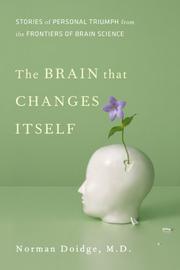
The Brain That Changes Itself by 7038154|Norman Doidge book cover

πŸ“˜ The Brain That Changes Itself

Explores the groundbreaking science of neuroplasticity, showing how the brain can recover from injury, learn new skills, and even rewire itself to overcome long‑standing mental limits.

β˜…β˜…β˜…β˜…β˜…β˜…β˜…β˜…β˜…β˜… 3.0 (9 ratings)
Similar? ✓ Yes 0 ✗ No 0
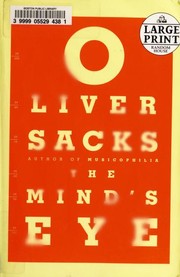
The Mind's Eye by 6502167|Oliver Sacks book cover

πŸ“˜ The Mind's Eye

Oliver Sacks weaves intimate case studies and personal anecdotes to explore how the brain perceives, interprets, and adapts to the world of sight, revealing the astonishing resilience of human cognition.

β˜…β˜…β˜…β˜…β˜…β˜…β˜…β˜…β˜…β˜… 4.4 (5 ratings)
Similar? ✓ Yes 0 ✗ No 0
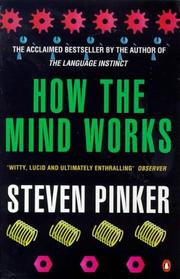
How the Mind Works by 7291571|Steven Pinker book cover

πŸ“˜ How the Mind Works

Steven Pinker’s acclaimed book offers an erudite exploration of the human mind, tracing its computational and evolutionary roots while examining how we see, think, feel, interact, and pursue art, religion, and philosophy.

β˜…β˜…β˜…β˜…β˜…β˜…β˜…β˜…β˜…β˜… 4.0 (2 ratings)
Similar? ✓ Yes 0 ✗ No 0
The ascent of mind by 9624106|William H. Calvin book cover

πŸ“˜ The ascent of mind


β˜…β˜…β˜…β˜…β˜…β˜…β˜…β˜…β˜…β˜… 4.0 (1 rating)
Similar? ✓ Yes 0 ✗ No 0
The mind and the brain by 6921291|Jeffrey M. Schwartz book cover

πŸ“˜ The mind and the brain


β˜…β˜…β˜…β˜…β˜…β˜…β˜…β˜…β˜…β˜… 0.0 (0 ratings)
Similar? ✓ Yes 0 ✗ No 0
A Natural History Of Human Thinking by 7080964|Michael Tomasello book cover

πŸ“˜ A Natural History Of Human Thinking


β˜…β˜…β˜…β˜…β˜…β˜…β˜…β˜…β˜…β˜… 0.0 (0 ratings)
Similar? ✓ Yes 0 ✗ No 0
Symmetry, causality, mind by 12030042|Michael Leyton book cover

πŸ“˜ Symmetry, causality, mind


β˜…β˜…β˜…β˜…β˜…β˜…β˜…β˜…β˜…β˜… 0.0 (0 ratings)
Similar? ✓ Yes 0 ✗ No 0
International Library of Psychology by 6984093|Routledge book cover

πŸ“˜ International Library of Psychology
 by Routledge


β˜…β˜…β˜…β˜…β˜…β˜…β˜…β˜…β˜…β˜… 0.0 (0 ratings)
Similar? ✓ Yes 0 ✗ No 0
The Emotional Brain by 7052618|Joseph Ledoux book cover

πŸ“˜ The Emotional Brain

What happens in our brains to make us feel fear, love, hate, anger, joy? do we control our emotions, or do they control us? Do animals have emotions? How can traumatic experiences in early childhood influence adult behavior, even though we have no conscious memory of them? In The Emotional Brain, Joseph LeDoux investigates the origins of human emotions and explains that many exist as part of complex neural systems that evolved to enable us to survive. Unlike conscious feelings, emotions originate in the brain at a much deeper level, says LeDoux, a leading authority in the field of neural science and one of the principal researchers profiled in Daniel Goleman's Emotional Intelligence. In this provocative book, LeDoux explores the underlying brain mechanisms responsible for our emotions, mechanisms that are only now being revealed. The Emotional Brain presents some fascinating findings about our familiar yet little understood emotions. For example, our brains can detect danger before we even experience the feeling of being afraid. The brain also begins to initiate physical responses (heart palpitations, sweaty palms, muscle tension) before we become aware of an associated feeling of fear. Conscious feelings, says LeDoux, are somewhat irrelevant to the way the emotional brain works. He points out that emotional responses are hard-wired into the brain's circuitry, but the things that make us emotional are learned through experience. And this may be the key to understanding, even changing, our emotional makeup. Many common psychiatric problems - such as phobias or posttraumatic stress disorder - involve malfunctions in the way emotion systems learn and remember. Understanding how these mechanisms normally work will have important consequences for how we view ourselves and how we treat emotional disorders.

β˜…β˜…β˜…β˜…β˜…β˜…β˜…β˜…β˜…β˜… 0.0 (0 ratings)
Similar? ✓ Yes 0 ✗ No 0
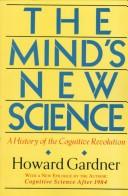
The mind's new science by 7276864|Howard Gardner book cover

πŸ“˜ The mind's new science


β˜…β˜…β˜…β˜…β˜…β˜…β˜…β˜…β˜…β˜… 0.0 (0 ratings)
Similar? ✓ Yes 0 ✗ No 0
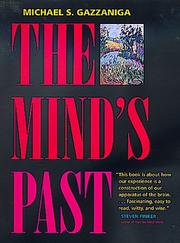
The mind's past by 8312127|Gazzaniga, Michael S. book cover

πŸ“˜ The mind's past

The mind’s Past explores how the brain automatically constructs narratives, revealing the fallibility of memory, perception, and self‑hood and illuminating the evolutionary roots of human consciousness.

β˜…β˜…β˜…β˜…β˜…β˜…β˜…β˜…β˜…β˜… 0.0 (0 ratings)
Similar? ✓ Yes 0 ✗ No 0
Predictive Mind by 12412076|Jakob Hohwy book cover

πŸ“˜ Predictive Mind

A new theory is taking hold in neuroscience. It is the theory that the brain is essentially a hypothesis-testing mechanism, one that attempts to minimise the error of its predictions about the sensory input it receives from the world. It is an attractive theory because powerful theoretical arguments support it, and yet it is at heart stunningly simple. Jakob Hohwy explains and explores this theory from the perspective of cognitive science and philosophy. The key argument throughout The Predictive Mind is that the mechanism explains the rich, deep, and multifaceted character of our conscious perception. It also gives a unified account of how perception is sculpted by attention, and how it depends on action. The mind is revealed as having a fragile and indirect relation to the world. Though we are deeply in tune with the world we are also strangely distanced from it. The first part of the book sets out how the theory enables rich, layered perception. The theory's probabilistic and statistical foundations are explained using examples from empirical research and analogies to different forms of inference. The second part uses the simple mechanism in an explanation of problematic cases of how we manage to represent, and sometimes misrepresent, the world in health as well as in mental illness. The third part looks into the mind, and shows how the theory accounts for attention, conscious unity, introspection, self and the privacy of our mental world. -- Provided by publisher.

β˜…β˜…β˜…β˜…β˜…β˜…β˜…β˜…β˜…β˜… 0.0 (0 ratings)
Similar? ✓ Yes 0 ✗ No 0

Some Other Similar Books

The Man Who Mistook His Wife for a Hat by Oliver Sacks
Incognito: The Secret Lives of the Brain by David Eagleman
Principles of Neural Science by Eric Kandel
The Tell-Tale Brain by V.S. Ramachandran
How the Brain Works by Steven Pinker
The Cognitive Neurosciences by Michael S. Gazzaniga
The Tell-Tale Brain: A Neuroscientist's Quest for What Makes Us Human by V.S. Ramachandran
Conscious: A Brief Guide to the Fundamental Mystery of the Mind by Annaka Harris
The Brain That Changes Itself: Stories of Personal Triumph from the Frontiers of Brain Science by Norman Doidge
The Master and His Emissary: The Divided Brain and the Making of the Western World by Iain McGilchrist
The Cognitive Neurosciences by Michael S. Gazzaniga
The Emotional Brain: The Mysterious Underpinnings of Emotional Life by Joseph LeDoux
Searching for Memory: The Brain, the Mind, and the Past by Daniel L. Schacter

Have a similar book in mind? Let others know!

Please login to submit books!