Books like Energy at the Crossroads by Vaclav Smil

First publish date: November 1, 2003
Authors: Vaclav Smil
★ ★ ★ ★ ★ 4.0 (1 community ratings)

Energy at the Crossroads by Vaclav Smil

How are these books recommended?

The books recommended for Energy at the Crossroads by Vaclav Smil are shaped by reader interaction. Votes on how closely books relate, user ratings, and community comments all help refine these recommendations and highlight books readers genuinely find similar in theme, ideas, and overall reading experience.


Have you read any of these books?
Your votes, ratings, and comments help improve recommendations and make it easier for other readers to discover books they’ll enjoy.

Books similar to Energy at the Crossroads (10 similar books)

Sustainable Energy - Without the Hot Air by 11556569|David J.C. MacKay book cover

πŸ“˜ Sustainable Energy - Without the Hot Air

An authoritative examination of the global sustainable energy crisis, detailing how energy consumption figures are estimated, the factors that distort them, and the renewable alternatives that offer viable solutions.

β˜…β˜…β˜…β˜…β˜…β˜…β˜…β˜…β˜…β˜… 5.0 (3 ratings)
Similar? ✓ Yes 0 ✗ No 0
Energy in world history by 6550590|Vaclav Smil book cover

πŸ“˜ Energy in world history

A sweeping examination of how every human activity, from foraging to modern industry, depends on energy and how shifts in energy sources have shaped societies across history.

β˜…β˜…β˜…β˜…β˜…β˜…β˜…β˜…β˜…β˜… 3.7 (3 ratings)
Similar? ✓ Yes 0 ✗ No 0
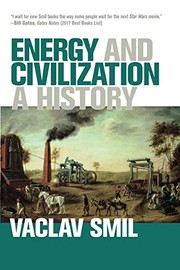
Energy and Civilization by 6550590|Vaclav Smil book cover

πŸ“˜ Energy and Civilization


β˜…β˜…β˜…β˜…β˜…β˜…β˜…β˜…β˜…β˜… 4.0 (1 rating)
Similar? ✓ Yes 0 ✗ No 0
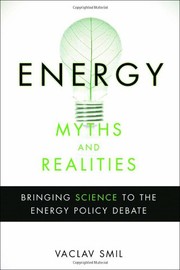
Energy myths and realities by 6550590|Vaclav Smil book cover

πŸ“˜ Energy myths and realities

MYTH: New energy sources and technical innovations will eliminate the need for fossil fuels within a few decades. REALITY: Comprehensive energy transitions take several generations. MYTH: Carbon sequestration (that is, capturing CO2 emissions from the atmosphere and storing it) is the solution to global climate change. REALITY: Because of its costs, technical challenges, and problems with social acceptance, carbon sequestration will not be able to prevent further substantial rise in carbon emissions. MYTH: Electric cars will replace conventional cars in the near future. REALITY: Electric cars are expensive, their adoption rate will be slow, and internal combustion engines will dominate the market for decades to come. These are just a few of the misconceptions about the future of global energy often presented as facts in everyday political discourse, explains energy scientist Vaclav Smil. In his just-published Energy Myths and Realities: Bringing Science to the Energy Policy Debate (AEI Press, 2010), Smil warns that while the propagation of these incorrect facts appears harmless, it is in fact hampering the development of effective new energy policies and wasting time and money which could be better used in pursuit of a constructive, scientific approach to the global energy challenge. Among the many popular misconceptions about energy that Smil deconstructs: The world will soon run out of oil. Although the share of conventional oil in the global energy supply will gradually decrease, liquid hydrocarbons will remain a major source of energy for decades to come. Large-scale nuclear energy adoption will solve our energy challenge. No rational long-range energy plan should exclude the nuclear option, but past experience with commercial nuclear generation dictates a great deal of caution: We must take into account irrational risk perceptions, dangers of nuclear proliferation, and the need for selection and maintenance of permanent disposal sites for radioactive wastes. Ethanol will replace gasoline as a significant source of automotive fuel. Corn-derived ethanol can provide only a relatively small share of fuel needs. Dramatically scaling up ethanol production would cause widespread environmental degradation. Wind power will soon become the world’s leading source of electricity. While wind-powered electricity is a welcome option for large-scale commercial energy con-version, current short-term expectations significantly exaggerate its likely contribution. Natural wind variability, uneven distribution of windy regions, low power density of wind-driven generation, and lack of infrastructure make wind power an inefficient large-scale energy source. In Energy Myths and Realities, Vaclav Smil cautions the public to be wary of exaggerated claims and impossible promises. He explains that any global energy transition will be prolonged and expensive and will hinge on the development of an extensive new infrastructure. Smil adds that traditional energy sources and established energy con-versions are persistent and adaptable enough to see the world through that transition. In other words, before we can create sound energy policies for the future, the world must renounce the many popular myths that cloud our judgment and impede true progress. - Publisher.

β˜…β˜…β˜…β˜…β˜…β˜…β˜…β˜…β˜…β˜… 4.0 (1 rating)
Similar? ✓ Yes 0 ✗ No 0
The birth of energy by 12015389|Cara New Daggett book cover

πŸ“˜ The birth of energy

"In The Birth of Energy Cara New Daggett traces the genealogy of contemporary notions of energy back to the nineteenth-century science of thermodynamics to challenge the underlying logic that informs today's uses of energy. These early resource-based concepts of power first emerged during the Industrial Revolution and were tightly bound to Western capitalist domination and the politics of industrialized work. As Daggett shows, thermodynamics was deployed as an imperial science to govern fossil fuel use, labor, and colonial expansion, in part through a hierarchical ordering of humans and nonhumans. By systematically excavating the historical connection between energy and work, Daggett argues that only by transforming the politics of work--most notably, the veneration of waged work--will we be able to confront the Anthropocene's energy problem. Substituting one source of energy for another will not ensure a habitable planet; rather, the concepts of energy and work themselves must be decoupled"---- Provided by publisher.

β˜…β˜…β˜…β˜…β˜…β˜…β˜…β˜…β˜…β˜… 0.0 (0 ratings)
Similar? ✓ Yes 0 ✗ No 0
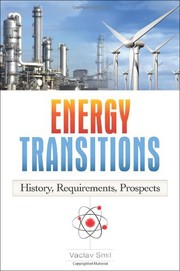
Energy transitions by 6550590|Vaclav Smil book cover

πŸ“˜ Energy transitions

Energy Transitions explores the long history of global energy sources, challenging common myths about coal, oil, and gas, and argues that moving to a non‑fossil, carbon‑neutral future will take decades, not years.

β˜…β˜…β˜…β˜…β˜…β˜…β˜…β˜…β˜…β˜… 0.0 (0 ratings)
Similar? ✓ Yes 0 ✗ No 0
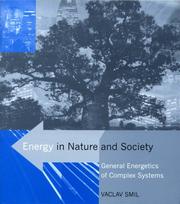
Energy in Nature and Society by 6550590|Vaclav Smil book cover

πŸ“˜ Energy in Nature and Society


β˜…β˜…β˜…β˜…β˜…β˜…β˜…β˜…β˜…β˜… 0.0 (0 ratings)
Similar? ✓ Yes 0 ✗ No 0
Energy by 6550590|Vaclav Smil book cover

πŸ“˜ Energy

Vaclav Smil explores the fundamental science of energy, its role in Earth’s evolution, human physiology, and climate change, offering clear insights into how our everyday choices impact global warming and sustainability.

β˜…β˜…β˜…β˜…β˜…β˜…β˜…β˜…β˜…β˜… 0.0 (0 ratings)
Similar? ✓ Yes 0 ✗ No 0
Energies by 6550590|Vaclav Smil book cover

πŸ“˜ Energies


β˜…β˜…β˜…β˜…β˜…β˜…β˜…β˜…β˜…β˜… 0.0 (0 ratings)
Similar? ✓ Yes 0 ✗ No 0
1493 for Young People by 11612353|Charles Mann book cover

πŸ“˜ 1493 for Young People

"1493 for Young People by Charles C. Mann tells the gripping story of globalization through travel, trade, colonization, and migration from its beginnings in the fifteenth century to the present. How did the lowly potato plant feed the poor across Europe and then cause the deaths of millions? How did the rubber plant enable industrialization? What is the connection between malaria, slavery, and the outcome of the American Revolution? How did the fabled silver mountain of sixteenth-century Bolivia fund economic development in the flood-prone plains of rural China and the wars of the Spanish Empire? Here is the story of how sometimes the greatest leaps also posed the greatest threats to human advancement. Mann's language is as plainspoken and clear as it is provocative, his research and erudition vast, his conclusions ones that will stimulate the critical thinking of young people. 1493 for Young People provides tools for wrestling with the most pressing issues of today, and will empower young people as they struggle with a changing world"--

β˜…β˜…β˜…β˜…β˜…β˜…β˜…β˜…β˜…β˜… 0.0 (0 ratings)
Similar? ✓ Yes 0 ✗ No 0

Some Other Similar Books

Energy: What Everyone Needs to Know by Charles A. S. Coldington
The Future of Energy: Earth, Wind, and Fire by Saul Griffith
The Grid: The Fraying Wires Between Americans and Our Energy Future by Gretchen Bakke
Energy and Civilization: A History by Vaclav Smil
Energy Revolutions: The Coming Shift to Renewable Power by Michael P. Ramirez
The Solar Economy: Already Choosing the Future by Gregor Czisch
Renewable Energy: Its Physics, Engineering, Environmental Impacts, Economics & Planning by Bent SΓΈrensen
The Reckoning: Energy and the Fate of the World by George Monbiot

Have a similar book in mind? Let others know!

Please login to submit books!