Books like The Why Axis by Uri Gneezy


A colorful examination of why people do what they do--observed through the lens of incentives that can spur people to achieve--as reviewed by two superstars revolutionizing economics.
First publish date: 2013
Authors: Uri Gneezy
★ ★ ★ ★ ★ 0.0 (0 community ratings)

The Why Axis by Uri Gneezy

How are these books recommended?

The books recommended for The Why Axis by Uri Gneezy are shaped by reader interaction. Votes on how closely books relate, user ratings, and community comments all help refine these recommendations and highlight books readers genuinely find similar in theme, ideas, and overall reading experience.


Have you read any of these books?
Your votes, ratings, and comments help improve recommendations and make it easier for other readers to discover books they’ll enjoy.

Books similar to The Why Axis (8 similar books)

Thinking, fast and slow by 6390436|Daniel Kahneman book cover

πŸ“˜ Thinking, fast and slow

Daniel Kahneman's "Thinking, Fast and Slow" explains how two distinct mental systems shape our judgments and decisions, offering insights into the biases that influence everyday choices.

β˜…β˜…β˜…β˜…β˜…β˜…β˜…β˜…β˜…β˜… 4.1 (189 ratings)
Similar? ✓ Yes 0 ✗ No 0
Superfreakonomics by 4913557|Steven D. Levitt book cover

πŸ“˜ Superfreakonomics

Superfreakonomics, the sequel to the bestseller Freakonomics, explores economics through unconventional questions, blending finance, psychology, and sociology to reveal hidden incentives that shape everyday life.

β˜…β˜…β˜…β˜…β˜…β˜…β˜…β˜…β˜…β˜… 4.0 (26 ratings)
Similar? ✓ Yes 0 ✗ No 0
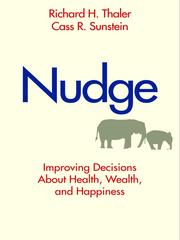
Nudge by 11561596|Richard H. Thaler book cover

πŸ“˜ Nudge

Nudge offers a practical guide to libertarian paternalism, showing how subtle design changes can help people make wiser decisions without restricting freedom.

β˜…β˜…β˜…β˜…β˜…β˜…β˜…β˜…β˜…β˜… 3.7 (22 ratings)
Similar? ✓ Yes 0 ✗ No 0
The art of thinking clearly by 9275146|Rolf Dobelli book cover

πŸ“˜ The art of thinking clearly

Rolf Dobelli presents 99 concise chapters that explain everyday cognitive biases, showing how awareness can sharpen decision‑making at work and in life.

β˜…β˜…β˜…β˜…β˜…β˜…β˜…β˜…β˜…β˜… 4.2 (18 ratings)
Similar? ✓ Yes 0 ✗ No 0
Predictably Irrational by 7667646|Dan Ariely book cover

πŸ“˜ Predictably Irrational
 by Dan Ariely

Explore how hidden psychological forces shape our economic decisions, from personal finance to the 2008 crisis, with Dan Ariely’s behavioral economics insights.

β˜…β˜…β˜…β˜…β˜…β˜…β˜…β˜…β˜…β˜… 4.3 (10 ratings)
Similar? ✓ Yes 0 ✗ No 0
Success and luck by 6718439|Robert H. Frank book cover

πŸ“˜ Success and luck

Robert H. Frank examines how unexpected chance and psychological factors shape success, arguing that a deeper grasp of luck can guide more equitable economic and social systems.

β˜…β˜…β˜…β˜…β˜…β˜…β˜…β˜…β˜…β˜… 2.0 (1 rating)
Similar? ✓ Yes 0 ✗ No 0
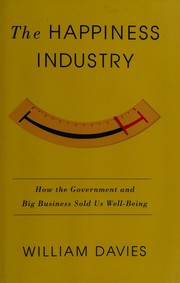
The happiness industry by 11885789|William Davies book cover

πŸ“˜ The happiness industry

"In winter 2014, a Tibetan monk lectured the world leaders gathered at Davos on the importance of Happiness. The recent DSM-5, the manual of all diagnosable mental illnesses, for the first time included shyness and grief as treatable diseases. Happiness has become the biggest idea of our age, a new religion dedicated to well-being. In this brilliant dissection of our times, political economist William Davies shows how this philosophy, first pronounced by Jeremy Bentham in the 1780s, has dominated the political debates that have delivered neoliberalism. From a history of business strategies of how to get the best out of employees, to the increased level of surveillance measuring every aspect of our lives; from why experts prefer to measure the chemical in the brain than ask you how you are feeling, to why Freakonomics tells us less about the way people behave than expected, The Happiness Industry is an essential guide to the marketization of modern life. Davies shows that the science of happiness is less a science than an extension of hyper-capitalism"-- "When Jeremy Bentham proposed that government should run 'for the greatest benefit of the greatest number,' he posed two problems: what is happiness and how can we measure it? With the rise of positive psychology, freakonomics, behavioural economics, endless TED talks, the happiness manifesto, the Happiness Index, the tyranny of customer service, the emergence of the quantified self movement, we have become a culture obsessed with measuring our supposed satisfaction. In anecdotes that include the Buddhist monk who lectured the business leaders of the world at Davos, why the Nike Fuel band makes us more worried about our fitness, how parts of our city are being rebuilt in response to scientific studies of oxytocin levels in our brain, and what a survey from Radisson hotels--that proves that 62% of us believe that well-being is a luxury worth more than work or a good relationship--really tells us about the way we measure ourselves, and continually find ourselves wanting"--

β˜…β˜…β˜…β˜…β˜…β˜…β˜…β˜…β˜…β˜… 4.0 (1 rating)
Similar? ✓ Yes 0 ✗ No 0
The Logic of Scientific Discovery by 6724044|Karl Popper book cover

πŸ“˜ The Logic of Scientific Discovery

When first published in 1959, this book revolutionized contemporary thinking about science and knowledge. It remains the one of the most widely read books about science to come out of the twentieth century.

β˜…β˜…β˜…β˜…β˜…β˜…β˜…β˜…β˜…β˜… 0.0 (0 ratings)
Similar? ✓ Yes 0 ✗ No 0

Some Other Similar Books

Nudge: Improving Decisions About Health, Wealth, and Happiness by Richard H. Thaler, Cass R. Sunstein
Misbehaving: The Making of Behavioral Economics by Richard H. Thaler
Predictably Irrational: The Hidden Forces That Shape Our Decisions by Dan Ariely
Scarcity: Why Having Too Little Means So Much by Sendhil Mullainathan, Eldar Shafir
Freakonomics: A Rogue Economist Explores the Hidden Side of Everything by Steven D. Levitt, Stephen J. Dubner
Behavioral Economics: When Psychology and Economics Collide by Scott Huettel, Tomer Ullman

Have a similar book in mind? Let others know!

Please login to submit books!