Books like Understanding computers and cognition by Terry Winograd


First publish date: 1990
Authors: Terry Winograd
★ ★ ★ ★ ★ 0.0 (0 community ratings)

Understanding computers and cognition by Terry Winograd

How are these books recommended?

The books recommended for Understanding computers and cognition by Terry Winograd are shaped by reader interaction. Votes on how closely books relate, user ratings, and community comments all help refine these recommendations and highlight books readers genuinely find similar in theme, ideas, and overall reading experience.


Have you read any of these books?
Your votes, ratings, and comments help improve recommendations and make it easier for other readers to discover books they’ll enjoy.

Books similar to Understanding computers and cognition (5 similar books)
The society of mind by 834497|Marvin Minsky book cover

πŸ“˜ The society of mind

Marvin Minsky presents an interconnected framework that explains human cognition and its implications for artificial intelligence.

β˜…β˜…β˜…β˜…β˜…β˜…β˜…β˜…β˜…β˜… 3.8 (5 ratings)
Similar? ✓ Yes 0 ✗ No 0
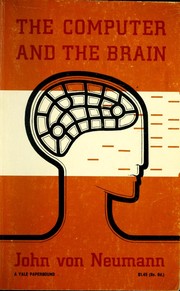
The computer and the brain by 2363385|John Von Neumann book cover

πŸ“˜ The computer and the brain

An exploration of the parallels between computer systems and the nervous system, focusing on cybernetic principles and neural networks.

β˜…β˜…β˜…β˜…β˜…β˜…β˜…β˜…β˜…β˜… 4.0 (3 ratings)
Similar? ✓ Yes 0 ✗ No 0
Handbook of data structures and applications by 10428917|Dinesh P. Mehta book cover

πŸ“˜ Handbook of data structures and applications


β˜…β˜…β˜…β˜…β˜…β˜…β˜…β˜…β˜…β˜… 0.0 (0 ratings)
Similar? ✓ Yes 0 ✗ No 0
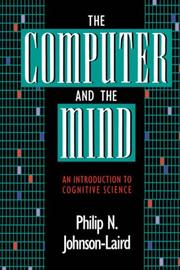
The computer and the mind by 12395327|P. N. Johnson-Laird book cover

πŸ“˜ The computer and the mind


β˜…β˜…β˜…β˜…β˜…β˜…β˜…β˜…β˜…β˜… 0.0 (0 ratings)
Similar? ✓ Yes 0 ✗ No 0
Cognition in the Wild by 10144732|Edwin Hutchins book cover

πŸ“˜ Cognition in the Wild

Edwin Hutchins combines his background as an anthropologist and an open-ocean racing sailor and navigator in this account of how anthropological methods can be combined with cognitive theory to produce a new reading of cognitive science. His theoretical insights are grounded in an extended analysis of ship navigation - its computational basis, its historical roots, its social organization, and the details of its implementation in actual practice aboard large ships. The result is an unusual interdisciplinary approach to cognition in culturally constituted activities outside the laboratory - "in the wild.". Hutchins examines a set of phenomena that have fallen between the established disciplines of psychology and anthropology, bringing to light a new set of relationships between culture and cognition. The standard view is that culture affects the cognition of individuals. Hutchins argues instead that cultural activity systems have cognitive properties of their own that differ from the cognitive properties of the individuals who participate in them. Each action for bringing a large naval vessel into port, for example, is informed by culture; thus the navigation team can be seen as a cognitive and computational system. Introducing life in the Navy and work on the bridge, Hutchins makes a clear distinction between the cognitive properties of an individual and the cognitive properties of a system. In striking contrast to the usual laboratory tasks of research in cognitive science, he adopts David Marr's paradigm and applies the principal metaphor of cognitive science - cognition as computation - to the navigation task. After comparing modern Western navigation with the method practiced in Micronesia, Hutchins explores the computational and cognitive properties of systems that involve multiple individuals. He then turns to an analysis of learning or change in the organization of cognitive systems at several scales. . Hutchins's conclusion illustrates the costs of ignoring the cultural nature of cognition and points to ways in which contemporary cognitive science can be transformed by new meanings and interpretations.

β˜…β˜…β˜…β˜…β˜…β˜…β˜…β˜…β˜…β˜… 0.0 (0 ratings)
Similar? ✓ Yes 0 ✗ No 0

Some Other Similar Books

Mind in Society: The Development of Higher Psychological Processes by Lev Vygotsky
The Social Construction of Technological Systems: New Directions in the Sociology and History of Technology by Wiebe E. Bijker, Thomas P. Hughes, Trevor Pinch
Understanding Computing: Mind and Machine by William J. Rapaport
How to Build a Brain: A Neural Architecture for Biological Cognition by Chris Eliasmith
The Philosophy of Artificial Intelligence by Margarete Beecher Rogers
Artificial Intelligence: A Guide to Intelligent Systems by Michael Negnevitsky
The Embodied Mind: Cognitive Science and Human Experience by Francisco J. Varela, Evan Thompson, Eleanor Rosch
Mind in Conversation: Speech, Thought, and Understanding by W. H. Calvin
The Art of Computer Programming by Donald E. Knuth
GΓΆdel, Escher, Bach: An Eternal Golden Biddle by Douglas R. Hofstadter
Cognitive Science: An Introduction by Ron Sun
The Computer and the Mind: Heuristic, Logic and Perception by John McCarthy
Artificial Intelligence: A Modern Approach by Stuart Russell and Peter Norvig
Cognition, Computation, and Consciousness by David P. Schacter
Processing: A Teaching and Learning Companion by Marcia Freeman
The Symbolic Species: The Co-evolution of Language and the Brain by Terrence W. Deacon
Representation and Reality: Principles of Cognitive Science by Wilfrid Sellars

Have a similar book in mind? Let others know!

Please login to submit books!