
Into the Wild
After graduating college, journalist Jon Krakauer traces the true story of Christopher McCandless, a young adventurer who abandoned possessions, ...
Is this book similar?
Books like this one
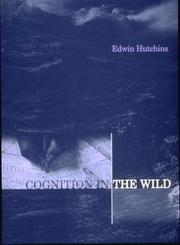
Edwin Hutchins combines his background as an anthropologist and an open-ocean racing sailor and navigator in this account of how anthropological methods can be combined with cognitive theory to produce a new reading of cognitive science. His theoretical insights are grounded in an extended analysis of ship navigation - its computational basis, its historical roots, its social organization, and the details of its implementation in actual practice aboard large ships. The result is an unusual interdisciplinary approach to cognition in culturally constituted activities outside the laboratory - "in the wild.". Hutchins examines a set of phenomena that have fallen between the established disciplines of psychology and anthropology, bringing to light a new set of relationships between culture and cognition. The standard view is that culture affects the cognition of individuals. Hutchins argues instead that cultural activity systems have cognitive properties of their own that differ from the cognitive properties of the individuals who participate in them. Each action for bringing a large naval vessel into port, for example, is informed by culture; thus the navigation team can be seen as a cognitive and computational system. Introducing life in the Navy and work on the bridge, Hutchins makes a clear distinction between the cognitive properties of an individual and the cognitive properties of a system. In striking contrast to the usual laboratory tasks of research in cognitive science, he adopts David Marr's paradigm and applies the principal metaphor of cognitive science - cognition as computation - to the navigation task. After comparing modern Western navigation with the method practiced in Micronesia, Hutchins explores the computational and cognitive properties of systems that involve multiple individuals. He then turns to an analysis of learning or change in the organization of cognitive systems at several scales. . Hutchins's conclusion illustrates the costs of ignoring the cultural nature of cognition and points to ways in which contemporary cognitive science can be transformed by new meanings and interpretations.
Discover your next read
Compare books other readers have recommended. Vote to help improve these suggestions.
Looking for more books like Cognition in the Wild by Edwin Hutchins? This list brings together suggested alternatives and feedback from SimilarBooks readers. Ratings reflect what readers think of each individual book, while the Yes and No votes show whether visitors consider it a good match for this title. Compare the recommendations below and suggest another book to help fellow readers discover their next read.
After graduating college, journalist Jon Krakauer traces the true story of Christopher McCandless, a young adventurer who abandoned possessions, ...

Robert Kegan examines how the complex demands of modern life challenge adult mental capacities, offering a theory of evolving cognition that conn...

Long before GPS, Google Earth, and global transit, humans traveled vast distances using only environmental clues and simple instruments.

Aspect social, Social aspects, Psychology, Culture, Science
Community ratings describe each book independently. Similarity votes measure whether readers consider a recommendation a good match for this particular title; results can change as more visitors share feedback.
Suggest another book below, or vote Yes or No on any existing recommendation.
Share your suggestion →Readers make discovery better
Share a recommendation and help other readers discover their next great read.