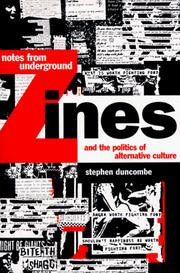
Books like Notes from Underground by Stephen Duncombe

245 pages ; 23 cm
First publish date: 1997
Authors: Stephen Duncombe
★ ★ ★ ★ ★ 5.0 (1 community ratings)

Notes from Underground by Stephen Duncombe

How are these books recommended?

The books recommended for Notes from Underground by Stephen Duncombe are shaped by reader interaction. Votes on how closely books relate, user ratings, and community comments all help refine these recommendations and highlight books readers genuinely find similar in theme, ideas, and overall reading experience.


Have you read any of these books?
Your votes, ratings, and comments help improve recommendations and make it easier for other readers to discover books they’ll enjoy.

Books similar to Notes from Underground (5 similar books)

Understanding Power by 7476011|Noam Chomsky book cover

📘 Understanding Power

Noam Chomsky assembles his most recent talks, offering a sweeping critique of U.S. foreign and domestic policy, imperialism, and social change, crafted for both newcomers and longtime listeners.

★★★★★★★★★★ 4.1 (12 ratings)
Similar? ✓ Yes 0 ✗ No 0
Simulacra and simulation by 10962465|Jean Baudrillard book cover

📘 Simulacra and simulation


★★★★★★★★★★ 3.3 (10 ratings)
Similar? ✓ Yes 0 ✗ No 0
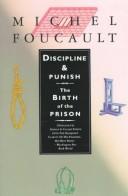
Discipline and Punish by 8650831|Michel Foucault book cover

📘 Discipline and Punish

Michel Foucault’s seminal work traces the evolution of punishment and surveillance, revealing how modern societies exercise power through disciplinary institutions such as prisons, schools, and hospitals.

★★★★★★★★★★ 3.8 (4 ratings)
Similar? ✓ Yes 0 ✗ No 0
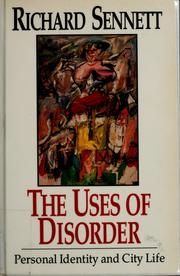
The Uses of Disorder by 6570545|Richard Sennett book cover

📘 The Uses of Disorder

The excitement of the brilliantly innovative book is that it challenges the reader to revise his concept of order—and to consider the seemingly disparate problems of the individual personality and the urban society in the light of a fresh, unified framework that has the shock of new truth. Drawing on recent ideas in psychology, sociology, and urban history, Sennett shows how the excessively “ordered” community freezes adults—both the fierce young idealists and their security-oriented parents—into rigid attitudes that originate in adolescence and stifle further personal growth. He explains how the accepted ideal of order generates patterns of behavior among the urban middle cases that are stultifying, narrow, and violence-prone. He demonstrates that most city planning has been conducted with the same rigidity, and shows, in specific and human terms, why that approach has not solved and cannot solve our cities problems. The Uses of Disorder is not only a critique of the ways in which the affluent city has failed as a place where the individual—even the affluent individual—can grow. It is also an exploration of new modes of urban organization through which city life can become richer and more life-affirming. The author proposes and projects in concrete terms (including a new use of the police) a functioning city that can incorporate anarchy, diversity, and creative disorder to bring into being adults who can openly respond to and dealt with the challenges of life. Thus, Richard Sennett, more aware of the nature of human nature than most Utopians of the past, sees progress in the creation of new urban relationships that will protect, not stability, but diversity and change. Out of his books, with its free and imaginative insights grounded in a strong sense of present-day realities, emerges the vision of a fully affluent and libertarian society—an arena that will welcome a rich variety of individuals, and accept the conflict that stem from such variety as not merely inevitable but life-giving.

★★★★★★★★★★ 0.0 (0 ratings)
Similar? ✓ Yes 0 ✗ No 0
The cultural contradictions of capitalism by 12252172|Daniel Bell book cover

📘 The cultural contradictions of capitalism

Since its original publication in 1976, The Cultural Contradictions of Capitalism has been hailed as an intellectual tour de force that redefines how we think about the relationship among econmomics, culture, and social change. Daniel Bell, the author of such other modern classics as The End of Ideology and The Coming of Post-Industrial Society, argues that the unbounded drive of modern capitalism undermines the moral foundations of the original Protestant ethic that ushered in capitalism itself. In a major new afterword, Bell offers a bracing perspective on contemporary Western society, from the end of the Cold War to the rise and fall of postmodernism, revealing the crucial cultural fault lines we face as the twenty-first century approaches.

★★★★★★★★★★ 0.0 (0 ratings)
Similar? ✓ Yes 0 ✗ No 0

Some Other Similar Books

The Society of the Spectacle by Guy Debord
The Power of the Image by Gini Slade
Culture and Anarchy by Matthew Arnold
The Society of the Spectacle by Guy Debord
Rage and Time by Peter Gay

Have a similar book in mind? Let others know!

Please login to submit books!