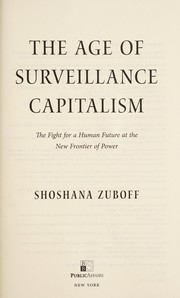
The Age of Surveillance Capitalism
Shoshana Zuboff explains how digital data is turned into a new market form—surveillance capitalism—where corporations predict and shape behavior ...
Is this book similar?
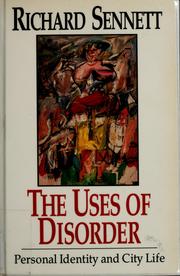
Books like this one
The excitement of the brilliantly innovative book is that it challenges the reader to revise his concept of order—and to consider the seemingly disparate problems of the individual personality and the urban society in the light of a fresh, unified framework that has the shock of new truth. Drawing on recent ideas in psychology, sociology, and urban history, Sennett shows how the excessively “ordered” community freezes adults—both the fierce young idealists and their security-oriented parents—into rigid attitudes that originate in adolescence and stifle further personal growth. He explains how the accepted ideal of order generates patterns of behavior among the urban middle cases that are stultifying, narrow, and violence-prone. He demonstrates that most city planning has been conducted with the same rigidity, and shows, in specific and human terms, why that approach has not solved and cannot solve our cities problems. The Uses of Disorder is not only a critique of the ways in which the affluent city has failed as a place where the individual—even the affluent individual—can grow. It is also an exploration of new modes of urban organization through which city life can become richer and more life-affirming. The author proposes and projects in concrete terms (including a new use of the police) a functioning city that can incorporate anarchy, diversity, and creative disorder to bring into being adults who can openly respond to and dealt with the challenges of life. Thus, Richard Sennett, more aware of the nature of human nature than most Utopians of the past, sees progress in the creation of new urban relationships that will protect, not stability, but diversity and change. Out of his books, with its free and imaginative insights grounded in a strong sense of present-day realities, emerges the vision of a fully affluent and libertarian society—an arena that will welcome a rich variety of individuals, and accept the conflict that stem from such variety as not merely inevitable but life-giving.
Discover your next read
Compare books other readers have recommended. Vote to help improve these suggestions.
Looking for more books like The Uses of Disorder by Richard Sennett? This list brings together suggested alternatives and feedback from SimilarBooks readers. Ratings reflect what readers think of each individual book, while the Yes and No votes show whether visitors consider it a good match for this title. Compare the recommendations below and suggest another book to help fellow readers discover their next read.
Shoshana Zuboff explains how digital data is turned into a new market form—surveillance capitalism—where corporations predict and shape behavior ...
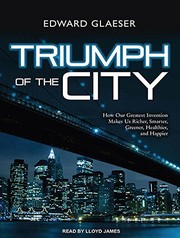
Urban economist Edward Glaeser argues that cities are humanity’s greatest invention, offering health, economic, and cultural benefits that outwei...
Michel Foucault’s seminal work traces the evolution of punishment and surveillance, revealing how modern societies exercise power through discipl...


Rethinking the open city Planners, privatisation, and police surveillance are laying siege to urban public spaces.
Observes city life through the eyes of its people, examining how urban environments and inhabitants shape one another.
James Howard Kunstler explores how urban design and architecture shape city culture and success, tracing examples from ancient Rome to modern Ame...

An in‑depth exploration of how cities shape and are shaped by people, covering urban planning, architecture, social history, and human ecology ac...
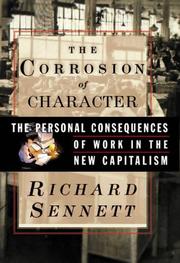
In the brave new world of the "flexible" corporation, Richard Sennett observes, workers at all levels are regarded as wholly disposable, and they...
City planning, Cities and towns, Long Now Manual for Civilization, Stadtplanung, Identity
Community ratings describe each book independently. Similarity votes measure whether readers consider a recommendation a good match for this particular title; results can change as more visitors share feedback.
Suggest another book below, or vote Yes or No on any existing recommendation.
Share your suggestion →Readers make discovery better
Share a recommendation and help other readers discover their next great read.