Books like 5 Types of Wealth by Sahil Bloom


First publish date: 2025
Subjects: Psychology, Finance
Authors: Sahil Bloom
0.0 (0 community ratings)

5 Types of Wealth by Sahil Bloom

How are these books recommended?

The books recommended for 5 Types of Wealth by Sahil Bloom are shaped by reader interaction. Votes on how closely books relate, user ratings, and community comments all help refine these recommendations and highlight books readers genuinely find similar in theme, ideas, and overall reading experience.


Have you read any of these books?
Your votes, ratings, and comments help improve recommendations and make it easier for other readers to discover books they’ll enjoy.

Books similar to 5 Types of Wealth (14 similar books)
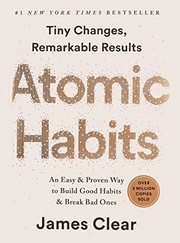
Atomic Habits by 11797737|James Clear book cover

πŸ“˜ Atomic Habits

No matter your goals, Atomic Habits offers a proven framework for improving every day. James Clear, one of the world's leading experts on habit formation, reveals practical strategies that will teach you exactly how to form good habits, break bad ones, and master the tiny behaviors that lead to remarkable results.

β˜…β˜…β˜…β˜…β˜…β˜…β˜…β˜…β˜…β˜… 4.0 (1046 ratings)
Similar? ✓ Yes 0 ✗ No 0
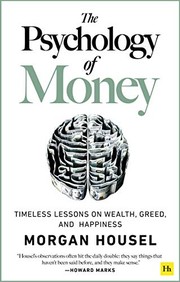
The Psychology of Money by 12622116|Morgan Housel book cover

πŸ“˜ The Psychology of Money

Timeless lessons on wealth, greed, and happiness doing well with money isn’t necessarily about what you know. It’s about how you behave. And behavior is hard to teach, even to really smart people. How to manage money, invest it, and make business decisions are typically considered to involve a lot of mathematical calculations, where data and formulae tell us exactly what to do. But in the real world, people don’t make financial decisions on a spreadsheet. They make them at the dinner table, or in a meeting room, where personal history, your unique view of the world, ego, pride, marketing, and odd incentives are scrambled together. In the psychology of money, the author shares 19 short stories exploring the strange ways people think about money and teaches you how to make better sense of one of life’s most important matters.

β˜…β˜…β˜…β˜…β˜…β˜…β˜…β˜…β˜…β˜… 4.1 (307 ratings)
Similar? ✓ Yes 0 ✗ No 0
Thinking, fast and slow by 6390436|Daniel Kahneman book cover

πŸ“˜ Thinking, fast and slow

In his mega bestseller, Thinking, Fast and Slow, Daniel Kahneman, world-famous psychologist and winner of the Nobel Prize in Economics, takes us on a groundbreaking tour of the mind and explains the two systems that drive the way we think. System 1 is fast, intuitive, and emotional; System 2 is slower, more deliberative, and more logical. The impact of overconfidence on corporate strategies, the difficulties of predicting what will make us happy in the future, the profound effect of cognitive biases on everything from playing the stock market to planning our next vacation―each of these can be understood only by knowing how the two systems shape our judgments and decisions. Engaging the reader in a lively conversation about how we think, Kahneman reveals where we can and cannot trust our intuitions and how we can tap into the benefits of slow thinking. He offers practical and enlightening insights into how choices are made in both our business and our personal lives―and how we can use different techniques to guard against the mental glitches that often get us into trouble. Topping bestseller lists for almost ten years, Thinking, Fast and Slow is a contemporary classic, an essential book that has changed the lives of millions of readers.

β˜…β˜…β˜…β˜…β˜…β˜…β˜…β˜…β˜…β˜… 4.1 (189 ratings)
Similar? ✓ Yes 0 ✗ No 0
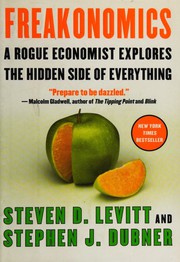
Freakonomics by 4913557|Steven D. Levitt book cover

πŸ“˜ Freakonomics

*A Rogue Economist Explores the Hidden Side of Everything* Which is more dangerous, a gun or a swimming pool? What do schoolteachers and sumo wrestlers have in common? Why do drug dealers still live with their moms? How much do parents really matter? How did the legalization of abortion affect the rate of violent crime? These may not sound like typical questions for an economist to ask. But Steven D. Levitt is not a typical economist. He is a much-heralded scholar who studies the riddles of everyday lifeβ€”from cheating and crime to sports and child-rearingβ€”and whose conclusions turn the conventional wisdom on its head. Freakonomics is a ground-breaking collaboration between Levitt and Stephen J. Dubner, an award-winning author and journalist. They usually begin with a mountain of data and a simple, unasked question. Some of these questions concern life-and-death issues; others have an admittedly freakish quality. Thus the new field of study contained in this book: Freakonomics. Through forceful storytelling and wry insight, Levitt and Dubner show that economics is, at root, the study of incentivesβ€”how people get what they want, or need, especially when other people want or need the same thing. In Freakonomics, they explore the hidden side of … well, everything. The inner workings of a crack gang. The truth about real-estate agents. The myths of campaign finance. The telltale marks of a cheating schoolteacher. The secrets of the Ku Klux Klan. What unites all these stories is a belief that the modern world, despite a great deal of complexity and downright deceit, is not impenetrable, is not unknowable, andβ€”if the right questions are askedβ€”is even more intriguing than we think. All it takes is a new way of looking at things. Freakonomics establishes this unconventional premise: If morality represents how we would like the world to work, then economics represents how it actually does work. It is true that readers of this book will be armed with enough riddles and stories to last a thousand cocktail parties. ButFreakonomics can provide more than that. It will literally redefine the way we view the modern world. First published in the U.S. in 2005, Freakonomics went on to sell more than 4 million copies around the world, in 35 languages. It also inspired a follow-up book, SuperFreakonomics; a high-profile documentary film; a radio program, and an award-winning blog, which has been called β€œthe most readable economics blog in the universe.” ([source][1]) [1]: http://freakonomics.com/books/

β˜…β˜…β˜…β˜…β˜…β˜…β˜…β˜…β˜…β˜… 3.9 (165 ratings)
Similar? ✓ Yes 0 ✗ No 0
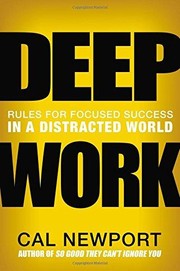
Deep Work by 7145896|Cal Newport book cover

πŸ“˜ Deep Work

One of the most valuable skills in our economy is becoming increasingly rare. If you master this skill, you'll achieve extraordinary results. Deep work is the ability to focus without distraction on a cognitively demanding task. It's a skill that allows you to quickly master complicated information and produce better results in less time. Deep work will make you better at what you do and provide the sense of true fulfillment that comes from craftsmanship. In short, deep work is like a super power in our increasingly competitive twenty-first century economy. And yet, most people have lost the ability to go deep-spending their days instead in a frantic blur of e-mail and social media, not even realizing there's a better way. In DEEP WORK, author and professor Cal Newport flips the narrative on impact in a connected age. Instead of arguing distraction is bad, he instead celebrates the power of its opposite. Dividing this book into two parts, he first makes the case that in almost any profession, cultivating a deep work ethic will produce massive benefits. He then presents a rigorous training regimen, presented as a series of four "rules," for transforming your mind and habits to support this skill. A mix of cultural criticism and actionable advice, DEEP WORK takes the reader on a journey through memorable stories -- from Carl Jung building a stone tower in the woods to focus his mind, to a social media pioneer buying a round-trip business class ticket to Tokyo to write a book free from distraction in the air -- and no-nonsense advice, such as the claim that most serious professionals should quit social media and that you should practice being bored. DEEP WORK is an indispensable guide to anyone seeking focused success in a distracted world.

β˜…β˜…β˜…β˜…β˜…β˜…β˜…β˜…β˜…β˜… 3.8 (150 ratings)
Similar? ✓ Yes 0 ✗ No 0
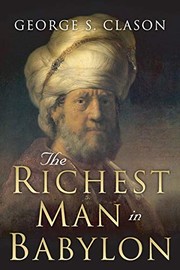
The Richest Man in Babylon by 7016477|George S. Clason book cover

πŸ“˜ The Richest Man in Babylon

To bring your dreams and desires to fulfillment, you must be successful with money. This book shows you how to amass personal wealth by sharing the secrets of the ancient Babylonians, who were the first to discover the universal laws of prosperity. Hailed as the greatest of all inspirational works on the subject of thrift, financial planning, and personal wealth, The Richest Man in Babylon is a timeless classic that holds the key to all you desire and everything you wish to accomplish. Through entertaining stories about the herdsmen, merchants, and tradesmen of ancient Babylon, George S. Clason provides concrete advice for creating, growing, and preserving wealth. Beloved by millions, this celebrated bestseller offers an understanding of, and a solution to, your personal financial problems. This is the book that holds the secrets to keeping your money and making more. Financial principles covered in this book include: Pay yourself first. Don't trust a bricklayer to buy jewels. (Don't get caught up in other people's excitement. Go seek the experts instead.) Don't put all your eggs in a single basket. (Diversify your portfolio.) Control thy expenses. (Even the richest man has a time constraint on his life. Do what you enjoy, but don't overdo it.) Increase your ability to earn. Keeping these core principles in mind will help you through economic hard times and put you on the road to riches.

β˜…β˜…β˜…β˜…β˜…β˜…β˜…β˜…β˜…β˜… 4.2 (66 ratings)
Similar? ✓ Yes 0 ✗ No 0
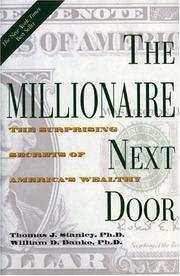
The millionaire next door by 6725793|Thomas J. Stanley book cover

πŸ“˜ The millionaire next door

Can you spot the millionaire next door? Who are the rich in this country? What do they do? Where do they shop? What do they drive? How do they invest? Where did their ancestors come from? How did they get rich? Can I ever become one of them? Get the answers in The Millionaire Next Door, the never-before-told story about wealth in America. You'll be surprised at what you find out. "Why aren't I as wealthy as I should be?" Many people ask this question of themselves all the time. Often they are hard-working, well-educated, middle-to-high-income people. Why, then, are so few affluent? The answer lies in The Millionaire Next Door: The Surprising Secrets of America's wealthy. According to authors Thomas J. Stanley and William D. Danko, most people have it all wrong about how you become wealthy in America. It is seldom inheritance or advanced degrees or even intelligence that builds fortunes in this country. Wealth in America is more often the result of hard work, diligent savings, and living below your means. - Jacket.

β˜…β˜…β˜…β˜…β˜…β˜…β˜…β˜…β˜…β˜… 4.0 (25 ratings)
Similar? ✓ Yes 0 ✗ No 0
The art of thinking clearly by 9275146|Rolf Dobelli book cover

πŸ“˜ The art of thinking clearly

The Art of Thinking Clearly by world-class thinker and entrepreneur Rolf Dobelli is an eye-opening look at human psychology and reasoning β€” essential reading for anyone who wants to avoid β€œcognitive errors” and make better choices in all aspects of their lives. Have you ever: Invested time in something that, with hindsight, just wasn’t worth it? Or continued doing something you knew was bad for you? These are examples of cognitive biases, simple errors we all make in our day-to-day thinking. But by knowing what they are and how to spot them, we can avoid them and make better decisions. Simple, clear, and always surprising, this indispensable book will change the way you think and transform your decision-makingβ€”work, at home, every day. It reveals, in 99 short chapters, the most common errors of judgment, and how to avoid them.

β˜…β˜…β˜…β˜…β˜…β˜…β˜…β˜…β˜…β˜… 4.2 (18 ratings)
Similar? ✓ Yes 0 ✗ No 0
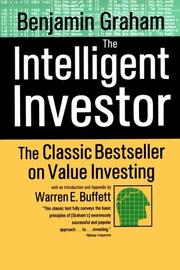
The Intelligent Investor by 11348460|Benjamin Graham book cover

πŸ“˜ The Intelligent Investor

This classic text is annotated to update Graham's timeless wisdom for today's market conditions... The greatest investment advisor of the twentieth century, Benjamin Graham, taught and inspired people worldwide. Graham's philosophy of "value investing" -- which shields investors from substantial error and teaches them to develop long-term strategies -- has made *The Intelligent Investor* the stock market bible ever since its original publication in 1949. Over the years, market developments have proven the wisdom of Graham's strategies. While preserving the integrity of Graham's original text, this revised edition includes updated commentary by noted financial journalist Jason Zweig, whose perspective incorporates the realities of today's market, draws parallels between Graham's examples and today's financial headlines, and gives readers a more thorough understanding of how to apply Graham's principles. Vital and indispensable, this HarperBusiness Essentials edition of *The Intelligent Investor* is the most important book you will ever read on how to reach your financial goals.

β˜…β˜…β˜…β˜…β˜…β˜…β˜…β˜…β˜…β˜… 3.5 (18 ratings)
Similar? ✓ Yes 0 ✗ No 0
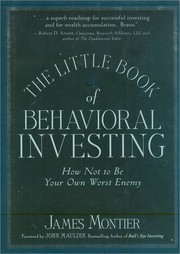
Little book of behavioral investing by 7022829|James Montier book cover

πŸ“˜ Little book of behavioral investing

A detailed guide to overcoming the most frequently encountered psychological pitfalls of investingBias, emotion, and overconfidence are just three of the many behavioral traits that can lead investors to lose money or achieve lower returns. Behavioral finance, which recognizes that there is a psychological element to all investor decision-making, can help you overcome this obstacle.In The Little Book of Behavioral Investing, expert James Montier takes you through some of the most important behavioral challenges faced by investors. Montier reveals the most common psychological barriers, clearly showing how emotion, overconfidence, and a multitude of other behavioral traits, can affect investment decision-making.Offers time-tested ways to identify and avoid the pitfalls of investor biasAuthor James Montier is one of the world's foremost behavioral analystsDiscusses how to learn from our investment mistakes instead of repeating themExplores the behavioral principles that will allow you to maintain a successful investment portfolioWritten in a straightforward and accessible style, The Little Book of Behavioral Investing will enable you to identify and eliminate behavioral traits that can hinder your investment endeavors and show you how to go about achieving superior returns in the process.Praise for The Little Book Of Behavioral Investing"The Little Book of Behavioral Investing is an important book for anyone who is interested in understanding the ways that human nature and financial markets interact."--Dan Ariely, James B. Duke Professor of Behavioral Economics, Duke University, and author of Predictably Irrational"In investing, success meansΒΏbeing on the right side of most trades. No book provides a better starting point toward that goal than this one."--Bruce Greenwald, Robert Heilbrunn Professor of Finance and Asset Management, Columbia Business School"'Know thyself.' Overcoming human instinct is key to becoming a better investor.ΒΏ You would be irrational if you did not read this book."--Edward Bonham-Carter, Chief Executive and Chief Investment Officer, Jupiter Asset Management"There is not an investor anywhere who wouldn't profit from reading this book."--Jeff Hochman, Director of Technical Strategy, Fidelity Investment Services Limited"James Montier gives us a very accessible version of why we as investors are so predictably irrational, and a guide to help us channel our 'Inner Spock' to make better investment decisions. Bravo!"--John Mauldin, President, Millennium Wave InvestmentsThe EPUB format of this title may not be compatible for use on all handheld devices.

β˜…β˜…β˜…β˜…β˜…β˜…β˜…β˜…β˜…β˜… 4.5 (2 ratings)
Similar? ✓ Yes 0 ✗ No 0
The hour between dog and wolf by 6650822|Coates, John book cover

πŸ“˜ The hour between dog and wolf

A Wall Street trader-turned-neuroscientist reveals the biology of boom-and-bust cycles to explain the impact of risk taking on body chemistry, citing the relationship between testosterone, decision making, and emotional health.

β˜…β˜…β˜…β˜…β˜…β˜…β˜…β˜…β˜…β˜… 5.0 (1 rating)
Similar? ✓ Yes 0 ✗ No 0
Study without stress by 7134352|Eugenia G. Kelman book cover

πŸ“˜ Study without stress


β˜…β˜…β˜…β˜…β˜…β˜…β˜…β˜…β˜…β˜… 0.0 (0 ratings)
Similar? ✓ Yes 0 ✗ No 0
The sexual trafficking in children by 754115|Daniel S. Campagna book cover

πŸ“˜ The sexual trafficking in children


β˜…β˜…β˜…β˜…β˜…β˜…β˜…β˜…β˜…β˜… 0.0 (0 ratings)
Similar? ✓ Yes 0 ✗ No 0
Your Money Or Your Life by 6948750|Joe Dominguez book cover

πŸ“˜ Your Money Or Your Life


β˜…β˜…β˜…β˜…β˜…β˜…β˜…β˜…β˜…β˜… 0.0 (0 ratings)
Similar? ✓ Yes 0 ✗ No 0

Have a similar book in mind? Let others know!

Please login to submit books!