Books like Strongmen by Ruth Ben-Ghiat


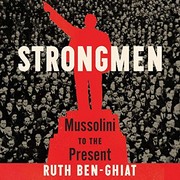
Ruth Ben‑Ghiat’s “Strongmen” offers an accessible examination of the ways in which contemporary heads of state secure and maintain authority. Drawing on political science theory and case studies, the book dissects the structures and strategies that underlie modern dictatorships. It is a valuable resource for scholars and readers interested in the dynamics of authoritarian regimes and the political forces that shape them.
First publish date: 2021
Genre: Politics & Government/Political Theory
Authors: Ruth Ben-Ghiat
★ ★ ★ ★ ★ 4.5 (4 community ratings)

Strongmen by Ruth Ben-Ghiat

How are these books recommended?

The books recommended for Strongmen by Ruth Ben-Ghiat are shaped by reader interaction. Votes on how closely books relate, user ratings, and community comments all help refine these recommendations and highlight books readers genuinely find similar in theme, ideas, and overall reading experience.


Have you read any of these books?
Your votes, ratings, and comments help improve recommendations and make it easier for other readers to discover books they’ll enjoy.

Books similar to Strongmen (12 similar books)

Surviving Autocracy by 8173637|Masha Gessen book cover

📘 Surviving Autocracy


★★★★★★★★★★ 4.0 (3 ratings)
Similar? ✓ Yes 0 ✗ No 0
The dictator's learning curve by 11436233|William J. Dobson book cover

📘 The dictator's learning curve

Its not easy being a dictator these days. Since the end of the Cold War, dictatorships worldwide have been on the decline and those that survive have changed dramatically. This book offers insight into the way dictators are adapting to the demands of the modern world, and their insidious efforts to disguise their regimes as democracies.

★★★★★★★★★★ 5.0 (1 rating)
Similar? ✓ Yes 0 ✗ No 0
The Myth of the Strong Leader by 8196982|Archie Brown book cover

📘 The Myth of the Strong Leader

In this magisterial and wide-ranging survey of political leadership over the past hundred years, Archie Brown challenges the widespread belief that strong leaders - those who dominate their colleagues and the policy-making process - are the most successful and admirable. Within democracies a collegial style of leadership is too often characterized as weakness and its advantages overlooked. Even in authoritarian regimes, a more collective leadership is a lesser evil compared with personal dictatorship where cultivation of the myth of the strong leader is often a prelude to oppression and carnage. 'Strong leaders' in democratic countries can do less harm, but here too the idea that one leader knows best and is entitled to take the big decisions is dangerous, even though overweening leaders in democracies are seldom as strong or independent as they purport to be. In reality, only a minority of political leaders make a big difference, by challenging assumptions about the politically possible or setting in motion systemic change. Yet in a democracy that is rare. It is especially when enlightened leaders acquire power in an authoritarian system that the opportunity for radical transformation occurs.

★★★★★★★★★★ 4.0 (1 rating)
Similar? ✓ Yes 0 ✗ No 0
The Authoritarian Moment by 7157866|Ben Shapiro book cover

📘 The Authoritarian Moment


★★★★★★★★★★ 5.0 (1 rating)
Similar? ✓ Yes 0 ✗ No 0
How to Be a Dictator by 6562321|Frank Dikötter book cover

📘 How to Be a Dictator


★★★★★★★★★★ 3.0 (1 rating)
Similar? ✓ Yes 0 ✗ No 0
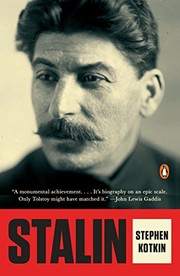
Stalin by 10109883|Stephen Kotkin book cover

📘 Stalin

"A magnificent new biography that revolutionizes our understanding of Stalin and his world. It has the quality of myth: a poor cobbler's son, a seminarian from an oppressed outer province of the Russian empire, reinvents himself as a top leader in a band of revolutionary zealots. When the band seizes control of the country in the aftermath of total world war, the former seminarian ruthlessly dominates the new regime until he stands as absolute ruler of a vast and terrible state apparatus, with dominion over Eurasia. While still building his power base within the Bolshevik dictatorship, he embarks upon the greatest gamble of his political life and the largest program of social reengineering ever attempted: the collectivization of all agriculture and industry across one sixth of the earth. Millions will die, and many more millions will suffer, but the man will push through to the end against all resistance and doubts. Where did such power come from? In Stalin, Stephen Kotkin offers a biography that, at long last, is equal to this shrewd, sociopathic, charismatic dictator in all his dimensions. The character of Stalin emerges as both astute and blinkered, cynical and true believing, people oriented and vicious, canny enough to see through people but prone to nonsensical beliefs. We see a man inclined to despotism who could be utterly charming, a pragmatic ideologue, a leader who obsessed over slights yet was a precocious geostrategic thinker--unique among Bolsheviks--and yet who made egregious strategic blunders. Through it all, we see Stalin's unflinching persistence, his sheer force of will--perhaps the ultimate key to understanding his indelible mark on history. Stalin gives an intimate view of the Bolshevik regime's inner geography of power, bringing to the fore fresh materials from Soviet military intelligence and the secret police. Kotkin rejects the inherited wisdom about Stalin's psychological makeup, showing us instead how Stalin's near paranoia was fundamentally political, and closely tracks the Bolshevik revolution's structural paranoia, the predicament of a Communist regime in an overwhelmingly capitalist world, surrounded and penetrated by enemies. At the same time, Kotkin demonstrates the impossibility of understanding Stalin's momentous decisions outside of the context of the tragic history of imperial Russia. The product of a decade of intrepid research, Stalin is a landmark achievement, a work that recasts the way we think about the Soviet Union, revolution, dictatorship, the twentieth century, and indeed the art of history itself"--

★★★★★★★★★★ 0.0 (0 ratings)
Similar? ✓ Yes 0 ✗ No 0
Dictatorship by 1888191|Carl Schmitt book cover

📘 Dictatorship

'Dictatorship' is Carl Schmitt's most scholarly book and arguably a paradigm for his entire work. Written shortly after the Russian Revolution and the First World War, Schmitt analyses the problem of the state of emergency and the power of the Reichsprasident in declaring it.

★★★★★★★★★★ 0.0 (0 ratings)
Similar? ✓ Yes 0 ✗ No 0
The Hitler of history by 6859818|John Lukacs book cover

📘 The Hitler of history

A scholarly examination of Adolf Hitler through the lens of his many biographers, analyzing how historians’ biases shape the portrayal of the Führer and the historiography of National Socialism.

★★★★★★★★★★ 0.0 (0 ratings)
Similar? ✓ Yes 0 ✗ No 0
The Authoritarian Dynamic by 7057542|Karen Stenner book cover

📘 The Authoritarian Dynamic

Explores the psychological roots of intolerance, linking innate authoritarian traits with societal threats to explain racism, political repression, homophobia, and more.

★★★★★★★★★★ 0.0 (0 ratings)
Similar? ✓ Yes 0 ✗ No 0
Non-democratic regimes by 8229366|Paul Brooker book cover

📘 Non-democratic regimes


★★★★★★★★★★ 0.0 (0 ratings)
Similar? ✓ Yes 0 ✗ No 0
Age of the Strongman by 11313197|Gideon Rachman book cover

📘 Age of the Strongman

The book traces the rise of ‘strongmen’—nationalist, socially conservative autocrats with a cult of personality—across capitals from Moscow to Washington, showing how they claim to represent the people while amassing global influence.

★★★★★★★★★★ 0.0 (0 ratings)
Similar? ✓ Yes 0 ✗ No 0
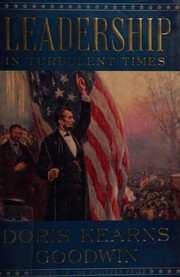
Leadership In Turbulent Times by 6551598|Doris Kearns Goodwin book cover

📘 Leadership In Turbulent Times

In this culmination of five decades of acclaimed studies in presidential history, Pulitzer Prize-winning author Doris Kearns Goodwin offers an illuminating exploration into the early development, growth, and exercise of leadership. Are leaders born or made? Where does ambition come from? How does adversity affect the growth of leadership? Does the man make the times or do the times make the man? In Leadership in Turbulent Times, Goodwin draws upon four of the presidents she has studied most closely—Abraham Lincoln, Theodore Roosevelt, Franklin D. Roosevelt, and Lyndon B. Johnson (in civil rights)—to show how they first recognized leadership qualities within themselves, and were recognized by others as leaders. No common pattern describes the trajectory of leadership. Although set apart in background, abilities, and temperament, these men shared a fierce ambition and a deep-seated resilience that enabled them to surmount uncommon adversity. At their best, all four were guided by a sense of moral purpose. At moments of great challenge, they were able to summon their talents to enlarge the opportunities and lives of others. This seminal work provides an accessible and essential road map for aspiring and established leaders in every field. In today’s polarized world, these stories of authentic leadership in times of apprehension and fracture take on a singular urgency. ([source][1]) [1]: https://doriskearnsgoodwin.com/books/

★★★★★★★★★★ 0.0 (0 ratings)
Similar? ✓ Yes 0 ✗ No 0

Some Other Similar Books

The Art of Resistance: My Life in the German Resistance by Harriet Murray
The Dictator's Handbook: Why Bad Behavior Is Almost Always Good Politics by Bruce Bueno de Mesquita and Alastair Smith
On Tyranny: Twenty Lessons from the Twentieth Century by Timothy Snyder
The Fascist Specter: A History of the Radical Right in Italy by Eugenio Di Rienzo
The Authoritarian Moment: How the World Is Using Emergency Powers to Forge a New Political Order by Ben Rhodes
Dispossession: The Performative in the Politics of Race by Tyrone Austin
The Rise of the Totalitarian State by Hannah Arendt
The New Poetics of Orphanhood: From Deserting Mother to Adoptive Father by Laura Salisbury
The Anatomy of Fascism by Robert O. Paxton

Have a similar book in mind? Let others know!

Please login to submit books!