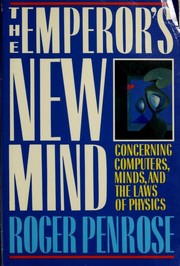
The Emperor's New Mind
Roger Penrose argues that human thought is rooted in deep, non-computable aspects of physics, suggesting true intelligence cannot be fully replic...
Is this book similar?

Books like this one
In Shadows of the Mind, Roger Penrose revisits themes from his 1989 bestseller, offering a fresh attack on artificial intelligence and proposing that aspects of human consciousness lie beyond Computability. He assembles a multidisciplinary case—from Turing computability and Gödel’s incompleteness theorems to quantum phenomena such as Schrödinger’s cat and the Elitzur‑Vaidman bomb‑testing problem—to argue that the brain’s conscious activity may involve a global quantum state operating within microtubules. By extending his inquiry into the microstructural biology of neurons, Penrose suggests that these cellular components could represent the real computational units of the mind, potentially resolving the paradox of consciousness and computation. His analysis traverses modern physics, philosophy, and cognitive science, inviting readers to envision a new physics that could eventually explain the physical basis of thought.
Discover your next read
Compare books other readers have recommended. Vote to help improve these suggestions.
Looking for more books like Shadows of the mind by Roger Penrose? This list brings together suggested alternatives and feedback from SimilarBooks readers. Ratings reflect what readers think of each individual book, while the Yes and No votes show whether visitors consider it a good match for this title. Compare the recommendations below and suggest another book to help fellow readers discover their next read.
Roger Penrose argues that human thought is rooted in deep, non-computable aspects of physics, suggesting true intelligence cannot be fully replic...

Marvin Minsky presents an interconnected framework that explains human cognition and its implications for artificial intelligence.
A collection of mathematically enriched essays by Douglas Hofstadter, weaving topics such as artificial intelligence, creativity, music, self-ref...



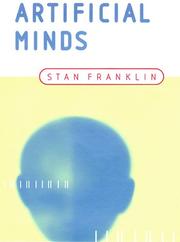
Stan Franklin guides readers through the evolving landscape of artificial intelligence, cognitive science, and robotics, arguing for a continuum ...

Hector Levesque explores how AI can illuminate the mind by focusing on commonsense intelligence and proposing the Winograd Schema Test as a true ...

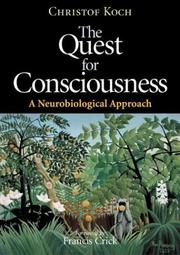
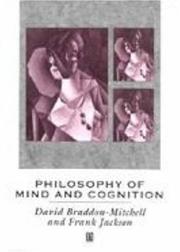
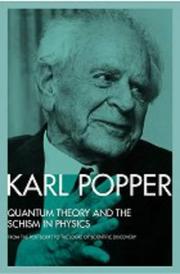

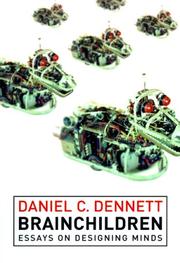
Daniel Dennett's collection of essays on philosophy of mind, artificial intelligence, and cognitive ethology, first published in 1984 to 1996.
Douglas Hofstadter explores the role of fluid concepts and creative analogies in human cognition, artificial intelligence, and computer simulatio...
New York Times reviewed, Philosophy, Thought and thinking, Physics, Philosophie
Community ratings describe each book independently. Similarity votes measure whether readers consider a recommendation a good match for this particular title; results can change as more visitors share feedback.
Suggest another book below, or vote Yes or No on any existing recommendation.
Share your suggestion →Readers make discovery better
Share a recommendation and help other readers discover their next great read.