Books like Manias, panics and crashes by Robert Z. Aliber


First publish date: 2011
Authors: Robert Z. Aliber
★ ★ ★ ★ ★ 0.0 (0 community ratings)

Manias, panics and crashes by Robert Z. Aliber

How are these books recommended?

The books recommended for Manias, panics and crashes by Robert Z. Aliber are shaped by reader interaction. Votes on how closely books relate, user ratings, and community comments all help refine these recommendations and highlight books readers genuinely find similar in theme, ideas, and overall reading experience.


Have you read any of these books?
Your votes, ratings, and comments help improve recommendations and make it easier for other readers to discover books they’ll enjoy.

Books similar to Manias, panics and crashes (6 similar books)

Liar's Poker by 6940939|Michael Lewis book cover

πŸ“˜ Liar's Poker

A candid, semi‑autobiographical look at 1980s Wall Street, following Michael Lewis from Princeton art history student to bond salesman at Salomon Brothers, exposing the culture of greed, humor, and intense competition that defined the era.

β˜…β˜…β˜…β˜…β˜…β˜…β˜…β˜…β˜…β˜… 4.0 (8 ratings)
Similar? ✓ Yes 0 ✗ No 0
Origins of the Crash by 9626650|Roger Lowenstein book cover

πŸ“˜ Origins of the Crash


β˜…β˜…β˜…β˜…β˜…β˜…β˜…β˜…β˜…β˜… 5.0 (1 rating)
Similar? ✓ Yes 0 ✗ No 0
Manias, panics, and crashes by 6523790|Charles Poor Kindleberger book cover

πŸ“˜ Manias, panics, and crashes

"Manias, Panics, and Crashes probes the most recent natural disasters of the markets - from Black Monday to the Japanese boom and bust, from the sterling crisis and peso devaluation to the explosion in today's technology stocks.". "Kindleberger's writing leads the reader through a myriad of financial free falls. From the currency devaluation in the Holy Roman Empire in 1618, through the California gold rush of the 1840s and '50s to the crash of 1987, all the way up to the present day, his sharply drawn history confronts a host of key questions: In the ups and downs of market behavior, where is the line between rational and irrational? Are the markets a fool's paradise in an explosive world? When the storm expands to dangerous proportions, who will calm the panic? Should a "lender of last resort" intervene to repair the wreckage?" "Manias, Panics, and Crashes can be regarded as a warning or a proposition, reminding readers, in many ways, that what goes around comes around. Like all true classics, Kindleberger's book remains timely - for better or for worse."--BOOK JACKET.

β˜…β˜…β˜…β˜…β˜…β˜…β˜…β˜…β˜…β˜… 4.0 (1 rating)
Similar? ✓ Yes 0 ✗ No 0
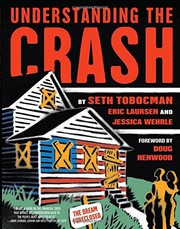
Understanding the crash by 13303102|Seth Tobocman book cover

πŸ“˜ Understanding the crash


β˜…β˜…β˜…β˜…β˜…β˜…β˜…β˜…β˜…β˜… 5.0 (1 rating)
Similar? ✓ Yes 0 ✗ No 0
The forgotten depression by 9637490|Grant, James book cover

πŸ“˜ The forgotten depression

"By the publisher of the prestigious Grant's Interest Rate Observer, an account of the deep economic slump of 1920-21 that proposes, with respect to federal intervention, "less is more." This is a free-market rejoinder to the Keynesian stimulus applied by Bush and Obama to the 2007-09 recession, in whose aftereffects, Grant asserts, the nation still toils. James Grant tells the story of America's last governmentally-untreated depression; relatively brief and self-correcting, it gave way to the Roaring Twenties. His book appears in the fifth year of a lackluster recovery from the overmedicated downturn of 2007-2009. In 1920-21, Woodrow Wilson and Warren G. Harding met a deep economic slump by seeming to ignore it, implementing policies that most twenty-first century economists would call backward. Confronted with plunging prices, wages, and employment, the government balanced the budget and, through the Federal Reserve, raised interest rates. No "stimulus" was administered, and a powerful, job-filled recovery was under way by late in 1921. In 1929, the economy once again slumped--and kept right on slumping as the Hoover administration adopted the very policies that Wilson and Harding had declined to put in place. Grant argues that well-intended federal intervention, notably the White House-led campaign to prop up industrial wages, helped to turn a bad recession into America's worst depression. He offers the experience of the earlier depression for lessons for today and the future. This is a powerful response to the prevailing notion of how to fight recession. The enterprise system is more resilient than even its friends give it credit for being, Grant demonstrates"--

β˜…β˜…β˜…β˜…β˜…β˜…β˜…β˜…β˜…β˜… 5.0 (1 rating)
Similar? ✓ Yes 0 ✗ No 0
The Big Short: Inside the Doomsday Machine by 11744904|Michael Lewis book cover

πŸ“˜ The Big Short: Inside the Doomsday Machine


β˜…β˜…β˜…β˜…β˜…β˜…β˜…β˜…β˜…β˜… 0.0 (0 ratings)
Similar? ✓ Yes 0 ✗ No 0

Some Other Similar Books

Manias, Panics, and Crashes: A History of Financial Crises by Charles P. Kindleberger
This Time Is Different: Eight Centuries of Financial Folly by Catherine R. Schivart
The Ascent of Money: A Financial History of the World by Niall Ferguson
The Black Swan: The Impact of the Highly Improbable by Nassim Nicholas Taleb
Fault Lines: How Hidden Fears Are Reshaping the World by Raghuram G. Rajan
When Genius Failed: The Rise and Fall of Long-Term Capital Management by Roger Lowenstein
The Great Recession: Market Failure or Systemic Failure? by Franklin Allen & Elena Carletti
The New Financial Order: Risk in the 21st Century by Gilbert R. Metcalf

Have a similar book in mind? Let others know!

Please login to submit books!