Books like The future of the professions by Richard E. Susskind


This book predicts the decline of today's professions and describes the people and systems that will replace them. In an Internet society, according to Richard Susskind and Daniel Susskind, we will neither need nor want doctors, teachers, accountants, architects, the clergy, consultants, lawyers, and many others, to work as they did in the 20th century. The Future of the Professions explains how 'increasingly capable systems' - from telepresence to artificial intelligence - will bring fundamental change in the way that the 'practical expertise' of specialists is made available in society. The authors challenge the 'grand bargain' - the arrangement that grants various monopolies to today's professionals. They argue that our current professions are antiquated, opaque and no longer affordable, and that the expertise of the best is enjoyed only by a few. In their place, they propose six new models for producing and distributing expertise in society.
First publish date: 2015
Subjects: Social aspects, Technological innovations, Professions, Computers and civilization, Effect of technological innovations on
Authors: Richard E. Susskind
3.0 (2 community ratings)

The future of the professions by Richard E. Susskind

How are these books recommended?

The books recommended for The future of the professions by Richard E. Susskind are shaped by reader interaction. Votes on how closely books relate, user ratings, and community comments all help refine these recommendations and highlight books readers genuinely find similar in theme, ideas, and overall reading experience.


Have you read any of these books?
Your votes, ratings, and comments help improve recommendations and make it easier for other readers to discover books they’ll enjoy.

Books similar to The future of the professions (7 similar books)
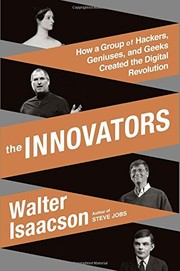
The Innovators

πŸ“˜ The Innovators

Following his blockbuster biography of Steve Jobs, The Innovators is Walter Isaacson’s revealing story of the people who created the computer and the Internet. It is destined to be the standard history of the digital revolution and an indispensable guide to how innovation really happens. What were the talents that allowed certain inventors and entrepreneurs to turn their visionary ideas into disruptive realities? What led to their creative leaps? Why did some succeed and others fail? In his masterly saga, Isaacson begins with Ada Lovelace, Lord Byron’s daughter, who pioneered computer programming in the 1840s. He explores the fascinating personalities that created our current digital revolution, such as Vannevar Bush, Alan Turing, John von Neumann, J.C.R. Licklider, Doug Engelbart, Robert Noyce, Bill Gates, Steve Wozniak, Steve Jobs, Tim Berners-Lee, and Larry Page. This is the story of how their minds worked and what made them so inventive. It’s also a narrative of how their ability to collaborate and master the art of teamwork made them even more creative. For an era that seeks to foster innovation, creativity, and teamwork, The Innovators shows how they happen.

β˜…β˜…β˜…β˜…β˜…β˜…β˜…β˜…β˜…β˜… 3.9 (21 ratings)
Similar? ✓ Yes 0 ✗ No 0
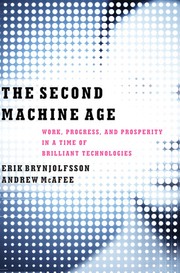
The Second Machine Age

πŸ“˜ The Second Machine Age

A revolution is under way. In recent years, Google's autonomous cars have logged thousands of miles on American highways and IBM's Watson trounced the best human Jeopardy! players. Digital technologies -- with hardware, software, and networks at their core -- will in the near future diagnose diseases more accurately than doctors can, apply enormous data sets to transform retailing, and accomplish many tasks once considered uniquely human. In The Second Machine Age MIT's Erik Brynjolfsson and Andrew McAfee -- two thinkers at the forefront of their field -- reveal the forces driving the reinvention of our lives and our economy. As the full impact of digital technologies is felt, we will realize immense bounty in the form of dazzling personal technology, advanced infrastructure, and near-boundless access to the cultural items that enrich our lives. Amid this bounty will also be wrenching change. Professions of all kinds, from lawyers to truck drivers, will be forever upended. Companies will be forced to transform or die. Recent economic indicators reflect this shift: fewer people are working, and wages are falling even as productivity and profits soar. Drawing on years of research and up-to-the-minute trends, Brynjolfsson and McAfee identify the best strategies for survival and offer a new path to prosperity. These include revamping education so that it prepares people for the next economy instead of the last one, designing new collaborations that pair brute processing power with human ingenuity, and embracing policies that make sense in a radically transformed landscape. A fundamentally optimistic book, The Second Machine Age will alter how we think about issues of technological, societal, and economic progress. - Publisher.

β˜…β˜…β˜…β˜…β˜…β˜…β˜…β˜…β˜…β˜… 3.7 (7 ratings)
Similar? ✓ Yes 0 ✗ No 0
The Singularity Is Near

πŸ“˜ The Singularity Is Near

For over three decades, Ray Kurzweil has been one of the most respected and provocative advocates of the role of technology in our future. In his classic The Age of Spiritual Machines, he argued that computers would soon rival the full range of human intelligence at its best. Now he examines the next step in this inexorable evolutionary process: the union of human and machine, in which the knowledge and skills embedded in our brains will be combined with the vastly greater capacity, speed, and knowledge-sharing ability of our creations.

β˜…β˜…β˜…β˜…β˜…β˜…β˜…β˜…β˜…β˜… 4.0 (6 ratings)
Similar? ✓ Yes 0 ✗ No 0
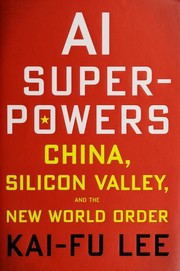
AI superpowers

πŸ“˜ AI superpowers
 by Kai-Fu Lee

The United States has long been the leader in Artificial Intelligence. But Dr. Kai-Fu Lee--one of the world's most respected experts on AI--reveals that China has caught up to the US at an astonishingly rapid pace. As Sino-American competition in AI heats up, Lee envisions China and the US forming a powerful duopoly in AI. He outlines the upheaval of traditional jobs, how the suddenly unemployed will find new ways of making their lives meaningful, and how the Chinese and American governments will have to cope with the changing economic landscape. "Kai-Fu Lee--one of the world's most respected experts on AI and China--reveals that China has suddenly caught up to the United States at an astonishingly rapid and unexpected pace. In AI Superpowers, Kai-fu Lee argues powerfully that because of the unprecedented developments in artificial intelligence, dramatic changes will be happening much sooner than many of us have expected. Indeed, as the U.S.-China competition in AI begins to heat up, Lee urges America and China to both accept and embrace the great responsibilities that come with significant technological power. Most experts already say that AI will have a devastating impact on blue-collar jobs. But Lee predicts that Chinese and American AI will have a strong impact on white-collar jobs as well. Is universal basic income the solution? In Lee's opinion, probably not. But he provides a clear description of which jobs will be affected and how soon, which jobs can be enhanced with AI, and, most important, how we can provide solutions to some of the most profound changes in human history that are coming soon."--Dust jacket.

β˜…β˜…β˜…β˜…β˜…β˜…β˜…β˜…β˜…β˜… 3.8 (4 ratings)
Similar? ✓ Yes 0 ✗ No 0
Zeros and Ones

πŸ“˜ Zeros and Ones

A highly contentious, very readable and totally up-to-the-minute investigation of women’s natural relationship with modern technology, an association which, Plant argues, will trigger a new sexual revolution. Zeros and Ones is an intelligent, provocative and accessible investigation of the intersection between women, feminism, machines and in particular, information technology. Arguing that the computer is rewriting the old conceptions of man and his world, it suggests that the telecoms revolution is also a sexual revolution which undermines the fundamental assumptions crucial to patriarchal culture. Historical, contemporary and future developments in telecommunications and in IT are interwoven with the past, present and future of feminism, women and sexual difference, and a wealth of connections, parallels and affinities between machines and women are uncovered as a result. Challenging the belief that man was ever in control of either his own agency, the planet, or his machines, this book argues it is seriously undermined by the new scientific paradigms emergent from theories of chaos, complexity and connectionism, all of which suggest that the old distinctions between man, woman, nature and technology need to be radically reassessed.

β˜…β˜…β˜…β˜…β˜…β˜…β˜…β˜…β˜…β˜… 0.0 (0 ratings)
Similar? ✓ Yes 0 ✗ No 0
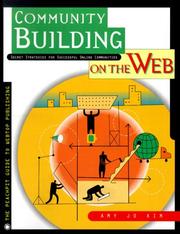
Community building on the Web

πŸ“˜ Community building on the Web
 by Amy Jo Kim


β˜…β˜…β˜…β˜…β˜…β˜…β˜…β˜…β˜…β˜… 0.0 (0 ratings)
Similar? ✓ Yes 0 ✗ No 0
The fourth industrial revolution

πŸ“˜ The fourth industrial revolution

"World-renowned economist Klaus Schwab, Founder and Executive Chairman of the World Economic Forum, explains that we have an opportunity to shape the fourth industrial revolution, which will fundamentally alter how we live and work. Schwab argues that this revolution is different in scale, scope and complexity from any that have come before. Characterized by a range of new technologies that are fusing the physical, digital and biological worlds, the developments are affecting all disciplines, economies, industries and governments, and even challenging ideas about what it means to be human. Artificial intelligence is already all around us, from supercomputers, drones and virtual assistants to 3D printing, DNA sequencing, smart thermostats, wearable sensors and microchips smaller than a grain of sand. But this is just the beginning: nanomaterials 200 times stronger than steel and a million times thinner than a strand of hair and the first transplant of a 3D printed liver are already in development. Imagine "smart factories" in which global systems of manufacturing are coordinated virtually, or implantable mobile phones made of biosynthetic materials. The fourth industrial revolution, says Schwab, is more significant, and its ramifications more profound, than in any prior period of human history. He outlines the key technologies driving this revolution and discusses the major impacts expected on government, business, civil society and individuals. Schwab also offers bold ideas on how to harness these changes and shape a better future--one in which technology empowers people rather than replaces them; progress serves society rather than disrupts it; and in which innovators respect moral and ethical boundaries rather than cross them. We all have the opportunity to contribute to developing new frameworks that advance progress."--Dust jacket.

β˜…β˜…β˜…β˜…β˜…β˜…β˜…β˜…β˜…β˜… 0.0 (0 ratings)
Similar? ✓ Yes 0 ✗ No 0

Some Other Similar Books

Humans + Machines by Julian T. Smith
The Rise of the Robots by Martin Ford
The Future of Work by Andrew McAfee and Erik Brynjolfsson
Reinventing Jobs by Thomas H. Davenport and Julia Kirby
The Future of Employment by Carl Benedikt Frey and Michael A. Osborne

Have a similar book in mind? Let others know!

Please login to submit books!