Books like When money destroys nations by Philip Haslam


Since the global financial crisis of 2008, major governments have resorted to printing vast sums of money to pay national debts and bail out banks. The Zimbabwean dollar collapsed in 2009 after years of rampant money printing. In 'When Money Destroys Nations', Philip Haslam and Russell Lamberti investigate the causes of hyperinflation and draw ominous parallels between Zimbabwe and the world's developed economies, including the United States. This story of how money destroys nations holds lessons that cannot be ignored.
First publish date: 2014
Genre: Business & Economics/Finance
Authors: Philip Haslam
★ ★ ★ ★ ★ 0.0 (0 community ratings)

When money destroys nations by Philip Haslam

How are these books recommended?

The books recommended for When money destroys nations by Philip Haslam are shaped by reader interaction. Votes on how closely books relate, user ratings, and community comments all help refine these recommendations and highlight books readers genuinely find similar in theme, ideas, and overall reading experience.


Have you read any of these books?
Your votes, ratings, and comments help improve recommendations and make it easier for other readers to discover books they’ll enjoy.

Books similar to When money destroys nations (10 similar books)

Confessions of an economic hit man by 8287976|Perkins, John book cover

πŸ“˜ Confessions of an economic hit man

Confessions of an Economic Hit Man reveals how U.S. officials and corporations allegedly shaped global economics to the detriment of developing nations.

β˜…β˜…β˜…β˜…β˜…β˜…β˜…β˜…β˜…β˜… 3.4 (15 ratings)
Similar? ✓ Yes 0 ✗ No 0
Too big to fail by 11097011|Andrew Ross Sorkin book cover

πŸ“˜ Too big to fail

Andrew Ross Sorkin’s *Too Big to Fail* offers a documented, real‑time narrative of the 2008–2009 global financial crisis, tracing the decisions and personalities that shaped the collapse and the emergency policy responses.

β˜…β˜…β˜…β˜…β˜…β˜…β˜…β˜…β˜…β˜… 3.9 (12 ratings)
Similar? ✓ Yes 0 ✗ No 0
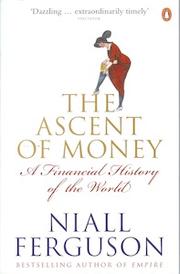
The ascent of money by 11003557|Niall Ferguson book cover

πŸ“˜ The ascent of money

Explores the origins and evolution of finance, revealing its role in human progress and economic history.

β˜…β˜…β˜…β˜…β˜…β˜…β˜…β˜…β˜…β˜… 4.1 (12 ratings)
Similar? ✓ Yes 0 ✗ No 0
Liar's Poker by 6940939|Michael Lewis book cover

πŸ“˜ Liar's Poker

A candid, semi‑autobiographical look at 1980s Wall Street, following Michael Lewis from Princeton art history student to bond salesman at Salomon Brothers, exposing the culture of greed, humor, and intense competition that defined the era.

β˜…β˜…β˜…β˜…β˜…β˜…β˜…β˜…β˜…β˜… 4.0 (8 ratings)
Similar? ✓ Yes 0 ✗ No 0
The Rise and Fall of the Dinosaurs by 11697995|Steve Brusatte book cover

πŸ“˜ The Rise and Fall of the Dinosaurs


β˜…β˜…β˜…β˜…β˜…β˜…β˜…β˜…β˜…β˜… 4.7 (3 ratings)
Similar? ✓ Yes 0 ✗ No 0
The Wolf of Wall Street by 7084437|Jordan Belfort book cover

πŸ“˜ The Wolf of Wall Street

Jordan Belfort’s memoir recounts his rise as the charismatic CEO of Strattonβ€―Oakmont, the 1990s brokerage that became a symbol of Wall Street excess, and his eventual downfall under SEC and FBI scrutiny.

β˜…β˜…β˜…β˜…β˜…β˜…β˜…β˜…β˜…β˜… 4.7 (3 ratings)
Similar? ✓ Yes 0 ✗ No 0
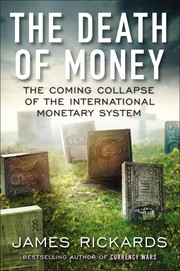
The Death of Money by 11334522|James Rickards book cover

πŸ“˜ The Death of Money

The next financial collapse will resemble nothing in history. Deciding upon the best course to follow will require comprehending a minefield of risks, while poised at a crossroads, pondering the death of the dollar. The international monetary system has collapsed three times in the past hundred years, in 1914, 1939, and 1971. Each collapse was followed by a period of tumult: war, civil unrest, or significant damage to the stability of the global economy. Now James Rickards, the acclaimed author of Currency Wars, shows why another collapse is rapidly approaching and why this time, nothing less than the institution of money itself is at risk. The American dollar has been the global reserve currency since the end of the Second World War. If the dollar fails, the entire international monetary system will fail with it. No other currency has the deep, liquid pools of assets needed to do the job. Optimists have always said, in essence, that there's nothing to worry about -- that confidence in the dollar will never truly be shaken, no matter how high our national debt or how dysfunctional our government. But in the last few years, the risks have become too big to ignore. While Washington is gridlocked and unable to make progress on our long-term problems, our biggest economic competitors -- China, Russia, and the oil-producing nations of the Middle East -- are doing everything possible to end U.S. monetary hegemony. The potential results: Financial warfare. Deflation. Hyperinflation. Market collapse. Chaos. Rickards offers a bracing analysis of these and other threats to the dollar. The fundamental problem is that money and wealth have become more and more detached. Money is transitory and ephemeral, and it may soon be worthless if central bankers and politicians continue on their current path. But true wealth is permanent and tangible, and it has real value worldwide. The author shows how everyday citizens who save and invest have become guinea pigs in the central bankers' laboratory. The world's major financial players -- national governments, big banks, multilateral institutions -- will always muddle through by patching together new rules of the game. The real victims of the next crisis will be small investors who assumed that what worked for decades will keep working. Fortunately, it's not too late to prepare for the coming death of money. Rickards explains the power of converting unreliable money into real wealth: gold, land, fine art, and other long-term stores of value. As he writes: "The coming collapse of the dollar and the international monetary system is entirely foreseeable. Only nations and individuals who make provision today will survive the maelstrom to come." - Publisher.

β˜…β˜…β˜…β˜…β˜…β˜…β˜…β˜…β˜…β˜… 5.0 (1 rating)
Similar? ✓ Yes 0 ✗ No 0
The Big Short: Inside the Doomsday Machine by 11744904|Michael Lewis book cover

πŸ“˜ The Big Short: Inside the Doomsday Machine


β˜…β˜…β˜…β˜…β˜…β˜…β˜…β˜…β˜…β˜… 0.0 (0 ratings)
Similar? ✓ Yes 0 ✗ No 0
Concise Guide to Macroeconomics by 8761736|David A. Moss book cover

πŸ“˜ Concise Guide to Macroeconomics


β˜…β˜…β˜…β˜…β˜…β˜…β˜…β˜…β˜…β˜… 0.0 (0 ratings)
Similar? ✓ Yes 0 ✗ No 0
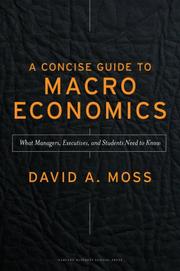
A concise guide to macroeconomics by 8761736|David A. Moss book cover

πŸ“˜ A concise guide to macroeconomics

"Understanding the Ground Rules for the Global Economy In this revised and updated edition of A Concise Guide to Macroeconomics, David A. Moss draws on his years of teaching at Harvard Business School to explain important macro concepts using clear and engaging language. This guidebook covers the essentials of macroeconomics and examines, in a simple and intuitive way, the core ideas of output, money, and expectations. Early chapters leave you with an understanding of everything from fiscal policy and central banking to business cycles and international trade. Later chapters provide a brief monetary history of the United States as well as the basics of macroeconomic accounting. You'll learn why countries trade, why exchange rates move, and what makes an economy grow. Moss's detailed examples will arm you with a clear picture of how the economy works and how key variables impact business and will equip you to anticipate and respond to major macroeconomic events, such as a sudden depreciation of the real exchange rate or a steep hike in the federal funds rate. Read this book from start to finish for a complete overview of macroeconomics, or use it as a reference when you're confronted with specific challenges, like the need to make sense of monetary policy or to read a balance of payments statement. Either way, you'll come away with a broad understanding of the subject and its key pieces, and you'll be empowered to make smarter business decisions. "-- "Now more than ever before, executives and managers need to understand their larger economic context. In A Concise Guide to Macroeconomics, David Moss leverages his many years of teaching experience at Harvard Business School to lay out important macroeconomic concepts in engaging, clear, and concise terms. In a simple and intuitive way, he breaks down the ideas into output, money, and expectations. In addition, Moss introduces powerful tools for interpreting the big-picture economic developments that shape events in the contemporary business arena. He uses detailed examples drawn from history to illuminate important concepts, and leaves the reader with a clearer picture of how our abstract economy actually works, and what impact in has on business. This classic resource is fully updated, including a new chapter on the Global Financial Crisis"--

β˜…β˜…β˜…β˜…β˜…β˜…β˜…β˜…β˜…β˜… 0.0 (0 ratings)
Similar? ✓ Yes 0 ✗ No 0

Some Other Similar Books

The Big Con: The True Story of How Washington Got Wowed and Left Wowed by Jonathan Kennedy
Currency Wars: The Making of the Next Global Crisis by James Rickards
Lords of Finance: The Bankers Who Broke the World by Liaquat Ahamed
The Ascent of Money: A Financial History of the World by Niall Ferguson
The Great Devaluation: The Dollar and the Future of the Global Economy by Willem Buiter
This Time Is Different: Eight Centuries of Financial Folly by Carmen M. Reinhart and Kenneth S. Rogoff
The Debt Trap: How the Debt Culture Undermines the Economy by Yves Mersch
The Collapse of the Dollar and How to Profit from It by James G. Rickards
The Dollar Crisis: Causes, Consequences, Cures by Richard Duncan
Global Currency Crisis: The End of American Hegemony by George T. Frasco
The Ascent of Money: A Financial History of the World by Niall Ferguson
Flash Boys: A Wall Street Revolt by Michael Lewis
The Panic of 1819: The Financial Crisis That Shaped the New World by Charles R. Sellers
When Money Dies: The Nightmare of the Weimar Hyperinflation by Adam Fergusson

Have a similar book in mind? Let others know!

Please login to submit books!