Books like Love, work, and play by Paul Thagard


First publish date: 2010
Authors: Paul Thagard
★ ★ ★ ★ ★ 0.0 (0 community ratings)

Love, work, and play by Paul Thagard

How are these books recommended?

The books recommended for Love, work, and play by Paul Thagard are shaped by reader interaction. Votes on how closely books relate, user ratings, and community comments all help refine these recommendations and highlight books readers genuinely find similar in theme, ideas, and overall reading experience.


Have you read any of these books?
Your votes, ratings, and comments help improve recommendations and make it easier for other readers to discover books they’ll enjoy.

Books similar to Love, work, and play (14 similar books)

Thinking, fast and slow by 6390436|Daniel Kahneman book cover

📘 Thinking, fast and slow

Daniel Kahneman's "Thinking, Fast and Slow" explains how two distinct mental systems shape our judgments and decisions, offering insights into the biases that influence everyday choices.

★★★★★★★★★★ 4.1 (189 ratings)
Similar? ✓ Yes 0 ✗ No 0
The art of thinking clearly by 9275146|Rolf Dobelli book cover

📘 The art of thinking clearly

Rolf Dobelli presents 99 concise chapters that explain everyday cognitive biases, showing how awareness can sharpen decision‑making at work and in life.

★★★★★★★★★★ 4.2 (18 ratings)
Similar? ✓ Yes 0 ✗ No 0
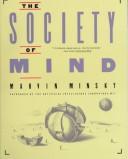
The society of mind by 834497|Marvin Minsky book cover

📘 The society of mind

Marvin Minsky presents an interconnected framework that explains human cognition and its implications for artificial intelligence.

★★★★★★★★★★ 3.8 (5 ratings)
Similar? ✓ Yes 0 ✗ No 0
Beyond boredom and anxiety by 7678979|Mihaly Csikszentmihalyi book cover

📘 Beyond boredom and anxiety


★★★★★★★★★★ 4.0 (1 rating)
Similar? ✓ Yes 0 ✗ No 0
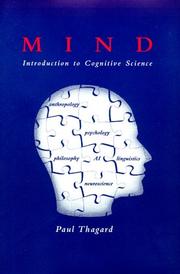
Mind by 6663841|Paul Thagard book cover

📘 Mind


★★★★★★★★★★ 5.0 (1 rating)
Similar? ✓ Yes 0 ✗ No 0
International Library of Psychology by 6984093|Routledge book cover

📘 International Library of Psychology
 by Routledge


★★★★★★★★★★ 0.0 (0 ratings)
Similar? ✓ Yes 0 ✗ No 0
Brainstorms by 7745734|Daniel C. Dennett book cover

📘 Brainstorms


★★★★★★★★★★ 0.0 (0 ratings)
Similar? ✓ Yes 0 ✗ No 0
Philosophy in the flesh by 6676611|George Lakoff book cover

📘 Philosophy in the flesh

George Lakoff argues that modern philosophy should be grounded in cognitive science, showing that our thoughts, language and moral concepts are largely shaped by embodied metaphors rather than abstract, disembodied reasoning.

★★★★★★★★★★ 0.0 (0 ratings)
Similar? ✓ Yes 0 ✗ No 0
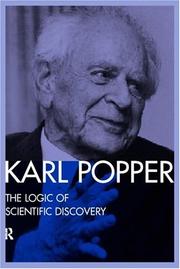
The Logic of Scientific Discovery by 6724044|Karl Popper book cover

📘 The Logic of Scientific Discovery

When first published in 1959, this book revolutionized contemporary thinking about science and knowledge. It remains the one of the most widely read books about science to come out of the twentieth century.

★★★★★★★★★★ 0.0 (0 ratings)
Similar? ✓ Yes 0 ✗ No 0
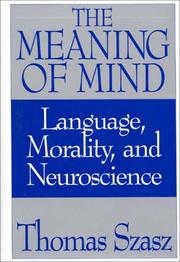
The meaning of mind by 8343260|Thomas Stephen Szasz book cover

📘 The meaning of mind

Thomas Szasz's critique of neuroscience's attempt to explain the 'mind' as brain function is presented in The Meaning of Mind.

★★★★★★★★★★ 0.0 (0 ratings)
Similar? ✓ Yes 0 ✗ No 0
Cognition in the Wild by 10144732|Edwin Hutchins book cover

📘 Cognition in the Wild

Edwin Hutchins combines his background as an anthropologist and an open-ocean racing sailor and navigator in this account of how anthropological methods can be combined with cognitive theory to produce a new reading of cognitive science. His theoretical insights are grounded in an extended analysis of ship navigation - its computational basis, its historical roots, its social organization, and the details of its implementation in actual practice aboard large ships. The result is an unusual interdisciplinary approach to cognition in culturally constituted activities outside the laboratory - "in the wild.". Hutchins examines a set of phenomena that have fallen between the established disciplines of psychology and anthropology, bringing to light a new set of relationships between culture and cognition. The standard view is that culture affects the cognition of individuals. Hutchins argues instead that cultural activity systems have cognitive properties of their own that differ from the cognitive properties of the individuals who participate in them. Each action for bringing a large naval vessel into port, for example, is informed by culture; thus the navigation team can be seen as a cognitive and computational system. Introducing life in the Navy and work on the bridge, Hutchins makes a clear distinction between the cognitive properties of an individual and the cognitive properties of a system. In striking contrast to the usual laboratory tasks of research in cognitive science, he adopts David Marr's paradigm and applies the principal metaphor of cognitive science - cognition as computation - to the navigation task. After comparing modern Western navigation with the method practiced in Micronesia, Hutchins explores the computational and cognitive properties of systems that involve multiple individuals. He then turns to an analysis of learning or change in the organization of cognitive systems at several scales. . Hutchins's conclusion illustrates the costs of ignoring the cultural nature of cognition and points to ways in which contemporary cognitive science can be transformed by new meanings and interpretations.

★★★★★★★★★★ 0.0 (0 ratings)
Similar? ✓ Yes 0 ✗ No 0
Predictive Mind by 12412076|Jakob Hohwy book cover

📘 Predictive Mind

A new theory is taking hold in neuroscience. It is the theory that the brain is essentially a hypothesis-testing mechanism, one that attempts to minimise the error of its predictions about the sensory input it receives from the world. It is an attractive theory because powerful theoretical arguments support it, and yet it is at heart stunningly simple. Jakob Hohwy explains and explores this theory from the perspective of cognitive science and philosophy. The key argument throughout The Predictive Mind is that the mechanism explains the rich, deep, and multifaceted character of our conscious perception. It also gives a unified account of how perception is sculpted by attention, and how it depends on action. The mind is revealed as having a fragile and indirect relation to the world. Though we are deeply in tune with the world we are also strangely distanced from it. The first part of the book sets out how the theory enables rich, layered perception. The theory's probabilistic and statistical foundations are explained using examples from empirical research and analogies to different forms of inference. The second part uses the simple mechanism in an explanation of problematic cases of how we manage to represent, and sometimes misrepresent, the world in health as well as in mental illness. The third part looks into the mind, and shows how the theory accounts for attention, conscious unity, introspection, self and the privacy of our mental world. -- Provided by publisher.

★★★★★★★★★★ 0.0 (0 ratings)
Similar? ✓ Yes 0 ✗ No 0
The cognitive paradigm by 12660912|Marc de Mey book cover

📘 The cognitive paradigm


★★★★★★★★★★ 0.0 (0 ratings)
Similar? ✓ Yes 0 ✗ No 0
The Structure of Scientific Revolutions by 9607127|Thomas S. Kuhn book cover

📘 The Structure of Scientific Revolutions

The Structure of Scientific Revolutions by Thomas S. Kuhn.

★★★★★★★★★★ 0.0 (0 ratings)
Similar? ✓ Yes 0 ✗ No 0

Some Other Similar Books

The Philosophy of Mind by Jaegwon Kim
The Nature of Rationality by Robert B. Brandom
Cognitive Science: An Introduction by Ronald T. Kellogg
Mind: A Brief Introduction by Berent encel
The Extended Mind by Andy Clark and David Chalmers

Have a similar book in mind? Let others know!

Please login to submit books!