Books like How our lives become stories by Paul John Eakin

First publish date: 1999
Authors: Paul John Eakin
★ ★ ★ ★ ★ 0.0 (0 community ratings)

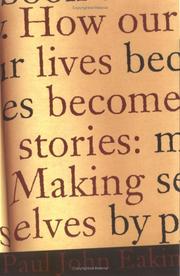
How our lives become stories by Paul John Eakin

How are these books recommended?

The books recommended for How our lives become stories by Paul John Eakin are shaped by reader interaction. Votes on how closely books relate, user ratings, and community comments all help refine these recommendations and highlight books readers genuinely find similar in theme, ideas, and overall reading experience.


Have you read any of these books?
Your votes, ratings, and comments help improve recommendations and make it easier for other readers to discover books they’ll enjoy.

Books similar to How our lives become stories (3 similar books)

Narrative of the life of Frederick Douglass by 6703980|Frederick Douglass book cover

πŸ“˜ Narrative of the life of Frederick Douglass

Frederickβ€―Douglass’s gripping autobiography recounts his journey from enslaved child to influential abolitionist, exposing the brutal realities of slavery and the resilience of those who endured it.

β˜…β˜…β˜…β˜…β˜…β˜…β˜…β˜…β˜…β˜… 4.4 (10 ratings)
Similar? ✓ Yes 0 ✗ No 0
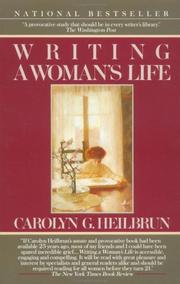
Writing a woman's life by 10583756|Carolyn G. Heilbrun book cover

πŸ“˜ Writing a woman's life

Heilbrun explores the life‑writing struggles of celebrated women authors, urging every woman to author her own script.

β˜…β˜…β˜…β˜…β˜…β˜…β˜…β˜…β˜…β˜… 3.0 (1 rating)
Similar? ✓ Yes 0 ✗ No 0
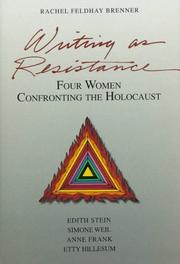
Writing as resistance by 9635899|Rachel Feldhay Brenner book cover

πŸ“˜ Writing as resistance

In this moving account of the life, work, and ethics of four Jewish women intellectuals in the world of the Holocaust, Rachel Feldhay Brenner explores the ways in which these women sought to maintain their faith in humanity while aware of intensifying destruction. She argues that through their written responses of autobiographical self-assertion Edith Stein, Simone Weil, Anne Frank, and Etty Hillesum resisted the Nazi terror in ways that defy its horrifying dehumanization. Personal identity crises engendered the intellectual-spiritual acts of autobiographical self-searching for each of these women. About to become a nun in 1933, Edith Stein embarked on her autobiography as a daughter of a Jewish family. Fleeing France and deportation in 1942, Simone Weil examined her inner struggle with faith and the Church in her "Spiritual Autobiography." Hiding for more than two years in the attic, Anne Frank poignantly confided in her diary about her efforts to become a better person. Having volunteered as a social worker in Westerbork, Etty Hillesum searched her soul for love in the reality of terror. In each case, autobiographical writing becomes an act of defiance that asserts humanity in a dehumanized/dehumanizing world. By focusing on the four women's accomplishments as intellectuals, writers, and thinkers, Brenner's account liberates them from other posthumous treatments that depict them as symbols of altruism, sanctity, and victimization. Her approach also elucidates the particular predicament of Western Jewish intellectuals who trusted the ideals of the Enlightenment and believed in human fellowship. While suffering the terror of physical annihilation decreed by the Final Solution, these women had to contend with their exclusion from the world that they considered theirs. On yet another level, this study of four extraordinary life stories contributes to a deeper understanding of the postwar development of ethical, theological, and feminist thought. In showing concern about a world that had ceased to care for them, Stein, Weil, Frank, and Hillesum demonstrated that the meaning of human existence consisted in the responsibility for the other, in the protection of the suffering God, in the primary value of relatedness through empathy. Arguing that their ethical tenets anticipated the thought of such postwar thinkers as Levinas, Fackenheim, Tillich, Arendt, and Nodding, Brenner proposes that the breakup of the humanist tradition of the Enlightenment in the Holocaust engendered the postwar exploration of humanist potential in self-givenness to the other.

β˜…β˜…β˜…β˜…β˜…β˜…β˜…β˜…β˜…β˜… 0.0 (0 ratings)
Similar? ✓ Yes 0 ✗ No 0

Some Other Similar Books

Telling Lives: Theories of Biography by Philip Lejeune
The Literature of Personal Experience by Sidonie Smith
The Art of Autobiography by William K. Wimsatt
Auto/biography as Cultural Practice by H. L. P. Smith
Living Autobiographically: How We Create Identity in Narrative by Viktor Shklovsky
Conversations with Paul Ricoeur by Richmond Campbell
Narrative Minds: The Social Life of Stories by Peter L. Burke
The Self We Live By: Narrative Identity in a Postmodern World by Dan P. McAdams
Memory and Identity: The History of a Modern Problem by Jan Assmann
The Narrative Construction of Reality by Jenifer G. P. H. R. J. H. H. R. H. H. H. H.

Have a similar book in mind? Let others know!

Please login to submit books!