Books like A Song for Nagasaki by Paul Glynn
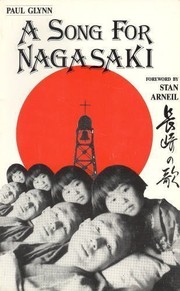

A Song for Nagasaki is a biography of Takashi Nagai, a Catholic convert who survived the Hiroshima bombing. The story begins with his childhood and the family's Shinto religion. It traces Nagai's journey from Shintoism to atheism to Catholicism and the impact of his religious conversion on his scientific research. The book explores the Christian message of love and forgiveness and its resonance with the Japanese people's suffering. It is a moving tribute to a remarkable man who dedicated his life to service after the atomic bomb disaster.
First publish date: 1990
Genre: Biography & Autobiography/Biography
Authors: Paul Glynn
★ ★ ★ ★ ★ 0.0 (0 community ratings)

A Song for Nagasaki by Paul Glynn

How are these books recommended?

The books recommended for A Song for Nagasaki by Paul Glynn are shaped by reader interaction. Votes on how closely books relate, user ratings, and community comments all help refine these recommendations and highlight books readers genuinely find similar in theme, ideas, and overall reading experience.


Have you read any of these books?
Your votes, ratings, and comments help improve recommendations and make it easier for other readers to discover books they’ll enjoy.

Books similar to A Song for Nagasaki (12 similar books)

The Book Thief by 4615885|Markus Zusak book cover

📘 The Book Thief

During World War II, a foster girl in Nazi Germany steals books to share with neighbors and a hidden Jewish man, proving literature’s power to nourish the soul amid darkness.

★★★★★★★★★★ 4.2 (121 ratings)
Similar? ✓ Yes 0 ✗ No 0
Between Shades of Gray by 11147927|Ruta Sepetys book cover

📘 Between Shades of Gray

In 1941 Lithuania, fifteen‑year‑old Lina and her family are deported by the Soviets to a Siberian labor camp; through art and resilience they endure brutal conditions and strive to survive the long journey ahead.

★★★★★★★★★★ 4.1 (14 ratings)
Similar? ✓ Yes 0 ✗ No 0
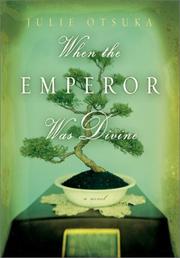
When the emperor was divine by 5182279|Julie Otsuka book cover

📘 When the emperor was divine

Japanese‑American family deported to a Utah internment camp during World War II, narrated through four family members as they confront eviction and life in isolation.

★★★★★★★★★★ 3.0 (1 rating)
Similar? ✓ Yes 0 ✗ No 0
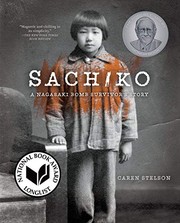
Sachiko by 7702670|Caren Stelson book cover

📘 Sachiko

Sachiko follows the true story of six‑year‑old Sachiko Yasui, whose miraculous survival of the Nagasaki atomic blast on August 9 1945 and the lifelong aftermath are told through extensive interviews and heartfelt narrative nonfiction.

★★★★★★★★★★ 5.0 (1 rating)
Similar? ✓ Yes 0 ✗ No 0
Night by 6414067|Elie Wiesel book cover

📘 Night

Elie Wiesel chronicles the harrowing realities of his childhood in Nazi concentration camps, and how witnessing the loss of family and friends transformed his faith.

★★★★★★★★★★ 0.0 (0 ratings)
Similar? ✓ Yes 0 ✗ No 0
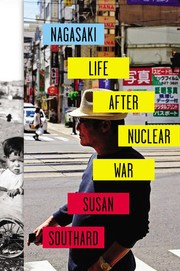
Nagasaki by 11632110|Susan Southard book cover

📘 Nagasaki

This book is a powerful and unflinching account of the enduring impact of nuclear war, told through the stories of those who survived. On August 9, 1945, three days after the atomic bombing of Hiroshima, the United States dropped a second atomic bomb on Nagasaki, a small port city on Japan's southernmost island. An estimated 74,000 people died within the first five months, and another 75,000 were injured. Published on the seventieth anniversary of the bombing, Nagasaki takes readers from the morning of the bombing to the city today, telling the first-hand experiences of five survivors, all of whom were teenagers at the time of the devastation. Susan Southard has spent years interviewing hibakusha ("bomb-affected people") and researching the physical, emotional, and social challenges of post-atomic life. She weaves together dramatic eyewitness accounts with searing analysis of the policies of censorship and denial that colored much of what was reported about the bombing both in the United States and Japan. A gripping narrative of human resilience, Nagasaki will help shape public discussion and debate over one of the most controversial wartime acts in history. - Publisher.

★★★★★★★★★★ 0.0 (0 ratings)
Similar? ✓ Yes 0 ✗ No 0
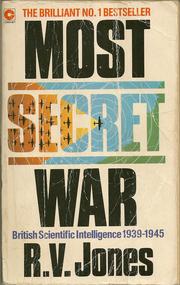
Most secret war by 12033248|Jones, R. V. book cover

📘 Most secret war

Most Secret War is R V Jones's account of his part in British Scientific Intelligence between 1939 and 1945. It was his responsibility to anticipate the German applications of science to warfare, so that the British could counter their new weapons before they were used. Much of his work had to do with radio navigation, as in the Battle of the Beams, with radar, as in the Allied Bomber Offensive and in the preparations for D-Day and in the war at sea. He was also in charge of the British intelligence against the V-1 (flying bomb) and V-2 (rocket) retaliation weapons and, although fortunately the Germans were some distance from success, against their nuclear weapons.

★★★★★★★★★★ 0.0 (0 ratings)
Similar? ✓ Yes 0 ✗ No 0
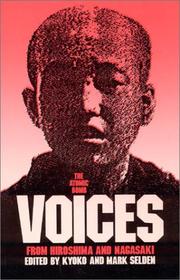
The Atomic bomb by 11252501|Kyoko Iriye Selden book cover

📘 The Atomic bomb


★★★★★★★★★★ 0.0 (0 ratings)
Similar? ✓ Yes 0 ✗ No 0
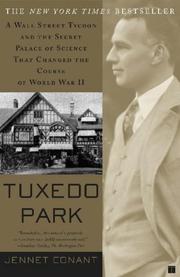
Tuxedo Park by 7053129|Jennet Conant book cover

📘 Tuxedo Park

"In the fall of 1940, as German bombers flew over London and with America not yet at war, a small team of British scientists on orders from Winston Churchill carried out a daring transatlantic mission. The British unveiled their most valuable military secret in a clandestine meeting with American nuclear physicists at the Tuxedo Park mansion of a mysterious Wall Street tycoon, Alfred Lee Loomis. Powerful, handsome, and enormously wealthy, Loomis had for years led a double life, spending his days brokering huge deals and his weekends working with the world's leading scientists in his deluxe private laboratory that was hidden in a massive stone castle.". "In this account of a hitherto unexplored but crucial story of the war, Jennet Conant traces one of the world's most extraordinary careers and scientific enterprises. She describes Loomis' phenomenal rise to become one of the Wall Street legends of the go-go twenties. He rode out the Depression years in high style, and indulged in the hobbies of the fabulously rich.". "At the height of his influence on Wall Street, Loomis abruptly retired and devoted himself purely to science. He turned his Tuxedo Park laboratory into the meeting place for the most visionary minds of the twentieth century: Albert Einstein, Werner Heisenberg, James Franck, Niels Bohr, and Enrico Fermi. With England threatened by invasion, he joined Vannevar Bush, Karl Compton, and the author's grandfather, Harvard president James B. Conant, in mobilizing civilian scientists to defeat Nazi Germany, and personally bankrolled pioneering research into the radar detection systems that ultimately changed the course of World War II.". "Together with his friend Ernest Lawrence, the Nobel Prize-winning atom smasher, Loomis established a top-secret wartime laboratory at MIT and recruited the most famous names in physics. Through his close ties to his cousin Henry Stimson, who was secretary of war, Loomis was able to push FDR to spend hundreds of millions of dollars to create the advanced radar systems that defeated the German Air Force and deadly U-boats, and then to build the first atomic bomb. One of the greatest scientific generals of World War II, Loomis' legacy exists not only in the development of radar but also in his critical role in speeding the day of victory."--BOOK JACKET.

★★★★★★★★★★ 0.0 (0 ratings)
Similar? ✓ Yes 0 ✗ No 0
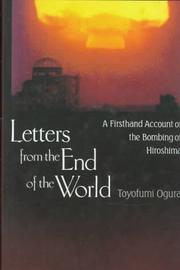
Letters from the end of the world by 8328042|Toyofumi Ogura book cover

📘 Letters from the end of the world

Letters reflecting a Japanese teacher’s personal experience during the 1945 atomic bombing of Hiroshima.

★★★★★★★★★★ 0.0 (0 ratings)
Similar? ✓ Yes 0 ✗ No 0
First into Nagasaki by 7158775|George Weller book cover

📘 First into Nagasaki

George Weller was a Pulitzer Prize--winning reporter who covered World War II across Europe, Africa, and Asia. At the war's end in September 1945, under General MacArthur's media blackout, correspondents were forbidden to enter both Nagasaki and Hiroshima. But instead of obediently staying with the press corps in northern Japan, Weller broke away. The intrepid newspaperman reached Nagasaki just weeks after the atomic bomb hit the city. Boldly presenting himself as a U.S. colonel to the Japanese military, Weller set out to explore the devastation.As Nagasaki's first outside observer, long before any American medical aid arrived, Weller witnessed the bomb's effects and wrote "the anatomy of radiated man." He interviewed doctors trying to cure those dying mysteriously from "Disease X." He typed far into every night, sending his forbidden dispatches back to MacArthur's censors, assuming their importance would make them unstoppable. He was wrong: the U.S. government censored every word, and the dispatches vanished from history.Weller also became the first to enter the nearby Allied POW camps. From hundreds of prisoners he gathered accounts of watching the atomic explosions bring an end to years of torture and merciless labor in Japanese mines. Their dramatic testimonies sum up one of the least-known chapters of the war--but those stories, too, were silenced.It is a powerful experience, more than 60 years later, to walk with Weller through the smoldering ruins of Nagasaki, or hear the sagas of prisoners who have just learned that their torment is over, and watch one of the era's most battle-experienced reporters trying to accurately and unsentimentally convey to the American people scenes unlike anything he--or anyone else--knew. Weller died in 2002, believing it all lost forever. Months later, his son found a fragile copy in a crate of moldy papers. This historic body of work has never been published.Along with reports from the brutal POW camps, a stirring saga of the worst of the Japanese "hellships" which carried U.S. prisoners into murder and even cannibalism, and a trove of Weller's unseen photos, First into Nagasaki provides a moving, unparalleled look at the bomb that killed more than 70,000 people and ended WWII. Amid current disputes over the controlled embedding of journalists in war zones and a government's right to keep secrets, it reminds us how such courageous rogue reporting is still essential to learning the truth.From the Hardcover edition.

★★★★★★★★★★ 0.0 (0 ratings)
Similar? ✓ Yes 0 ✗ No 0
Extraordinary leaders by 13652194|Joseph E. Jannotta book cover

📘 Extraordinary leaders

A rare dual‑perspective memoir of World War II in the Solomon Islands, contrasting the wartime letters of American LCI commander Alfred Vernon Jannotta Jr. with the diaries of Japanese Ensign Kotarō Kawanishi.

★★★★★★★★★★ 0.0 (0 ratings)
Similar? ✓ Yes 0 ✗ No 0

Some Other Similar Books

The Japanese Lover by Isabel Allende
Mushroom People by Haruki Murakami
Asmara: A Memoir of an Eritrean Childhood by Negar Djavadi
A Human Pattern by Patricia W. Elliott
The Shore by Kozue Otomo

Have a similar book in mind? Let others know!

Please login to submit books!