Books like The penal system by Michael Cavadino
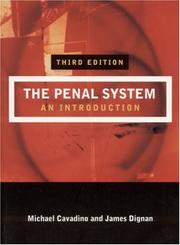

First publish date: 1992
Authors: Michael Cavadino
★ ★ ★ ★ ★ 0.0 (0 community ratings)

The penal system by Michael Cavadino

How are these books recommended?

The books recommended for The penal system by Michael Cavadino are shaped by reader interaction. Votes on how closely books relate, user ratings, and community comments all help refine these recommendations and highlight books readers genuinely find similar in theme, ideas, and overall reading experience.


Have you read any of these books?
Your votes, ratings, and comments help improve recommendations and make it easier for other readers to discover books they’ll enjoy.

Books similar to The penal system (3 similar books)
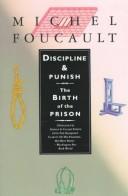
Discipline and Punish by 8650831|Michel Foucault book cover

πŸ“˜ Discipline and Punish

Michel Foucault’s seminal work traces the evolution of punishment and surveillance, revealing how modern societies exercise power through disciplinary institutions such as prisons, schools, and hospitals.

β˜…β˜…β˜…β˜…β˜…β˜…β˜…β˜…β˜…β˜… 3.8 (4 ratings)
Similar? ✓ Yes 0 ✗ No 0
Locked in by 11961347|John F. Pfaff book cover

πŸ“˜ Locked in

John F. Pfaff examines the roots of mass incarceration in the United States, challenging conventional narratives and spotlighting shifts in prosecutorial behavior during the 1990s.

β˜…β˜…β˜…β˜…β˜…β˜…β˜…β˜…β˜…β˜… 3.0 (1 rating)
Similar? ✓ Yes 0 ✗ No 0
From the war on poverty to the war on crime by 11956250|Elizabeth Kai Hinton book cover

πŸ“˜ From the war on poverty to the war on crime

"In the United States today, one in every 31 adults is under some form of penal control, including one in eleven African American men. How did the "land of the free" become the home of the world's largest prison system? Challenging the belief that America's prison problem originated with the Reagan administration's War on Drugs, Elizabeth Hinton traces the rise of mass incarceration to an ironic source: the social welfare programs of Lyndon Johnson's Great Society at the height of the civil rights era. Johnson's War on Poverty policies sought to foster equality and economic opportunity. But these initiatives were also rooted in widely shared assumptions about African Americans' role in urban disorder, which prompted Johnson to call for a simultaneous War on Crime. The 1965 Law Enforcement Assistance Act empowered the national government to take a direct role in militarizing local police. Federal anticrime funding soon incentivized social service providers to ally with police departments, courts, and prisons. Under Richard Nixon and his successors, welfare programs fell by the wayside while investment in policing and punishment expanded. Anticipating future crime, policy makers urged states to build new prisons and introduced law enforcement measures into urban schools and public housing, turning neighborhoods into targets of police surveillance. By the 1980s, crime control and incarceration dominated national responses to poverty and inequality. The initiatives of that decade were less a sharp departure than the full realization of the punitive transformation of urban policy implemented by Republicans and Democrats alike since the 1960s."--Provided by publisher.

β˜…β˜…β˜…β˜…β˜…β˜…β˜…β˜…β˜…β˜… 0.0 (0 ratings)
Similar? ✓ Yes 0 ✗ No 0

Some Other Similar Books

Introduction to Criminal Justice by Ronald J. Fourcey
The Sociology of Punishment by David Downes
Criminal Justice Policy and Planning by James W. Henderson
Punishment and Society by Michael Hood
Justice, Crime, and Violence by William J. Chambliss
Reforming Punishment by David Garland
The Politics of Criminal Justice by George F. Cole
The Death Penalty Debate by Scott Turow
Criminology: Explaining Crime by Ian Marsh
The Routledge Handbook of Critical Criminology by Walters, Russo, and Brown

Have a similar book in mind? Let others know!

Please login to submit books!