Books like Track Changes by Matthew G. Kirschenbaum


First publish date: 2016
Subjects: History, Technological innovations, Writing, Word processing, Creation (Literary, artistic, etc.)
Authors: Matthew G. Kirschenbaum
4.0 (2 community ratings)

Track Changes by Matthew G. Kirschenbaum

How are these books recommended?

The books recommended for Track Changes by Matthew G. Kirschenbaum are shaped by reader interaction. Votes on how closely books relate, user ratings, and community comments all help refine these recommendations and highlight books readers genuinely find similar in theme, ideas, and overall reading experience.


Have you read any of these books?
Your votes, ratings, and comments help improve recommendations and make it easier for other readers to discover books they’ll enjoy.

Books similar to Track Changes (2 similar books)

The Chinese typewriter by 11876175|Thomas S. Mullaney book cover

πŸ“˜ The Chinese typewriter


β˜…β˜…β˜…β˜…β˜…β˜…β˜…β˜…β˜…β˜… 0.0 (0 ratings)
Similar? ✓ Yes 0 ✗ No 0
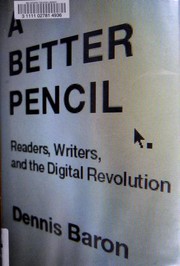
From pencils to pixels by 13215101|Dennis E. Baron book cover

πŸ“˜ From pencils to pixels

"Computers, now the writer's tool of choice, are still blamed by skeptics for a variety of ills, from speeding writing up to the point of recklessness, to complicating or trivializing the writing process, to destroying the English language itself. A Better Pencil puts our complex, still-evolving hate-love relationship with computers and the internet into perspective, describing how the digital revolution influences our reading and writing practices, and how the latest technologies differ from what came before. The book explores our use of computers as writing tools in light of the history of communication technology, a history of how we love, fear, and actually use our writing technologies - not just computers, but also typewriters, pencils, and clay tablets. Dennis Baron shows that virtually all writing implements - and even writing itself - were greeted at first with anxiety and outrage: the printing press disrupted the "almost spiritual connection" between the writer and the page; the typewriter was "impersonal and noisy" and would "destroy the art of handwriting." Both pencils and computers were created for tasks that had nothing to do with writing. Pencils, crafted by woodworkers for marking up their boards, were quickly repurposed by writers and artists. The computer crunched numbers, not words, until writers saw it as the next writing machine. Baron also explores the new genres that the computer has launched: email, the instant message, the web page, the blog, social-networking pages like MySpace and Facebook, and communally-generated texts like Wikipedia and the Urban Dictionary, not to mention YouTube. Here then is a fascinating history of our tangled dealings with a wide range of writing instruments, from ancient papyrus to the modern laptop ..."--Jacket.

β˜…β˜…β˜…β˜…β˜…β˜…β˜…β˜…β˜…β˜… 0.0 (0 ratings)
Similar? ✓ Yes 0 ✗ No 0

Some Other Similar Books

Mechanisms: New Media and the Forensic Imagination by Winterhouse Collective
Data and Goliath: The Hidden Battles to Collect Your Data and Control Your World by Bruce Schneier
The Digital Dark Age by Benjamin S. Schwartz
Coding Freedom: The Ethics and Aesthetics of Hacking by E. Gabriella Coleman
Digital Preservation: For the Information Technology Professional by James L. Sanna
Documenting the Now: A Guide to Visual Anthropology by Michael C. Steiner
The Social Life of Information by John Seely Brown & Paul Duguid
Re-Engineering the Library: The Design and Delivery of Digital Information Services by Kenneth M. Ryan and Gary M. Pitkin
Digital Preservation in Libraries, Archives, and Museums by Taylor & Francis
Archive Wars: The Politics of History by Sharon Macdonald

Have a similar book in mind? Let others know!

Please login to submit books!