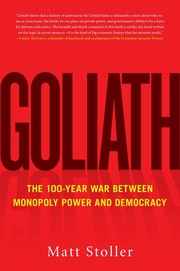
Books like Goliath by Matt Stoller


A startling look at how concentrated financial power and consumerism transformed American politics, resulting in the emergence of populism and authoritarianism, the fall of the Democratic Party—while also providing the steps needed to create a new democracy. Americans once had a coherent and clear understanding of political tyranny, one crafted by Thomas Jefferson and updated for the industrial age by Louis Brandeis. A concentration of power, whether in the hands of a military dictator or a JP Morgan, was understood as autocratic and dangerous to individual liberty and democracy. This idea stretched back to the country’s founding. In the 1930s, people observed that the Great Depression was caused by financial concentration in the hands of a few whose misuse of their power induced a financial collapse. They drew on this tradition to craft the New Deal. In Goliath, Matt Stoller explains how authoritarianism and populism have returned to American politics for the first time in eighty years, as the outcome of the 2016 election shook our faith in democratic institutions. It has brought to the fore dangerous forces that many modern Americans never even knew existed. Today’s bitter recriminations and panic represent more than just fear of the future, they reflect a basic confusion about what is happening and the historical backstory that brought us to this moment. The true effects of populism, a shrinking middle class, and concentrated financial wealth are only just beginning to manifest themselves under the current administrations. The lessons of Stoller’s study will only grow more relevant as time passes. Building upon his viral article in The Atlantic, “How the Democrats Killed Their Populist Soul,” Stoller illustrates in rich detail how we arrived at this tenuous moment, and the steps we must take to create a new democracy.
First publish date: 2019
Subjects: Populism, Democratic Party (U.S.), Industrial concentration, Monopolies, united states
Authors: Matt Stoller
0.0 (0 community ratings)

Goliath by Matt Stoller

How are these books recommended?

The books recommended for Goliath by Matt Stoller are shaped by reader interaction. Votes on how closely books relate, user ratings, and community comments all help refine these recommendations and highlight books readers genuinely find similar in theme, ideas, and overall reading experience.


Have you read any of these books?
Your votes, ratings, and comments help improve recommendations and make it easier for other readers to discover books they’ll enjoy.

Books similar to Goliath (5 similar books)
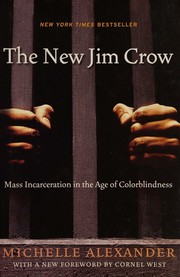
The New Jim Crow

📘 The New Jim Crow

The New Jim Crow: Mass Incarceration in the Age of Colorblindness is a 2010 book by Michelle Alexander, a civil rights litigator and legal scholar. The book discusses race-related issues specific to African-American males and mass incarceration in the United States, but Alexander noted that the discrimination faced by African-American males is prevalent among other minorities and socio-economically disadvantaged populations. Alexander's central premise, from which the book derives its title, is that "mass incarceration is, metaphorically, the New Jim Crow". --wikipedia

3.4 (14 ratings)
Similar? ✓ Yes 0 ✗ No 0
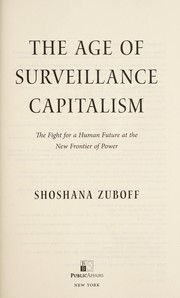
The Age of Surveillance Capitalism

📘 The Age of Surveillance Capitalism

"Shoshana Zuboff, named "the true prophet of the information age" by the Financial Times, has always been ahead of her time. Her seminal book In the Age of the Smart Machine foresaw the consequences of a then-unfolding era of computer technology. Now, three decades later she asks why the once-celebrated miracle of digital is turning into a nightmare. Zuboff tackles the social, political, business, personal, and technological meaning of "surveillance capitalism" as an unprecedented new market form. It is not simply about tracking us and selling ads, it is the business model for an ominous new marketplace that aims at nothing less than predicting and modifying our everyday behavior--where we go, what we do, what we say, how we feel, who we're with. The consequences of surveillance capitalism for us as individuals and as a society vividly come to life in The Age of Surveillance Capitalism's pathbreaking analysis of power. The threat has shifted from a totalitarian "big brother" state to a universal global architecture of automatic sensors and smart capabilities: A "big other" that imposes a fundamentally new form of power and unprecedented concentrations of knowledge in private companies--free from democratic oversight and control"-- "In this masterwork of original thinking and research, Shoshana Zuboff provides startling insights into the phenomenon that she has named surveillance capitalism. The stakes could not be higher: a global architecture of behavior modification threatens human nature in the twenty-first century just as industrial capitalism disfigured the natural world in the twentieth. Zuboff vividly brings to life the consequences as surveillance capitalism advances from Silicon Valley into every economic sector. Vast wealth and power are accumulated in ominous new "behavioral futures markets," where predictions about our behavior are bought and sold, and the production of goods and services is subordinated to a new "means of behavioral modification." The threat has shifted from a totalitarian Big Brother state to a ubiquitous digital architecture: a "Big Other" operating in the interests of surveillance capital. Here is the crucible of an unprecedented form of power marked by extreme concentrations of knowledge and free from democratic oversight. Zuboff's comprehensive and moving analysis lays bare the threats to twenty-first century society: a controlled "hive" of total connection that seduces with promises of total certainty for maximum profit-at the expense of democracy, freedom, and our human future. With little resistance from law or society, surveillance capitalism is on the verge of dominating the social order and shaping the digital future--if we let it."--Dust jacket.

3.9 (11 ratings)
Similar? ✓ Yes 0 ✗ No 0
Dark Money

📘 Dark Money
 by Jane Mayer

Who are the immensely wealthy right-wing ideologues shaping the fate of America today? From the bestselling author of The Dark Side, an electrifying work of investigative journalism that uncovers the agenda of this powerful group. In her new preface, Jane Mayer discusses the results of the most recent election and Donald Trump's victory, and how, despite much discussion to the contrary, this was a huge victory for the billionaires who have been pouring money in the American political system. Why is America living in an age of profound and widening economic inequality? Why have even modest attempts to address climate change been defeated again and again? Why do hedge-fund billionaires pay a far lower tax rate than middle-class workers? In a riveting and indelible feat of reporting, Jane Mayer illuminates the history of an elite cadre of plutocrats—headed by the Kochs, the Scaifes, the Olins, and the Bradleys—who have bankrolled a systematic plan to fundamentally alter the American political system. Mayer traces a byzantine trail of billions of dollars spent by the network, revealing a staggering conglomeration of think tanks, academic institutions, media groups, courthouses, and government allies that have fallen under their sphere of influence. Drawing from hundreds of exclusive interviews, as well as extensive scrutiny of public records, private papers, and court proceedings, Mayer provides vivid portraits of the secretive figures behind the new American oligarchy and a searing look at the carefully concealed agendas steering the nation. Dark Money is an essential book for anyone who cares about the future of American democracy. ([source][1]) [1]: http://jane-mayer.com/

4.3 (3 ratings)
Similar? ✓ Yes 0 ✗ No 0
The Democracy Project

📘 The Democracy Project

A bold rethinking of the most powerful political idea in the world—democracy—and the story of how radical democracy can yet transform America. Democracy has been the American religion since before the Revolution—from New England town halls to the multicultural democracy of Atlantic pirate ships. But can our current political system, one that seems responsive only to the wealthiest among us and leaves most Americans feeling disengaged, voiceless, and disenfranchised, really be called democratic? And if the tools of our democracy are not working to solve the rising crises we face, how can we—average citizens—make change happen? David Graeber, one of the most influential scholars and activists of his generation, takes readers on a journey through the idea of democracy, provocatively reorienting our understanding of pivotal historical moments, and extracts their lessons for today.

3.0 (1 rating)
Similar? ✓ Yes 0 ✗ No 0
Capitalism, Socialism and Democracy

📘 Capitalism, Socialism and Democracy

**Capitalism, Socialism, and Democracy** is a book on economics, sociology, and history by Joseph Schumpeter, arguably one of—if not his most—famous, controversial, and important works. It’s also one of the most famous, controversial, and important books on social theory, social sciences, and economics—in which Schumpeter deals with capitalism, socialism, and creative destruction. It is the third most cited book in the social sciences published before 1950, behind Marx’s Capital and The Wealth of Nations by Adam Smith. (Source: [Wikipedia](https://en.wikipedia.org/wiki/Capitalism,_Socialism_and_Democracy))

0.0 (0 ratings)
Similar? ✓ Yes 0 ✗ No 0

Some Other Similar Books

The Power Broker by Robert A. Caro
Twilight of the Elites by Chris Hayes
The Road to Serfdom by Friedrich Hayek
Fear City by Kim V Bennett
The Political Economy of the American Revolution by Donald J. Matthew
Dark Money: The Hidden History of the Billionaires Behind the Rise of the Radical Right by Jane Mayer

Have a similar book in mind? Let others know!

Please login to submit books!