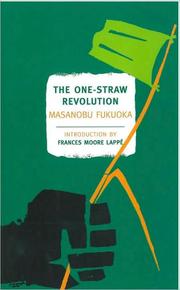
Books like One-Straw Revolution by Masanobu Fukuoka


"Call it Zen and the Art of Farming or a Little Green Book, Masanobu Fukuoka's manifesto about farming, eating, and the limits of human knowledge presents a radical challenge to the global systems we rely on for our food. At the same time, it is a spiritual memoir of a man whose innovative system of cultivating the earth reflects a deep faith in the wholeness and balance of the natural world. As Wendell Berry writes in his preface, the book 'is valuable to us because it is at once practical and philosophical. It is an inspiring, necessary book about agriculture because it is not just about agriculture'. Trained as a scientist, Fukuoka rejected both modern agribusiness and centuries of agricultural practice, deciding instead that the best forms of cultivation mirror nature's own laws. Over the next three decades he perfected his so-called do-nothing technique: commonsense, sustainable practices that all but eliminate the use of pesticides, fertilizer, tillage, and perhaps most significantly, wasteful effort."--Book cover.
First publish date: 2010
Subjects: Organic farming, Agriculture, japan
Authors: Masanobu Fukuoka
0.0 (0 community ratings)

One-Straw Revolution by Masanobu Fukuoka

How are these books recommended?

The books recommended for One-Straw Revolution by Masanobu Fukuoka are shaped by reader interaction. Votes on how closely books relate, user ratings, and community comments all help refine these recommendations and highlight books readers genuinely find similar in theme, ideas, and overall reading experience.


Have you read any of these books?
Your votes, ratings, and comments help improve recommendations and make it easier for other readers to discover books they’ll enjoy.

Books similar to One-Straw Revolution (6 similar books)
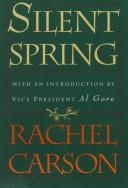
Silent Spring by 6587490|Rachel Carson book cover

πŸ“˜ Silent Spring

This account of the effects of pesticides on the environment launched the environmental movement in America.

β˜…β˜…β˜…β˜…β˜…β˜…β˜…β˜…β˜…β˜… 3.9 (16 ratings)
Similar? ✓ Yes 0 ✗ No 0
Shizen nōhō wara ippon no kakumei by 12572593|Masanobu Fukuoka book cover

πŸ“˜ Shizen nōhō wara ippon no kakumei

Six decades ago in postwar Japan, long before Michael Pollan or Alice Waters, Masanobu Fukuoka, a laboratory scientist who had studied plant enzymes and rhizomes in Tokyo laboratories and had worked with poisonous wartime chemicals during the devastations of the Second World War, headed back to the land his father's family farmed for nearly 1,400 years. There he painstakingly recovered and developed a method of farming that aligned itself as closely as possible with natural principles. While Japan set itself on a breakneck course toward modernization, Fukuoka grew rice in the opposite way, refusing to farm with chemicals that would annihilate even something as small as a leaf beetle. Call his book "Zen and the Art of the Wild Cucumber," or see Fukuoka as a Japanese Thoreau tending the whole universe in a beanstalk -- however you approach Fukuoka's rich philosophical side, it's important also to notice that his deep spiritual wisdom was co-terminous with his genius as a farmer. Without fertilizers or even tilling, he nonetheless harvested some of the greatest rice yields per acre in all of Japan. By the late '70s, when The One Straw Revolution was translated into English, Fukuoka had become a guru and disciple in seemingly radical -- but eminently sensible -- ways of approaching food, gardening, farming, and eating. His book is an early cult classic in organic and natural farming circles, but its implications stretch beyond them and continue to resonate as a global food crisis looms. Fukuoka believed that fertilizers and pesticides caused the very problems that they proposed to solve; that rather than annihilating pests, they invited them. He argued that natural foods, grown without these costly additives, should be the cheapest; and that the body living closest to the land and aligning itself with the seasons would be the healthiest. Thirty years later, as this book is re-released, Fukuoka's message -- now more urgent than ever -- remains a deeply nourishing clarion call.

β˜…β˜…β˜…β˜…β˜…β˜…β˜…β˜…β˜…β˜… 4.2 (6 ratings)
Similar? ✓ Yes 0 ✗ No 0
Shizen nōhō wara ippon no kakumei by 12572593|Masanobu Fukuoka book cover

πŸ“˜ Shizen nōhō wara ippon no kakumei

Six decades ago in postwar Japan, long before Michael Pollan or Alice Waters, Masanobu Fukuoka, a laboratory scientist who had studied plant enzymes and rhizomes in Tokyo laboratories and had worked with poisonous wartime chemicals during the devastations of the Second World War, headed back to the land his father's family farmed for nearly 1,400 years. There he painstakingly recovered and developed a method of farming that aligned itself as closely as possible with natural principles. While Japan set itself on a breakneck course toward modernization, Fukuoka grew rice in the opposite way, refusing to farm with chemicals that would annihilate even something as small as a leaf beetle. Call his book "Zen and the Art of the Wild Cucumber," or see Fukuoka as a Japanese Thoreau tending the whole universe in a beanstalk -- however you approach Fukuoka's rich philosophical side, it's important also to notice that his deep spiritual wisdom was co-terminous with his genius as a farmer. Without fertilizers or even tilling, he nonetheless harvested some of the greatest rice yields per acre in all of Japan. By the late '70s, when The One Straw Revolution was translated into English, Fukuoka had become a guru and disciple in seemingly radical -- but eminently sensible -- ways of approaching food, gardening, farming, and eating. His book is an early cult classic in organic and natural farming circles, but its implications stretch beyond them and continue to resonate as a global food crisis looms. Fukuoka believed that fertilizers and pesticides caused the very problems that they proposed to solve; that rather than annihilating pests, they invited them. He argued that natural foods, grown without these costly additives, should be the cheapest; and that the body living closest to the land and aligning itself with the seasons would be the healthiest. Thirty years later, as this book is re-released, Fukuoka's message -- now more urgent than ever -- remains a deeply nourishing clarion call.

β˜…β˜…β˜…β˜…β˜…β˜…β˜…β˜…β˜…β˜… 4.2 (6 ratings)
Similar? ✓ Yes 0 ✗ No 0
The One-Straw Revolution by 12572593|Masanobu Fukuoka book cover

πŸ“˜ The One-Straw Revolution

Leaving a career as a plant pathologist, the author took over the family farm in Japan consisting of rice fields and a mandarin orchard, where he developed and practiced pioneering methods of permaculture well before the term itself was coined. His account of his Zen-inspired way of sustainable agriculture has become a classic in the literature of permaculture.

β˜…β˜…β˜…β˜…β˜…β˜…β˜…β˜…β˜…β˜… 4.0 (3 ratings)
Similar? ✓ Yes 0 ✗ No 0
The road back to nature by 12572593|Masanobu Fukuoka book cover

πŸ“˜ The road back to nature


β˜…β˜…β˜…β˜…β˜…β˜…β˜…β˜…β˜…β˜… 0.0 (0 ratings)
Similar? ✓ Yes 0 ✗ No 0
Japan's dietary transition and its impacts by 6550590|Vaclav Smil book cover

πŸ“˜ Japan's dietary transition and its impacts


β˜…β˜…β˜…β˜…β˜…β˜…β˜…β˜…β˜…β˜… 0.0 (0 ratings)
Similar? ✓ Yes 0 ✗ No 0

Some Other Similar Books

The Unsettling of America: Culture & Agriculture by Wendell Berry
Permaculture: A Designers' Manual by Bill Mollison
Growing a Revolution: Bringing Soil to Life by David R. Montgomery
The Soil Will Save Us: How Scientists, Farmers, and Foodies Are Healing the Soil to Save the Planet by Kristin Ohlson
Seed to Seed: Seed Saving and Growing Techniques for Vegetable Gardeners by Suzanne Ashworth
The Ecology of a Cracker Childhood by Janisse Ray
Braiding Sweetgrass: Indigenous Wisdom, Scientific Knowledge, and the Teachings of Plants by Robin Wall Kimmerer
The Survival of the Flowers by Steve Parker
Gaia's Garden: A Guide to Home-Scale Permaculture by Toby Hemenway

Have a similar book in mind? Let others know!

Please login to submit books!