Books like Cyborg by Marie O'Mahony


First publish date: 2002
Authors: Marie O'Mahony
★ ★ ★ ★ ★ 0.0 (0 community ratings)

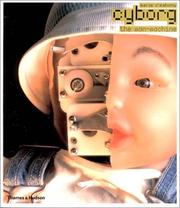
Cyborg by Marie O'Mahony

How are these books recommended?

The books recommended for Cyborg by Marie O'Mahony are shaped by reader interaction. Votes on how closely books relate, user ratings, and community comments all help refine these recommendations and highlight books readers genuinely find similar in theme, ideas, and overall reading experience.


Have you read any of these books?
Your votes, ratings, and comments help improve recommendations and make it easier for other readers to discover books they’ll enjoy.

Books similar to Cyborg (7 similar books)
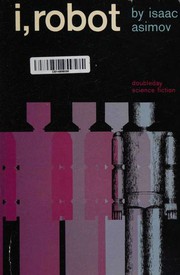
I, Robot by 7740570|Isaac Asimov book cover

πŸ“˜ I, Robot

Isaac Asimov’s classic collection revisits the evolution of robotics through a series of interconnected short stories framed by Dr. Susan Calvin’s encounters with a reporter in the 21st century.

β˜…β˜…β˜…β˜…β˜…β˜…β˜…β˜…β˜…β˜… 4.2 (161 ratings)
Similar? ✓ Yes 0 ✗ No 0
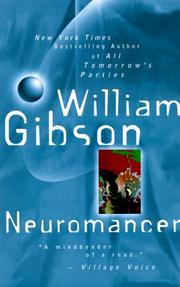
Neuromancer by 6920463|William Gibson book cover

πŸ“˜ Neuromancer

William Gibson’s debut Sprawl novel, *Neuromancer*, blends cyberpunk with a visionary digital future, following a hacker’s final job against a powerful AI. It earned Hugo, Nebula, and Philip K. Dick awards.

β˜…β˜…β˜…β˜…β˜…β˜…β˜…β˜…β˜…β˜… 4.0 (72 ratings)
Similar? ✓ Yes 0 ✗ No 0
The age of intelligent machines by 6685929|Ray Kurzweil book cover

πŸ“˜ The age of intelligent machines

Ray Kurzweil surveys the rise of artificial intelligence, from philosophical roots to contemporary breakthroughs and future implications for science, society, and economy.

β˜…β˜…β˜…β˜…β˜…β˜…β˜…β˜…β˜…β˜… 3.2 (5 ratings)
Similar? ✓ Yes 0 ✗ No 0
The Posthuman by 11602331|Rosi Braidotti book cover

πŸ“˜ The Posthuman

The Posthuman offers both an introduction and major contribution to contemporary debates on the posthuman. Digital 'second life', genetically modified food, advanced prosthetics, robotics and reproductive technologies are familiar facets of our globally linked and technologically mediated societies. This has blurred the traditional distinction between the human and its others, exposing the non-naturalistic structure of the human. The Posthuman starts by exploring the extent to which a post-humanist move displaces the traditional humanistic unity of the subject. Rather than perceiving this situation as a loss of cognitive and moral self-mastery, Braidotti argues that the posthuman helps us make sense of our flexible and multiple identities. Braidotti then analyzes the escalating effects of post-anthropocentric thought, which encompass not only other species, but also the sustainability of our planet as a whole. Because contemporary market economies profit from the control and commodification of all that lives, they result in hybridization, erasing categorical distinctions between the human and other species, seeds, plants, animals and bacteria. These dislocations induced by globalized cultures and economies enable a critique of anthropocentrism, but how reliable are they as indicators of a sustainable future? The Posthuman concludes by considering the implications of these shifts for the institutional practice of the humanities. Braidotti outlines new forms of cosmopolitan neo-humanism that emerge from the spectrum of post-colonial and race studies, as well as gender analysis and environmentalism. The challenge of the posthuman condition consists in seizing the opportunities for new social bonding and community building, while pursuing sustainability and empowerment.

β˜…β˜…β˜…β˜…β˜…β˜…β˜…β˜…β˜…β˜… 0.0 (0 ratings)
Similar? ✓ Yes 0 ✗ No 0
Cyborg IV by 10152915|Martin Caidin book cover

πŸ“˜ Cyborg IV


β˜…β˜…β˜…β˜…β˜…β˜…β˜…β˜…β˜…β˜… 0.0 (0 ratings)
Similar? ✓ Yes 0 ✗ No 0
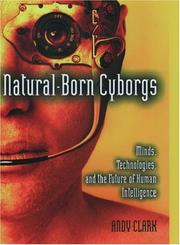
Natural-Born Cyborgs by 6954470|Andy Clark book cover

πŸ“˜ Natural-Born Cyborgs
 by Andy Clark

From Robocop to the Terminator to Eve 8, no image better captures our deepest fears about technology than the cyborg, the person who is both flesh and metal, brain and electronics. But philosopher and cognitive scientist Andy Clark sees it differently. Cyborgs, he writes, are not something tobe feared--we already are cyborgs. In Natural-Born Cyborgs, Clark argues that what makes humans so different from other species is our capacity to fully incorporate tools and supporting cultural practices into our existence. Technology as simple as writing on a sketchpad, as familiar as Google or a cellular phone, and aspotentially revolutionary as mind-extending neural implants--all exploit our brains' astonishingly plastic nature. Our minds are primed to seek out and incorporate non-biological resources, so that we actually think and feel through our best technologies...

β˜…β˜…β˜…β˜…β˜…β˜…β˜…β˜…β˜…β˜… 0.0 (0 ratings)
Similar? ✓ Yes 0 ✗ No 0
Donna Haraway's a Cyborg Manifesto by 12616779|Christien Garcia book cover

πŸ“˜ Donna Haraway's a Cyborg Manifesto


β˜…β˜…β˜…β˜…β˜…β˜…β˜…β˜…β˜…β˜… 0.0 (0 ratings)
Similar? ✓ Yes 0 ✗ No 0

Some Other Similar Books

The Cyberiad by Stanislaw Lem
The Singularity Trap by Federico Pistono
Robot Dreams by Isaac Asimov
Engines of Creation: The Coming Era of Nanotechnology by K. Eric Drexler
Artificial Intelligence: A Guide for Thinking Humans by Melanie Mitchell
Superintelligence: Paths, Dangers, Strategies by Nick Bostrom

Have a similar book in mind? Let others know!

Please login to submit books!