Books like What is life? by Lynn Margulis

First publish date: 1995
Genre: Science/Biology
Authors: Lynn Margulis
★ ★ ★ ★ ★ 5.0 (2 community ratings)

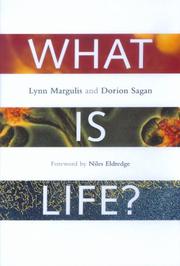
What is life? by Lynn Margulis

How are these books recommended?

The books recommended for What is life? by Lynn Margulis are shaped by reader interaction. Votes on how closely books relate, user ratings, and community comments all help refine these recommendations and highlight books readers genuinely find similar in theme, ideas, and overall reading experience.


Have you read any of these books?
Your votes, ratings, and comments help improve recommendations and make it easier for other readers to discover books they’ll enjoy.

Books similar to What is life? (9 similar books)
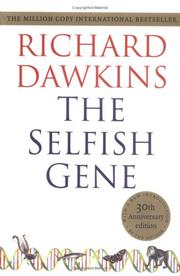
The selfish gene by 6696980|Richard Dawkins book cover

πŸ“˜ The selfish gene

Richard Dawkins’ classic, The Selfish Gene reexamines evolution from the perspective of genes as primary agents, arguing that organisms serve as vehicles for gene replication.

β˜…β˜…β˜…β˜…β˜…β˜…β˜…β˜…β˜…β˜… 4.4 (64 ratings)
Similar? ✓ Yes 0 ✗ No 0
The Extended Phenotype by 6696980|Richard Dawkins book cover

πŸ“˜ The Extended Phenotype


β˜…β˜…β˜…β˜…β˜…β˜…β˜…β˜…β˜…β˜… 4.4 (5 ratings)
Similar? ✓ Yes 0 ✗ No 0
What is life? The physical aspect of the living cell by 2442585|Erwin Schrödinger book cover

πŸ“˜ What is life? The physical aspect of the living cell

Erwin SchrΓΆdinger’s 1944 book "What Is Life?" poses the question of how living organisms can be explained by physics and chemistry, introducing the concept of an aperiodic crystal that later inspired the discovery of DNA.

β˜…β˜…β˜…β˜…β˜…β˜…β˜…β˜…β˜…β˜… 4.8 (4 ratings)
Similar? ✓ Yes 0 ✗ No 0
Five kingdoms by 6686620|Lynn Margulis book cover

πŸ“˜ Five kingdoms

"An all-inclusive catalogue of the world's living diversity, Five Kingdoms defines and describes the major divisions, or phyla, of nature's five great kingdoms - bacteria, protoctists, animals, fungi, and plants - using a modern classification scheme that is consistent with both the fossil record and molecular data. Generously illustrated and remarkably easy to follow, it not only allows readers to sample the full range of life forms inhabiting our planet but to familiarize themselves with the taxonomic theories by which all organisms' origins and distinctive characteristics are traced and classified."--BOOK JACKET.

β˜…β˜…β˜…β˜…β˜…β˜…β˜…β˜…β˜…β˜… 5.0 (1 rating)
Similar? ✓ Yes 0 ✗ No 0
Aquagenesis by 6914924|Richard Ellis book cover

πŸ“˜ Aquagenesis

"Ellis's detailed drawings bring animals to life that have not been seen for 400 million years, some that rival science fiction monsters for sheer weirdness. Early crocodiles and turtles were three times larger than they are today: and there was once a manatee that was 30 feet long and had no bones below the elbow. There were the trilobites, jointed animals with complex eyes that dominated the seas for 200 million years and then completely disappeared: sharks with teeth on their backs: and others, 50 feet long, with teeth the size of your hand.". "Fifty million years ago, some land-dwelling mammals reentered the water and began the process of modification that turned them into whales. It was the most astonishing transformation in mammalian history. In Aquagenesis, you will track these changes and meet the paleontologists who have found the links between the terrestrial mammals and the first semiaquatic whales - creatures that probably looked like hyenas, huge shrews, or fat otters. Today the only animal on earth that regularly walk in an upright, two-legged stance are penguins and people. It is possible that our size, shape, stride, intelligence, and hair (or lack thereof) can also be explained by the provocative theory of the aquatic ape."--BOOK JACKET.

β˜…β˜…β˜…β˜…β˜…β˜…β˜…β˜…β˜…β˜… 4.0 (1 rating)
Similar? ✓ Yes 0 ✗ No 0
The symbiotic planet by 6686620|Lynn Margulis book cover

πŸ“˜ The symbiotic planet

Although Charles Darwin's theory of evolution laid the foundations of modern biology, it did not tell the whole story. Most remarkably, ``The Origin of Species said very little about, of all things, the origins of species. Darwin and his modern successors have shown very convincingly how inherited variations are naturally selected, but they leave unanswered how variant organisms come to be in the first place. In Symbiotic Planet, renowned scientist Lynn Margulis shows that symbiosis, which simply means members of different species living in physical contact with each other, is crucial to the origins of evolutionary novelty. Ranging from bacteria, the smallest kinds of life, to the largest -- the living Earth itself -- Margulis explains the symbiotic origins of many of evolution's most important innovations. The very cells we're made of started as symbiotic unions of different kinds of bacteria. Sex -- and its inevitable corollary, death -- arose when failed attempts at cannibalism resulted in seasonally repeated mergers of some of our tiniest ancestors. Dry land became forested only after symbioses of algae and fungi evolved into plants. Since all living things are bathed by the same waters and atmosphere, all the inhabitants of Earth belong to a symbiotic union. Gaia, the finely tuned largest ecosystem of the Earth's surface, is just symbiosis as seen from space. Along the way, Margulis describes her initiation into the world of science and the early steps in the present revolution in evolutionary biology; the importance of species classification for how we think about the living world; and the way "academic apartheid" can block scientific advancement. Written with enthusiasm and authority, this is a book that could change the way you view our living Earth.

β˜…β˜…β˜…β˜…β˜…β˜…β˜…β˜…β˜…β˜… 5.0 (1 rating)
Similar? ✓ Yes 0 ✗ No 0
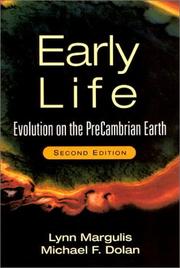
Early life by 6686620|Lynn Margulis book cover

πŸ“˜ Early life


β˜…β˜…β˜…β˜…β˜…β˜…β˜…β˜…β˜…β˜… 0.0 (0 ratings)
Similar? ✓ Yes 0 ✗ No 0
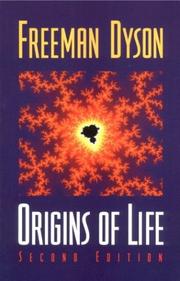
Origins of Life (CANTO) by 6754800|Freeman J. Dyson book cover

πŸ“˜ Origins of Life (CANTO)


β˜…β˜…β˜…β˜…β˜…β˜…β˜…β˜…β˜…β˜… 0.0 (0 ratings)
Similar? ✓ Yes 0 ✗ No 0
What is life? by 10777415|Addy Pross book cover

πŸ“˜ What is life?
 by Addy Pross

What is Life? explores how chemistry alone can give rise to the complex, self-maintaining properties of living systems, arguing that Darwinian evolution emerges from a fundamental chemical principle that links replicating molecules to complex life.

β˜…β˜…β˜…β˜…β˜…β˜…β˜…β˜…β˜…β˜… 0.0 (0 ratings)
Similar? ✓ Yes 0 ✗ No 0

Some Other Similar Books

Life on the Edge: The Coming of Age of Quantum Biology by Johnjoe McFadden and Jim Al-Khalili
The Vital Question: Energy, Evolution, and the Origins of Complex Life by Nick Lane
The Origin of Life: A Warm Little Pond by A. G. Cairns-Smith
The Genetic Code: The Molecular Basis of Genetic Information by Merrill R. Miser
Biogenesis: A Paleoanthropologist's View by George Sarton
The Evolution of Life: The Scientific Record of the History of Life by Stephen Jay Gould
Life: The Leading Edge of Evolutionary Biology by David J. Depew and Bruce H. Weber

Have a similar book in mind? Let others know!

Please login to submit books!