Books like I'd rather we got casinos, and other Black thoughts by Larry Wilmore
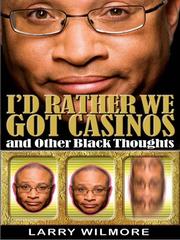

Within these pages are the musings, the revelations, the ruminations, and the reflections of Daily Show comic Larry Wilmore--from why black weathermen make him feel happy (or sad) and why brothas don't see UFOs, to his search for Black Jesus, or his quest to replace "African-American" with "chocolate," Wilmore has finally agreed to share his unique (black) perspective. Soon, you too will have the ability to find racism in everything. Bring back the Shetland Negro and do away with Black History Month! After all, can twenty-eight days of trivia really make up for centuries of oppression?--From publisher description.
First publish date: 2008
Subjects: Nonfiction, Race relations, Racism, Politics, African Americans
Authors: Larry Wilmore
3.5 (2 community ratings)

I'd rather we got casinos, and other Black thoughts by Larry Wilmore

How are these books recommended?

The books recommended for I'd rather we got casinos, and other Black thoughts by Larry Wilmore are shaped by reader interaction. Votes on how closely books relate, user ratings, and community comments all help refine these recommendations and highlight books readers genuinely find similar in theme, ideas, and overall reading experience.


Have you read any of these books?
Your votes, ratings, and comments help improve recommendations and make it easier for other readers to discover books they’ll enjoy.

Books similar to I'd rather we got casinos, and other Black thoughts (15 similar books)

Between the World and Me by 7695610|Ta-Nehisi Coates book cover

πŸ“˜ Between the World and Me

Between the World and Me is a 2015 nonfiction book written by American author Ta-Nehisi Coates and published by Spiegel & Grau. It is written as a letter to the author's teenage son about the feelings, symbolism, and realities associated with being Black in the United States. Coates recapitulates American history and explains to his son the "racist violence that has been woven into American culture." Coates draws from an abridged, autobiographical account of his youth in Baltimore, detailing the ways in which institutions like the school, the police, and even "the streets" discipline, endanger, and threaten to disembody black men and women. The work takes structural and thematic inspiration from James Baldwin's 1963 epistolary book The Fire Next Time. Unlike Baldwin, Coates sees white supremacy as an indestructible force, one that Black Americans will never evade or erase, but will always struggle against. The novelist Toni Morrison wrote that Coates filled an intellectual gap in succession to James Baldwin. Editors of The New York Times and The New Yorker described the book as exceptional. The book won the 2015 National Book Award for Nonfiction and was a finalist for the 2016 Pulitzer Prize for General Non-Fiction.

β˜…β˜…β˜…β˜…β˜…β˜…β˜…β˜…β˜…β˜… 4.2 (42 ratings)
Similar? ✓ Yes 0 ✗ No 0
The fire next time by 8267768|James Baldwin book cover

πŸ“˜ The fire next time

**From Amazon.com:** A national bestseller when it first appeared in 1963, *The Fire Next Time* galvanized the nation and gave passionate voice to the emerging civil rights movement. At once a powerful evocation of James Baldwin's early life in Harlem and a disturbing examination of the consequences of racial injustice, the book is an intensely personal and provocative document. It consists of two "letters," written on the occasion of the centennial of the Emancipation Proclamation, that exhort Americans, both black and white, to attack the terrible legacy of racism. Described by The New York Times Book Review as "sermon, ultimatum, confession, deposition, testament, and chronicle...all presented in searing, brilliant prose," The Fire Next Time stands as a classic of our literature.

β˜…β˜…β˜…β˜…β˜…β˜…β˜…β˜…β˜…β˜… 4.5 (31 ratings)
Similar? ✓ Yes 0 ✗ No 0
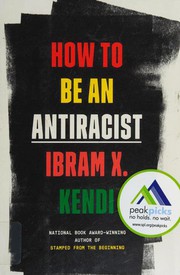
How to Be an Antiracist by 11765339|Ibram X. Kendi book cover

πŸ“˜ How to Be an Antiracist

Antiracism is a transformative concept that reorients and reenergizes the conversation about racismβ€”and, even more fundamentally, points us toward liberating new ways of thinking about ourselves and each other. At its core, racism is a powerful system that creates false hierarchies of human value; its warped logic extends beyond race, from the way we regard people of different ethnicities or skin colors to the way we treat people of different sexes, gender identities, and body types. Racism intersects with class and culture and geography and even changes the way we see and value ourselves. In How to Be an Antiracist, Kendi takes readers through a widening circle of antiracist ideasβ€”from the most basic concepts to visionary possibilitiesβ€”that will help readers see all forms of racism clearly, understand their poisonous consequences, and work to oppose them in our systems and in ourselves. Kendi weaves an electrifying combination of ethics, history, law, and science with his own personal story of awakening to antiracism. This is an essential work for anyone who wants to go beyond the awareness of racism to the next step: contributing to the formation of a just and equitable society. ([source](http://www.randomhousebooks.com/books/564299/))

β˜…β˜…β˜…β˜…β˜…β˜…β˜…β˜…β˜…β˜… 4.3 (28 ratings)
Similar? ✓ Yes 0 ✗ No 0
So you want to talk about race by 11860495|Ijeoma Oluo book cover

πŸ“˜ So you want to talk about race

"A current, constructive, and actionable exploration of today's racial landscape, offering straightforward clarity that readers of all races need to contribute to the dismantling of the racial divide. In So You Want to Talk About Race, Editor at Large of The Establishment, Ijeoma Oluo offers a contemporary, accessible take on the racial landscape in America, addressing head-on such issues as privilege, police brutality, intersectionality, micro-aggressions, the Black Lives Matter movement, and the "N" word. Perfectly positioned to bridge the gap between people of color and white Americans struggling with race complexities, Oluo answers the questions readers don't dare ask, and explains the concepts that continue to elude everyday Americans. Oluo is an exceptional writer with a rare ability to be straightforward, funny, and effective in her coverage of sensitive, hyper-charged issues in America. Her messages are passionate but finely tuned, and crystalize ideas that would otherwise be vague by empowering them with aha-moment clarity. Her writing brings to mind voices like Ta-Nehisi Coates and Roxane Gay, and Jessica Valenti in Full Frontal Feminism, and a young Gloria Naylor, particularly in Naylor's seminal essay "The Meaning of a Word.""--

β˜…β˜…β˜…β˜…β˜…β˜…β˜…β˜…β˜…β˜… 4.3 (21 ratings)
Similar? ✓ Yes 0 ✗ No 0
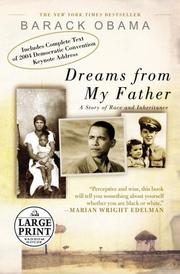
Dreams from My Father by 9590397|Barack Obama book cover

πŸ“˜ Dreams from My Father

Dreams from My Father is Barack Obama's remarkable memoir. The son of a black African father and a white American mother, Obama was only two years old when his father walked out on the family. Many years later, Obama receives a phone call from Nairobi: his father is dead. This sudden news inspires an emotional odyssey for Obama, determined to learn the truth of his father's life and reconcile his divided inheritance. Written at the age of thirty-three, long before Obama had thoughts of a political career, Dreams from My Father is an unforgettable read. It illuminates not only Obama's journey, but also our universal desire to understand our history, and what makes us the people we are.

β˜…β˜…β˜…β˜…β˜…β˜…β˜…β˜…β˜…β˜… 3.8 (8 ratings)
Similar? ✓ Yes 0 ✗ No 0
The Misadventures of Awkward Black Girl by 11945755|Issa Rae book cover

πŸ“˜ The Misadventures of Awkward Black Girl
 by Issa Rae

"A collection of humorous essays on what it's like to be unabashedly awkward in a world that regards introverts as hapless misfits, and Black as cool ... [from] Issa Rae, the creator of the Shorty Award-winning ... series The Misadventures of Awkward Black Girl"--

β˜…β˜…β˜…β˜…β˜…β˜…β˜…β˜…β˜…β˜… 3.5 (4 ratings)
Similar? ✓ Yes 0 ✗ No 0
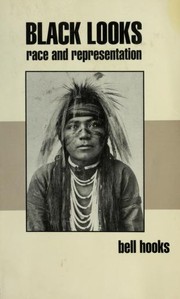
Black looks by 6923016|Bell Hooks book cover

πŸ“˜ Black looks
 by Bell Hooks

"In the critical essays collected in Black Looks, bell hooks interrogates old narratives and argues for alternative ways to look at blackness, black subjectivity, and whiteness. Her focus is on spectatorship--in particular, the way blackness and black people are experienced in literature, music, television, and especially film--and her aim is to create a radical intervention into the way we talk about race and representation. As she describes: 'The essays in Black Looks are meant to challenge and unsettle, to disrupt and subvert.' As students, scholars, activists, intellectuals, and any other readers who have engaged with the book since its original release in 1992 can attest, that's exactly what these pieces do"--

β˜…β˜…β˜…β˜…β˜…β˜…β˜…β˜…β˜…β˜… 5.0 (1 rating)
Similar? ✓ Yes 0 ✗ No 0
Backlash by 6989676|George Yancy book cover

πŸ“˜ Backlash

"When George Yancy penned a New York Times op-ed entitled 'Dear White America' asking white Americans to confront the ways that they benefit from racism, he knew his article would be controversial. But he was unprepared for the flood of vitriol in response. The resulting blowback played out in the national media, with critics attacking Yancy in every form possible--including death threats--and supporters rallying to his side. Despite the rhetoric of a 'post-race' America, Yancy quickly discovered that racism is still alive, crude, and vicious in its expression. In Backlash, Yancy expands upon the original article and chronicles the ensuing controversy as he seeks to understand what it was about the op-ed that created so much rage among so many white readers. He challenges white Americans to rise above the vitriol and to develop a new empathy for the African American experience."--Dust jacket.

β˜…β˜…β˜…β˜…β˜…β˜…β˜…β˜…β˜…β˜… 4.0 (1 rating)
Similar? ✓ Yes 0 ✗ No 0
The Big Short: Inside the Doomsday Machine by 11744904|Michael Lewis book cover

πŸ“˜ The Big Short: Inside the Doomsday Machine


β˜…β˜…β˜…β˜…β˜…β˜…β˜…β˜…β˜…β˜… 0.0 (0 ratings)
Similar? ✓ Yes 0 ✗ No 0
Face-to-face by 11599204|Rose L. H. Finkenstaedt book cover

πŸ“˜ Face-to-face

Why have blacks been, in effect, responsible for much of the material success of America? Why did whites consider dispossession of blacks as essential to the rise of industrial wealth? Why has the continued relegation of blacks to outcast status united the rest of the nation? Why did the black agitation of the sixties yield to the despair of the seventies and the indifference of the eighties and nineties? Face-to-Face pursues the answers to these and many other important questions as it examines the white and black trends in American history and contemporary culture. It traces the devastating economic, political and social effects of segregation, all too evident in our city ghettos. It lays bare the myths behind the black stereotypes, such as the Black Beast, the Contented Slave and the Mulatto. Most of these stereotypes have sexual implications. Even white writers and intellectuals as acclaimed as William Faulkner, John Crowe Ransom, Norman Mailer and William Styron repeat and perpetuate them. Through her personal association with Malcolm X and other black rebels of the sixties, and her work for the old Freedom Now Party and The Liberator magazine, the author is able to give unusual insight into the blacks' uphill struggle to achieve their own cultural autonomy and overcome the bias of white supremacy.

β˜…β˜…β˜…β˜…β˜…β˜…β˜…β˜…β˜…β˜… 0.0 (0 ratings)
Similar? ✓ Yes 0 ✗ No 0
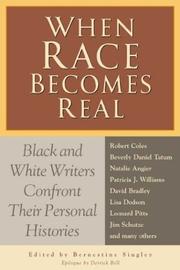
When race becomes real by 7337930|Bernestine Singley book cover

πŸ“˜ When race becomes real


β˜…β˜…β˜…β˜…β˜…β˜…β˜…β˜…β˜…β˜… 0.0 (0 ratings)
Similar? ✓ Yes 0 ✗ No 0
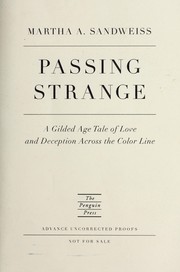
Passing Strange by 1419804|Martha A. Sandweiss book cover

πŸ“˜ Passing Strange

The secret double life of the man who mapped the American West and the woman he lovedClarence King is a hero of nineteenth-century western history. Brilliant scientist and witty conversationalist, bestselling author and architect of the great surveys that mapped the West after the Civil War, King was named by John Hay "the best and brightest of his generation." But King hid a secret from his Gilded Age cohorts and prominent family in Newport: for thirteen years he lived a double lifeβ€”as the celebrated white explorer, geologist, and writer Clarence King and as a black Pullman porter and steelworker named James Todd. The fair, blue-eyed son of a wealthy China trader passed across the color line, revealing his secret to his black common-law wife, Ada King, only on his deathbed.Noted historian of the American West Martha Sandweiss is the first writer to uncover the life that King tried so hard to conceal from the public eye. She reveals the complexity of a man who while publicly espousing a personal dream of a uniquely American "race," an amalgam of white and black, hid his love for his wife and their five biracial children. Passing Strange tells the dramatic tale of a family built along the fault lines of celebrity, class, and raceβ€”from the "Todds" wedding in 1888 to the 1964 death of Ada, one of the last surviving Americans born into slavery, to finally the legacy inherited by Clarence King's granddaughter, who married a white man and adopted a white child in order to spare her family the legacies of racism.A remarkable feat of research and reporting spanning the Civil War to the civil rights era, Passing Strange tells a uniquely American story of self-invention, love, deception, and race.

β˜…β˜…β˜…β˜…β˜…β˜…β˜…β˜…β˜…β˜… 0.0 (0 ratings)
Similar? ✓ Yes 0 ✗ No 0
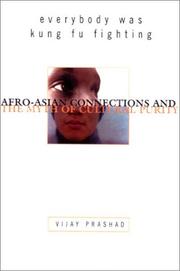
Everybody was Kung Fu fighting by 7426174|Vijay Prashad book cover

πŸ“˜ Everybody was Kung Fu fighting

"In 1992 the U.S. media was treated to "conflict" between blacks and Asians during the Los Angeles uprising. The event crystallized white-supremacist stereotypes of blacks as the "problem" minority and Asians as the "model."". "In this work, historian Vijay Prashad refuses to engage the typical racial discussion that matches people of color against each other while institutionalizing the primacy of the white majority. Instead he examines more than five centuries of remarkable historical evidence of cultural and political interaction between blacks and Asians around the world, in which they have exchanged cultural and religious symbols, appropriated personas and lifestyles, and worked together to achieve political change. From the Shivites of Jamaica, who introduced Ganja and dreadlocks to the Afro-Jamaicans; to Ho Chi Minh the Garveyite; to Japanese-American Richard Aoki, a charter member of the Black Panthers, African- and Asian-derived movements and cultures, like all others, have been porous rather than discrete."--BOOK JACKET.

β˜…β˜…β˜…β˜…β˜…β˜…β˜…β˜…β˜…β˜… 0.0 (0 ratings)
Similar? ✓ Yes 0 ✗ No 0
"They Say" by 6465013|James West Davidson book cover

πŸ“˜ "They Say"


β˜…β˜…β˜…β˜…β˜…β˜…β˜…β˜…β˜…β˜… 0.0 (0 ratings)
Similar? ✓ Yes 0 ✗ No 0
Color conscious by 9639687|Anthony Appiah book cover

πŸ“˜ Color conscious

In America today, the problem of achieving racial justice - whether through "color blind" policies or through affirmative action - provokes more noisy name-calling than fruitful deliberation. In Color Conscious, K. Anthony Appiah and Amy Gutmann, two eminent moral and political philosophers, seek to clear the ground for a discussion of the place of race in politics and in our moral lives. Provocative and insightful, their essays tackle different aspects of the question of racial justice; together they provide a compelling response to our nation's most vexing problem. Appiah begins by establishing the problematic nature of the idea of race. He draws on the scholarly consensus that "race" has no legitimate biological basis, exploring the history of its invention as a social category and showing how the concept has been used to explain differences among groups of people by mistakenly attributing various "essences" to them. Appiah argues that while people of color may still need to gather together, in the face of racism, under the banner of race, they need also to balance carefully the calls of race against the many other dimensions of individual identity; and he suggests, finally, what this might mean for our political life. Gutmann examines alternative political responses to racial injustice. She argues that American politics cannot be fair to all citizens by being color blind because American society is not color blind. Fairness, not color blindness, is a fundamental principle of justice. Whether policies should be color conscious, class conscious, or both in particular situations, depends on an open-minded assessment of their fairness and their capacity to move us closer to a society with liberty and justice for all. Exploring timely issues of university admissions, corporate hiring, and political representation, Gutmann develops a moral perspective that supports a commitment to constitutional democracy. Appiah and Gutmann write candidly and carefully, presenting many-faceted interpretations of a host of controversial issues. Instead of supplying simple answers to complex questions, they offer - to citizens of every color - principled starting points for the ongoing national discussions about race.

β˜…β˜…β˜…β˜…β˜…β˜…β˜…β˜…β˜…β˜… 0.0 (0 ratings)
Similar? ✓ Yes 0 ✗ No 0

Some Other Similar Books

White Fragility: Why It's So Hard for White People to Talk About Racism by Robin DiAngelo
Me and White Supremacy: Combat Racism, Change the World, and Become a Good Ancestor by Layla F. Saad
Waking Up White: How the Largest Racial Injustice in America Became Less Visible by Debby Irving
The Color of Law: A Forgotten History of How Our Government Segregated America by Richard Rothstein

Have a similar book in mind? Let others know!

Please login to submit books!