Books like A history of God by Karen Armstrong


Karen Armstrong’s book examines how Jewish, Christian, and Muslim ideas of God have evolved across time, culture, and philosophy. She traces the shift from pagan polytheism to Jewish monotheism during the Babylonian exile, then explores the distinct yet overlapping beliefs that emerged in Christianity and Islam. Through a historical lens, she discusses how thinkers and mystics, the Reformation, Enlightenment, and modern skeptics and fundamentalists have shaped these concepts. Armstrong argues that God’s image must serve the people who adopt it, and that as societies change, so too does the notion of a personal deity. The work invites readers to consider how past shifts in the understanding of God might inform a new, contemporary conception in the twenty‑first century.
First publish date: 1993
Genre: History/Modern History
Authors: Karen Armstrong
★ ★ ★ ★ ★ 3.8 (12 community ratings)

A history of God by Karen Armstrong

How are these books recommended?

The books recommended for A history of God by Karen Armstrong are shaped by reader interaction. Votes on how closely books relate, user ratings, and community comments all help refine these recommendations and highlight books readers genuinely find similar in theme, ideas, and overall reading experience.


Have you read any of these books?
Your votes, ratings, and comments help improve recommendations and make it easier for other readers to discover books they’ll enjoy.

Books similar to A history of God (5 similar books)

The Case for God by 9655162|Karen Armstrong book cover

📘 The Case for God

Karen Armstrong traces humanity’s lifelong quest to answer profound questions through the evolving concept of God, focusing on Western monotheistic traditions, especially Christianity.

★★★★★★★★★★ 3.0 (1 rating)
Similar? ✓ Yes 0 ✗ No 0
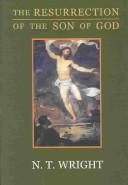
Christian origins and the question of God by 6719013|N. T. Wright book cover

📘 Christian origins and the question of God

Volume 1: This first volume in the series Christian Origins and the Question of God provides a historical, theological, and literary study of first-century Judaism and Christianity. Wright offers a preliminary discussion of the meaning of the word god within those cultures, as he explores the ways in which developing an understanding of those first-century cultures are of relevance for the modern world. Volume 2: In this highly anticipated volume, N. T. Wright focuses directly on the historical Jesus: Who was he? What did he say? And what did he mean by it? Wright begins by showing how the questions posed by Albert Schweitzer a century ago remain central today. Then he sketches a profile of Jesus in terms of his prophetic praxis, his subversive stories, the symbols by which he reordered his world, and the answers he gave to the key questions that any world view must address. The examination of Jesus' aims and beliefs, argued on the basis of Jesus' actions and their accompanying riddles, is sure to stimulate heated response. Wright offers a provocative portrait of Jesus as Israel's Messiah who would share and bear the fate of the nation and would embody the long-promised return of Israel's God to Zion. Volume 3: Why did Christianity begin, and why did it take the shape it did? To answer this question , which any historian must face, renowned New Testament scholar N. T. Wright focuses on the key question: what precisely happened at Easter? What did the early Christians mean when they said that Jesus of Nazareth had been raised from the dead? What can be said today about this belief? This book... sketches a map of ancient beliefs about life after death, in both the Greco-Roman and Jewish worlds. It then highlights the fact that the early Christians' belief about the afterlife belonged firmly on the Jewish spectrum, while introducing several new mutations and sharper definitions. This, together with other features of early Christianity, forces the historian to read the Easter narratives in the gospels, not simply as late rationalizations of early Christian spirituality, but as accounts of two actual events: the empty tomb of Jesus and his 'appearances.' How do we explain these phenomena? The early Christians' answer was that Jesus had indeed been bodily raised from the dead; that was why they hailed him as the messianic 'son of God.' No modern historian has come up with a more convincing explanation. Facing this question, we are confronted to this day with the most central issues of worldview and theology. Volume 4: This highly anticipated two-book ...volume in N. T. Wright's magisterial series...is destined to become the standard reference point on the subject for all serious students of the Bible and theology. The mature summation of a lifetime's study, this landmark book pays a rich tribute to the breadth and depth of the apostle's vision, and offers an unparalleled wealth of detailed insights into his life, times, and enduring impact.Wright carefully explores the whole context of Paul's thought and activity Jewish, Greek and Roman, cultural, philosophical, religious, and imperial and shows how the apostle's worldview and theology enabled him to engage with the many-sided complexities of first-century life that his churches were facing. Wright also provides close and illuminating readings of the letters and other primary sources, along with critical insights into the major twists and turns of exegetical and theological debate in the vast secondary literature. The result is a rounded and profoundly compelling account of the man who became the world's first, and greatest, Christian theologian." -- Publisher descriptions.

★★★★★★★★★★ 3.0 (1 rating)
Similar? ✓ Yes 0 ✗ No 0
The battle for God by 9655162|Karen Armstrong book cover

📘 The battle for God

"In The Battle for God, Karen Armstrong shows us how and why fundamentalist groups came into existence and what they yearn to accomplish.". "We see the West in the sixteenth century beginning to create an entirely new kind of civilization, which brought in its wake change in every aspect of life - often painful and violent, even if liberating. Armstrong argues that one of the things that changed most was religion. People could no longer think about or experience the divine in the same why; they had to develop new forms of faith to fit their new circumstances.". "Armstrong characterizes fundamentalism as one of these new ways of being religious that have emerged in every major faith tradition. She examines the ways in which these movements, while not monolithic, have each sprung from a dread of modernityoften in response to assault (sometimes unwitting, sometimes intentional) by the mainstream society.". "Armstrong sees fundamentalist groups as complex, innovative, and modern - rather than as throwbacks to the past - but contends that they have failed in religious terms. Maintaining that fundamentalism often exists in symbiotic relationship with an aggressive modernity, each impelling the other on to greater excess, she suggests compassion as a way to defuse what is now an intensifying conflict."--BOOK JACKET.

★★★★★★★★★★ 5.0 (1 rating)
Similar? ✓ Yes 0 ✗ No 0
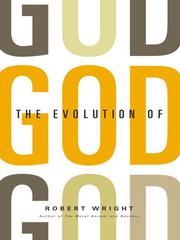
The Evolution of God by 11185680|Robert Wright book cover

📘 The Evolution of God

Robert Wright traces the evolution of monotheistic faiths from the Stone Age to the Information Age, revealing a hidden pattern that reshapes our understanding of Judaism, Christianity and Islam and suggests a future of religious harmony.

★★★★★★★★★★ 0.0 (0 ratings)
Similar? ✓ Yes 0 ✗ No 0
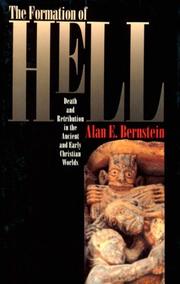
The formation of hell by 11500970|Alan E. Bernstein book cover

📘 The formation of hell

From the author of "The Devil: Perceptions of Evil from Antiquity to Primitive Christianity", this book examines a central theme in Western Culture: The Centuries-Old Notion Of Hell - Exile From God, Subjection To fire, worms and darkness. In this study, Alan Bernstein investigates just How And Why Belief In Hell Arose. Although We May Associate The Notion Of hell with Christian beliefs, its gradual emergence depended on Conflicting Notions That Pervaded The Mediterranean World More Than A millennium before the birth of Christ. Bernstein takes us back to those times and offers us a view of the philosophy, poetry, folklore, myth and theology of that formative age.; Drawing on sources from ancient Egypt, Mesopotamia, Greece, Rome and Israel, as well as early Christian writings, the author reconstructs the story of the prophets, priests and poets who fashioned concepts of hell from an array of perspectives on death and justice. The author traces hell's formation through close readings of works including the epics of Homer and Virgil, the satires of Lucian, the dialogues of Plato and Plutarch, the legends of Enoch, the confessions of the Psalms, the prophecies of Isaiah, Ezechiel and Daniel and the parables of Jesus. Re-enacting debates about the nature of hell among the common people and the elites of diverse religious traditions, he provides new insight into the social implications and the psychological consequences of different visions of the afterlife. This book aims to captivate readers interested in history, mythology. literature, psychology, philosophy and religion. It should be of use to ancient historians, classicists, theologists, and cultural historians.

★★★★★★★★★★ 0.0 (0 ratings)
Similar? ✓ Yes 0 ✗ No 0

Some Other Similar Books

God Is Not Great: How Religion Poisons Everything by Christopher Hitchens
The Language of God: A Scientist Presents Evidence for Belief by Francis S. Collins
The Sacred and The Profane: The Nature of Religion by Mircea Eliade
Religion and the Rise of Modern Science by Piet Hut
The Bible and the Ancient Near East by Donald E. Gowan
The Prophet: The Life of Prophet Muhammad by Lesley Hazleton

Have a similar book in mind? Let others know!

Please login to submit books!