Books like Steaming into a Victorian future by Julie Anne Taddeo


Examines various manifestations of steampunk in order to better understand steampunk sub-culture & its effect on popular culture & wider society. Expands & extends existing scholarship on steampunk in order to explore many previously unconsidered questions about cultural creativity, social networking, fandom, appropriation, & creation of meaning.
First publish date: 2012
Authors: Julie Anne Taddeo
★ ★ ★ ★ ★ 0.0 (0 community ratings)

Steaming into a Victorian future by Julie Anne Taddeo

How are these books recommended?

The books recommended for Steaming into a Victorian future by Julie Anne Taddeo are shaped by reader interaction. Votes on how closely books relate, user ratings, and community comments all help refine these recommendations and highlight books readers genuinely find similar in theme, ideas, and overall reading experience.


Have you read any of these books?
Your votes, ratings, and comments help improve recommendations and make it easier for other readers to discover books they’ll enjoy.

Books similar to Steaming into a Victorian future (5 similar books)

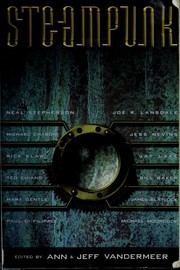
Steampunk by 7648326|Ann VanderMeer book cover

πŸ“˜ Steampunk

A steampunk anthology featuring imaginative stories and anachronistic settings, blending Victorian elegance with modern science fiction.

β˜…β˜…β˜…β˜…β˜…β˜…β˜…β˜…β˜…β˜… 3.0 (2 ratings)
Similar? ✓ Yes 0 ✗ No 0
The steampunk bible by 7919151|Jeff VanderMeer book cover

πŸ“˜ The steampunk bible

A comprehensive guide to the steampunk movement, tracing its origins from early science‑fiction classics to contemporary films and the thriving DIY community that embraces Victorian aesthetics and retro technology.

β˜…β˜…β˜…β˜…β˜…β˜…β˜…β˜…β˜…β˜… 0.0 (0 ratings)
Similar? ✓ Yes 0 ✗ No 0
Science fiction before 1900 by 11584297|Paul K. Alkon book cover

πŸ“˜ Science fiction before 1900

Because science has played the leading role in defining our world today, science fiction has become the twentieth century's most characteristic form of literature. It excels at articulating the new possibilities for good and evil that shape our destinies in an age when science has created technologies once beyond even the reach of fantasy. Reflecting too the global nature of science, science fiction is the most international of all genres. Moreover, no other form better illustrates the fact that genres serve ethical as well as aesthetic purposes. With impressive scope and vitality, science fiction engages us in a moral dialogue centering on whether science will ultimately advance humanity or destroy it. Given the sweeping range of these urgent concerns, it is no surprise then that science fiction counts among its ranks an amazingly diverse lot of writers, including H. G. Wells, Aldous Huxley, George Orwell, Ursula K. Le Guin, Kingsley Amis, Anthony Burgess, Pierre Boulle, Stanislaw Lem, Yevgeny Zamyatin, Kobo Abe, and Isaac Asimov; that its authors hail from countries as divergent from one another as the United States, Russia, Poland, Japan, France, Australia, and England; and that its themes include time travel, atomic warfare, invasions from Mars, genetic experiments, and visits to and from outer space. In Science Fiction Before 1900, Paul K. Alkon provides a detailed survey of the hallmarks of the evolution of science fiction: Mary Shelley's Frankenstein, Jules Verne's Twenty Thousand Leagues Under the Sea, Albert Robida's The Twentieth Century, Villiers de L'Isle-Adam's Tomorrow's Eve, Edward Bellamy's Looking Backward, Mark Twain's A Connecticut Yankee in King Arthur's Court, and H. G. Wells's The Time Machine and War of the Worlds. Stressing that full appreciation of these key texts depends on understanding the nature and advent of the genre, Alkon first provides a brimming introductory chapter, "A Short History of the Future." After thus defining science fiction and examining the genre's origins, aesthetics, and social context, he proceeds to chapters on England, France, and America, an unusual arrangement vastly different from the patented chronological order. This choice, though, pays huge dividends: while chronology is a simple matter to maintain across the whole of the book, the national division helps establish an interesting viewpoint on the subject. Alkon, while stressing the worldwide nature of the genre, nevertheless discovers the distinctive features that reflect particular national moods and cultures. He further explores societal accents by tracing many of the genre's finest elements to themes popular in certain countries: France's fascination with technology and tales of the future; America's profound doubts about technology's impact on humanity, so well evidenced in Twain's time-travel tales; the English search for new viewpoints on the imagination. The final three chapters of Science Fiction Before 1900 constitute a well-rounded guide to research and further reading. Including a bibliographic essay, recommended titles, and a chronology of works, this section nicely complements Alkon's carefully selected list of readings and provides readers with a firm foundation to explore both the genre and the milestone texts discussed here.

β˜…β˜…β˜…β˜…β˜…β˜…β˜…β˜…β˜…β˜… 0.0 (0 ratings)
Similar? ✓ Yes 0 ✗ No 0
Steampunk by 11839482|Paul Roland book cover

πŸ“˜ Steampunk


β˜…β˜…β˜…β˜…β˜…β˜…β˜…β˜…β˜…β˜… 0.0 (0 ratings)
Similar? ✓ Yes 0 ✗ No 0
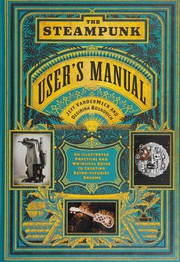
The steampunk user's manual by 11831543|Desirina Boskovich book cover

πŸ“˜ The steampunk user's manual

Steampunk, the retro-futuristic cultural movement, has become a substantial and permanent genre in the worlds of fantasy and science fiction. A large part of its appeal is that, at its core, Steampunk is about doing it yourself: building on the past while also innovating and creating something original. VanderMeer's latest book offers practical and inspirational guidance for readers to find their individual path into this realm. Including sections on art, fashion, architecture, crafts, music, performance, and storytelling, The Steampunk User's Manual provides a conceptual how-to guide that motivates and awes both the armchair enthusiast and the committed creator. Examples range from the utterly doable to the completely over-the-top, encouraging participation and imagination at all levels.

β˜…β˜…β˜…β˜…β˜…β˜…β˜…β˜…β˜…β˜… 0.0 (0 ratings)
Similar? ✓ Yes 0 ✗ No 0

Some Other Similar Books

Victorian Science Fiction by Jason Colavito
Victorian Technologies and the Making of the Modern World by Daniel R. Headrick
Science and Victorian Culture by Adam T. Smith
The Victorian Heroine: The Politics of Girlhood by Kate Ferguson Ellis
Victorian Literature and the Victorian State by Michael T. Martin
The Cambridge Companion to Victorian Poetry by Grace Moore
Victorian Sensation: Or, the Spectacular, the Scandal, and the Nonsense of Victorian Popular Culture by Michael Diamond
The Literature of the Victorian Gothic by Kerry Clayton
Technology and Victorian Literature by Anthony Enns

Have a similar book in mind? Let others know!

Please login to submit books!