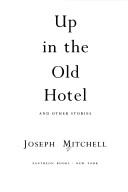
"Up in the Old Hotel had its beginnings in the nineteen-thirties, in the hopelessness of the early days of the Great Depression, when Joseph Mitchell, at that time a young newspaper reporter in New York City, gradually became aware that the people be respected the most and got the most pleasure out of interviewing were really pretty strange. "Among them," he once wrote, were visionaries, obsessives, imposters, fanatics, lost souls, the-end-is-near street preachers, old Gypsy kings and old Gypsy queens, and out-and-out freak-show freaks." One of the street preachers was a gloomily eloquent old Southerner named the Reverend Mr. James Jefferson Davis Hall, who carried a WHERE WILL YOU SPEND ETERNITY? sign up and down the sidewalks of the theatrical district, which he called "the belly and the black heart of that Great Whore of Babylon, the city of New York," for a generation; one of the Gypsy kings was King Cockeye Johnny Nikanov, who liked to say that the difference between Gypsies and gajos, or non-Gypsies, is that a Gypsy will steal gasoline out of the tanks of parked automobiles but that a high-class United States politician gajo will steal a whole damned oil well; one of the freak-show freaks was Jane Barnell, billed as Lady Olga, who was the Bearded Lady in Hubert's Museum and Flea Circus on Forty-second Street and who was a legend in the freak-show world because of her imaginatively sarcastic and sometimes imaginatively obscene and sometimes imaginatively brutal remarks about people in freak-show audiences delivered deadpan and sotto voce to her fellow freaks gathered about her on the platform. These people were extraordinarily dissimilar, but all of them, each and every one of them, protected themselves and kept themselves going by the use of a kind of humor that Mitchell thought of as graveyard humor, and he admired them for this. Even the Reverend Hall depended on this kind of humor to get his points across, and some of his gloomiest sermons were at the same time comic masterpieces. Mitchell could write only briefly about these people in newspapers, but he kept in touch with some of them, and later on, when he joined the staff of The New Yorker, he wrote full-scale "Profiles" of them. At The New Yorker, as time went on, he turned to writing about more conventional people--a great variety of them--only to find that if they were asked the right questions, and if their answers were closely listened to, even the most conventional of them were also apt to turn out to be really quite strange. And, amazingly, he discovered that a large proportion of them, after seeking over and over to find some meaning in their lives and finding only meaninglessness, had also learned to console themselves with graveyard humor." "Between 1943 and 1965, four collections of Mitchell's stories from The New Yorker were published--McSorley's Wonderful Saloon, Old Mr. Flood, The Bottom of the Harbor and Joe Gould's Secret. All of these books have been out of print for years, and all of them, with some previously uncollected stories added to McSorley's Wonderful Saloon, are included in this book. Through the years, a succession of literary critics have written essays on Mitchell's stories, extolling his prose, remarking on the dazzling diversity of his subjects, and exploring the darkness that they profess to discern underneath his humor. Some of Mitchell's colleagues at The New Yorker believe that his "Profiles" and "Reporter at Large" articles are among the best the magazine has ever published and are among the ones most likely to endure. One of his colleagues, Calvin Trillin, dedicated a book to him, stating "To the New Yorker reporter who set the standard--Joseph Mitchell.""--BOOK JACKET.
First publish date: 1992
Subjects: Fiction, New York Times reviewed, Social life and customs, Manners and customs, Fiction, general
The books recommended for Up in the old hotel, and other stories by
Joseph Mitchell are shaped by reader interaction.
Votes on how closely books relate, user ratings, and community comments all help
refine these recommendations and highlight books readers genuinely find similar
in theme, ideas, and overall reading experience.
Have you read any of these books?
Your votes, ratings, and comments help improve recommendations and make it easier
for other readers to discover books they’ll enjoy.
Books similar to Up in the old hotel, and other stories (20 similar books)
Set in the Gulf Stream off the coast of Havana, Hemingway's magnificent fable is the tale of an old man, a young boy and a giant fish. This story of heroic endeavour won Hemingway the Nobel Prize for Literature. It stands as a unique and timeless vision of the beauty and grief of man's challenge to the elements.
On November 15, 1959, in the small town of Holcomb, Kansas, four members of the Clutter family were savagely murdered by blasts from a shotgun held a few inches from their faces. There was no apparent motive for the crime, and there were almost no clues.
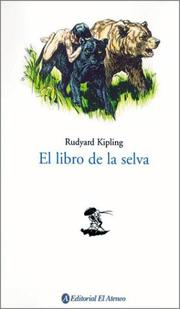
The adventures of Mowgli, a man-child raised by wolves in the jungle, have captured the imaginations not just of children, but of all readers, for generations.
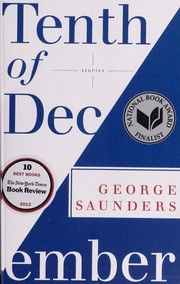
One of the most important and blazingly original writers of his generation, George Saunders is an undisputed master of the short story, and Tenth of December is his most honest, accessible, and moving collection yet.
In the taut opener, “Victory Lap,” a boy witnesses the attempted abduction of the girl next door and is faced with a harrowing choice: Does he ignore what he sees, or override years of smothering advice from his parents and act? In “Home,” a combat-damaged soldier moves back in with his mother and struggles to reconcile the world he left with the one to which he has returned. And in the title story, a stunning meditation on imagination, memory, and loss, a middle-aged cancer patient walks into the woods to commit suicide, only to encounter a troubled young boy who, over the course of a fateful morning, gives the dying man a final chance to recall who he really is.
A hapless, deluded owner of an antiques store; two mothers struggling to do the right thing; a teenage girl whose idealism is challenged by a brutal brush with reality; a man tormented by a series of pharmaceutical experiments that force him to lust, to love, to kill—the unforgettable characters that populate the pages of Tenth of December are vividly and lovingly infused with Saunders’s signature blend of exuberant prose, deep humanity, and stylistic innovation.
Writing brilliantly and profoundly about class, sex, love, loss, work, despair, and war, Saunders cuts to the core of the contemporary experience. These stories take on the big questions and explore the fault lines of our own morality, delving into the questions of what makes us good and what makes us human.
Unsettling, insightful, and hilarious, the stories in Tenth of December—through their manic energy, their focus on what is redeemable in human beings, and their generosity of spirit—not only entertain and delight; they fulfill Chekhov’s dictum that art should “prepare us for tenderness.”
([source][1])
[1]: http://www.georgesaundersbooks.com/tenth-of-december/
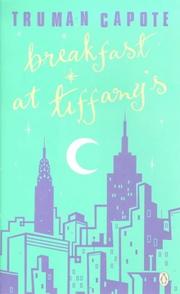
Published with three short stories this novella cemented Capote’s position at the forefront of American literature. It is the story of a friendship between New York neighbours, good time girl Holly Golightly and the unnamed male narrator.
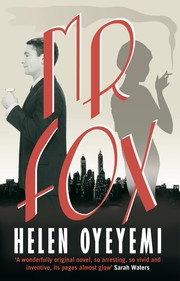
It’s a bright afternoon in 1938 and Mary Foxe is in a confrontational mood. St John Fox, celebrated novelist, hasn’t seen her in six years. He’s unprepared for her afternoon visit, not least because she doesn’t exist. He’s infatuated with her. But he also made her up.
“You’re a villain,” she tells him. ‘A serial killer . . . can you grasp that?”
Will Mr Fox meet his muse’s challenge, to stop murdering his heroines and explore something of love? What will his wife Daphne think of this sudden change in her husband? Can there be a happy ending – this time?
This non-fiction book is Hemingway’s tribute to and justification of what he saw as the art and skill of bullfighting. Together with a potted history of bullfighting the author adds his views on what makes it more than a mere spectacle, elevating it to a ritualized display of courage encompassing everything a man needs to know about life and death.
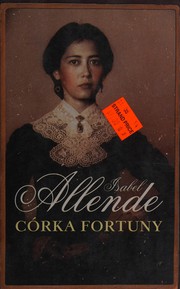
A Chilean woman searches for her lover in the goldfields of 1840s California. Arriving as a stowaway, Eliza finances her search with various jobs, including playing the piano in a brothel
MEET NATTY BUMPPO The first volume in the famous Leatherstocking Tales, The Pioneers introduces Natty Bumppo, the quintessential American hunter and frontiersman who struggles to defend his cherished freedom.
In Other Rooms, Other Wonders illuminates a place and people as it describes the overlapping worlds of an extended Pakistani landowning family. Servants, masters, peasants and socialites, all inextricably bound to each other, confront the advantages and constraints of their station, the dissolution of old ways, and the shock of change. These richly textured stories reveal the complexities of Pakistani class and culture, as they describe the loves, triumphs, misunderstandings and tragedies of everyday life.
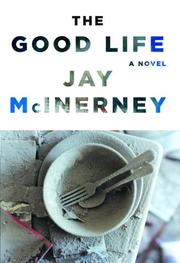
Hailed by Newsweek as "a superb and humane social critic" with, according to The Wall Street Journal, "all the true instincts of a major novelist," Jay McInerney unveils a story of love, family, conflicting desires, and catastrophic loss in his most powerfully searing work thus far.Clinging to a semiprecarious existence in TriBeCa, Corrine and Russell Calloway have survived a separation and are thoroughly wonderstruck by young twins whose provenance is nothing less than miraculous, even as they contend with the faded promise of a marriage tinged with suspicion and deceit. Meanwhile, several miles uptown and perched near the top of the Upper East Side's social register, Luke McGavock has postponed his accumulation of wealth in an attempt to recover the sense of purpose now lacking in a life that often gives him pause--especially with regard to his teenage daughter, whose wanton extravagance bears a horrifying resemblance to her mother's. But on a September morning, brightness falls horribly from the sky, and people worlds apart suddenly find themselves working side by side at the devastated site, feeling lost anywhere else, yet battered still by memory and regret, by fresh disappointment and unimaginable shock. What happens, or should happen, when life stops us in our tracks, or our own choices do? What if both secrets and secret needs, long guarded steadfastly, are finally revealed? What is the good life? Posed with astonishing understanding and compassion, these questions power a novel rich with characters and events, both comic and harrowing, revelatory about not only New York after the attacks but also the toll taken on those lucky enough to have survived them. Wise, surprising, and, ultimately, heart-stoppingly redemptive, The Good Life captures lives that allow us to see--through personal, social, and moral complexity--more clearly into the heart of things.From the Hardcover edition.
Bette is 27, smart, pretty, fun - and bored. When she splits up with her long-term boyfriend, she decides it's time for a change. A chance meeting propels her into a new role as a party planner. Running with the cool Manhattan pack, Bette can hardly believe her luck. Suddenly, the greatest city in the world is her own personal playground and boy, the toys are incredible! But quicker than you can say Manolo Blahnik, everything starts to fall apart. Bette finds herself the prey of a notorious playboy - and suddenly the lead item of the society gossip columns. Her new boss couldn't be more thrilled but Bette's family and old friends are less so. The girl they know and love, with a penchant for dodgy romance novels, cheesy 80s music and junk food, is in danger of turning into just another Park Avenue Princess. As Bette struggles to keep both her old and new lives from imploding, she finds salvation in an unlikely form. But can she say goodbye to the glamour and the Gucci, the Prada and the parties, and step back into the real world - and into the arms of a real Prince Charming?
England, late 1970s. Forty-something Chris is trapped in a loveless, sexless marriage. Roza, in her twenties, the daughter of one of Tito's partisans, has only recently moved to London from Yugoslavia. One evening, Chris mistakes her for a prostitute and propositions her. Instead of being offended, she gets into his car. Over the next months Roza tells Chris stories of her past. She's a fast-talking, wily Scheherazade, saving her own life as she retells it--and Chris is rapt. This deeply moving novel of their unlikely love is also a brilliantly subtle commentary on the seductive power of storytelling.From the Trade Paperback edition.
Contains:
A no-account Creole --
In and out of old Natchitoches --
In Sabine --
A very fine fiddle --
[Beyond the Bayou][1]
Old Aunt Peggy --
The return of Alcibiade --
A rude awakening --
The Be^nitous' slave --
[Desiree's Baby][2]
A turkey hunt --
Madame Celestin's divorce --
Love on the Bon-Dieu --
Loka --
Boulo^t and Boulotte --
For Marse Chouchoute --
A visit to Avoyelles --
A wizard from Gettysburg --
Ma'ame Pelagie --
At the 'Cadian ball --
La Belle Zorai{de --
A gentleman of Bayou Te^che --
A lady of Bayou St. John.
[1]: https://openlibrary.org/works/OL14943640W/Beyond_the_Bayou
[2]: https://openlibrary.org/works/OL20078777W/D%C3%A9sir%C3%A9e%E2%80%99s_Baby