Books like Trials of the Visionary Mind by John Weir Perry


First publish date: December 1998
Authors: John Weir Perry
★ ★ ★ ★ ★ 5.0 (1 community ratings)

Trials of the Visionary Mind by John Weir Perry

How are these books recommended?

The books recommended for Trials of the Visionary Mind by John Weir Perry are shaped by reader interaction. Votes on how closely books relate, user ratings, and community comments all help refine these recommendations and highlight books readers genuinely find similar in theme, ideas, and overall reading experience.


Have you read any of these books?
Your votes, ratings, and comments help improve recommendations and make it easier for other readers to discover books they’ll enjoy.

Books similar to Trials of the Visionary Mind (7 similar books)
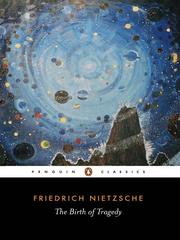
The Birth of Tragedy by 6336566|Friedrich Nietzsche book cover

πŸ“˜ The Birth of Tragedy

Nietzsche’s first book explores Greek tragedy, Schopenhauer’s philosophy, and Wagner’s music, arguing that the fusion of Apollonian order and Dionysian ecstasy creates the highest art and offers insight into suffering.

β˜…β˜…β˜…β˜…β˜…β˜…β˜…β˜…β˜…β˜… 3.0 (1 rating)
Similar? ✓ Yes 0 ✗ No 0
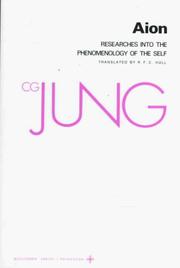
Aion by 6038351|Carl Gustav Jung book cover

πŸ“˜ Aion

Carlβ€―Gustavβ€―Jung’s *Aion* explores how the Selfβ€”the totality of the psycheβ€”is symbolized, especially through the fish, Gnostic, and alchemical signs that echo Christ, while reviewing core concepts like ego, shadow, anima and animus.

β˜…β˜…β˜…β˜…β˜…β˜…β˜…β˜…β˜…β˜… 5.0 (1 rating)
Similar? ✓ Yes 0 ✗ No 0
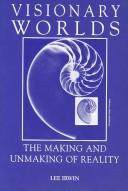
Visionary worlds by 6596303|Lee Irwin book cover

πŸ“˜ Visionary worlds
 by Lee Irwin

Visionary Worlds examines the role and significance of imagination and the myth-making processes that engage human beings in constructing a viable, living world of meaningful relations, beliefs, and social interactions. In this process of "world-building," we each draw on a wide variety of ideologies - religious, philosophical, aesthetic or scientific - which often conflict and clash with one another in the struggle to evolve a coherent and meaningful worldview. This unpredictable and fallible process often requires considerable readjustment or revisions as the complexities of an increasingly pluralistic society impinge upon us with greater divergence and multiplicity. This work examines the ways in which we all make and unmake our reality as part of the challenge of seeking greater spiritual maturity and relatedness to others.

β˜…β˜…β˜…β˜…β˜…β˜…β˜…β˜…β˜…β˜… 5.0 (1 rating)
Similar? ✓ Yes 0 ✗ No 0
How to interpret dreams and visions by 9447278|Perry F. Stone book cover

πŸ“˜ How to interpret dreams and visions


β˜…β˜…β˜…β˜…β˜…β˜…β˜…β˜…β˜…β˜… 0.0 (0 ratings)
Similar? ✓ Yes 0 ✗ No 0
Encounter with the self by 12472229|Edward F. Edinger book cover

πŸ“˜ Encounter with the self


β˜…β˜…β˜…β˜…β˜…β˜…β˜…β˜…β˜…β˜… 0.0 (0 ratings)
Similar? ✓ Yes 0 ✗ No 0
International Library of Psychology by 6984093|Routledge book cover

πŸ“˜ International Library of Psychology
 by Routledge


β˜…β˜…β˜…β˜…β˜…β˜…β˜…β˜…β˜…β˜… 0.0 (0 ratings)
Similar? ✓ Yes 0 ✗ No 0
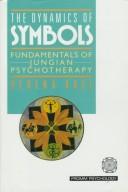
The dynamics of symbols by 6862851|Verena Kast book cover

πŸ“˜ The dynamics of symbols

According to Carl Jung, the goal of human life is self realization; we have to strive to become whole. Deep down, we are all creative beings, and we have to make use of our creativity to become what we really are. Kast explores Jung's concept of the human being and describes the path to wholeness which, since Jung, is known as the individuation process. It becomes clear that wholeness is only possible through the interplay between conscious and unconscious. However, the two have different languages: consciousness uses word-logic, whereas the unconscious uses dream-logic. Both languages would be forever foreign to each other, were it not for symbols, which mediate between the two: our unconscious encodes its knowledge in symbols, which we then have to translate into the language of our consciousness. Thus symbols are focal points of psychic development, and it is through them that we can become whole human beings. Jung taught us the techniques with which we can make the creative core of the unconscious available to consciousness. Kast explains them by using numerous examples from her daily work as a therapist. She shows us how psychological problems can be overcome by working on the symbols in which they express themselves. In a language that can be readily grasped by the general reader, Kast goes on to explain the basic thought of Jungian psychotherapy, covering the correlation between symbols and complexes, with a special emphasis on the ego-complex; the healing function of the archetypes and how they appear in, and interact with, symbols; and symbols in transference and countertransference, powerful tools in psychotherapy. Kast also discusses the interplay of psychosomatic diseases and symbols. The Dynamics of Symbols is not only of immediate interest to all psychologists and their patients. It is of direct concern to everyone who has the desire to become a whole human being.

β˜…β˜…β˜…β˜…β˜…β˜…β˜…β˜…β˜…β˜… 0.0 (0 ratings)
Similar? ✓ Yes 0 ✗ No 0

Some Other Similar Books

The Divided Self: An Existential Study in Sanity and Madness by R.D. Laing
Madness and Civilization: A History of Insanity in the Age of Reason by Michel Foucault
The Myth of Mental Illness: Foundations of a Theory of Personal Conduct by Thomas Szasz
Man and His Symbols by Carl G. Jung
Psychotic Disorders in Modern Society by Elyn Saks
The Man Who Mistook His Wife for a Hat by Oliver Sacks
Healing the Mind: The Art and Science of Mental Health by Edward Kotlowitz
The Political Mind: A Cognitive Scientist's Guide to His Audience by George Lakoff
On Becoming a Person: A Therapist's View of Psychotherapy by Carl Rogers

Have a similar book in mind? Let others know!

Please login to submit books!