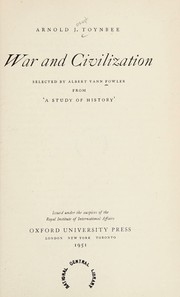
Books like War and human progress by John Ulric Nef


First publish date: 1950
Genre: History/Military History
Authors: John Ulric Nef
★ ★ ★ ★ ★ 0.0 (0 community ratings)

War and human progress by John Ulric Nef

How are these books recommended?

The books recommended for War and human progress by John Ulric Nef are shaped by reader interaction. Votes on how closely books relate, user ratings, and community comments all help refine these recommendations and highlight books readers genuinely find similar in theme, ideas, and overall reading experience.


Have you read any of these books?
Your votes, ratings, and comments help improve recommendations and make it easier for other readers to discover books they’ll enjoy.

Books similar to War and human progress (10 similar books)
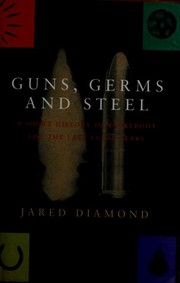
Guns, germs, and steel by 6922525|Jared Diamond book cover

📘 Guns, germs, and steel

Jared Diamond explains how geography, biology, and human ingenuity shaped the world’s unequal societies in his Pulitzer‑winning study of civilization and social evolution.

★★★★★★★★★★ 4.2 (137 ratings)
Similar? ✓ Yes 0 ✗ No 0
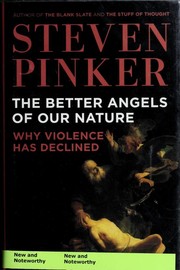
The better angels of our nature by 7291571|Steven Pinker book cover

📘 The better angels of our nature

Overestimates of violence beg the question: is modern society the most peaceful era? Steven Pinker argues that, through centuries of decline, violence has steadily fallen, revealing humanity’s better angels.

★★★★★★★★★★ 3.9 (9 ratings)
Similar? ✓ Yes 0 ✗ No 0
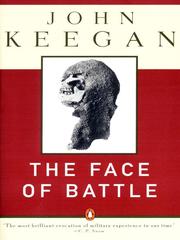
The Face of Battle by 11328957|John Keegan book cover

📘 The Face of Battle

John Keegan offers a visceral, on‑the‑frontline view of combat, comparing three iconic battles—Agincourt, Waterloo, and the Somme—to reveal the physical, emotional, and motivational realities soldiers face.

★★★★★★★★★★ 4.3 (3 ratings)
Similar? ✓ Yes 0 ✗ No 0
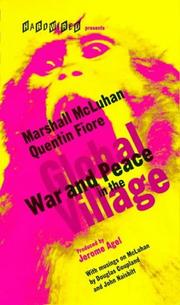
War and peace in the global village by 11978943|Marshall McLuhan book cover

📘 War and peace in the global village


★★★★★★★★★★ 3.0 (1 rating)
Similar? ✓ Yes 0 ✗ No 0
The War of the World by 11003557|Niall Ferguson book cover

📘 The War of the World

Historian Fergusson provides a revolutionary reinterpretation of the modern era that resolves its central paradox: why unprecedented progress coincided with unprecedented violence, and why the seeming triumph of the West bore the seeds of its undoing. From the conflicts that presaged the First World War to the aftershocks of the Cold War, the twentieth century was by far the bloodiest in all of human history. How can we explain the astonishing scale and intensity of its violence when, thanks to the advances of science and economics, most people were better off than ever before? Wherever one looked, the world in 1900 offered the happy prospect of ever-greater interconnection. Why, then, did global progress descend into internecine war and genocide? Drawing on a pioneering combination of history, economics, and evolutionary theory, Ferguson examines what he calls the age of hatred and sets out to explain what went wrong with modernity. --From publisher description.

★★★★★★★★★★ 0.0 (0 ratings)
Similar? ✓ Yes 0 ✗ No 0
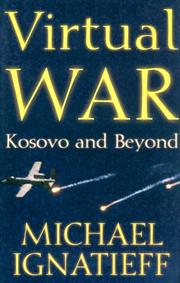
Virtual war by 6690724|Michael Ignatieff book cover

📘 Virtual war

This latest work (portions of which have appeared in the New Yorker and elsewhere) completes an unplanned trilogy that took shape around current events. Like the trilogy's previous two titles (Blood and Belonging and The Warrior's Honor), this book critiques the West's selective use of military power to protect human rights and the failure of Western governments to "back principle with decisive military force"--But here Ignatieff pushes this critique a step further, attempting to explain the paradox of the West's moral activism around human rights and its unwillingness to use force or put its own soldiers at risk: war, he suggests, has ceased to be real to those with technological mastery. Whereas Kosovo "looked and sounded like a war" to those on the ground, it was a virtual event for citizens of NATO countries--it was "a spectacle: it aroused emotions in the intense but shallow way that sports do." In other words, the basic equality of moral risk (kill or be killed) in traditional war was replaced by something akin to "a turkey shoot." In a series of profiles of major players in the Kosovo crisis (including American negotiator Richard Holbrook and war crimes prosecutor Louise Arbour and Aleksa Djilas, a Yugoslav opposed to the bombing), as well as in other writings--including a fine, concluding essay--the author presents a strong argument on the need to avoid wars that let the West off easily and don't have clear-cut results.

★★★★★★★★★★ 0.0 (0 ratings)
Similar? ✓ Yes 0 ✗ No 0
War and Civilization by 1541537|Arnold J. Toynbee book cover

📘 War and Civilization

Los ensayos recogidos en *Guerra y civilización* de Toynbee nos dan la opinión del autor sobre el militarismo. Toynbee vivió dos guerras mundiales y fue miembro de la comisión de paz después de cada una. Por eso está alerta a los peligros del pensamiento marcial. Creía que la paz nunca era más frágil que cuando se asegura como resultado de una guerra exitosa. Solo ese punto de vista hace que la guerra y la civilización sean oportunas y relevantes.

★★★★★★★★★★ 0.0 (0 ratings)
Similar? ✓ Yes 0 ✗ No 0
War That Doesn't Say Its Name by 13871181|Jason K. Stearns book cover

📘 War That Doesn't Say Its Name


★★★★★★★★★★ 0.0 (0 ratings)
Similar? ✓ Yes 0 ✗ No 0
Asia's next giant by 8928255|Alice H. Amsden book cover

📘 Asia's next giant


★★★★★★★★★★ 0.0 (0 ratings)
Similar? ✓ Yes 0 ✗ No 0

Some Other Similar Books

The History of Warfare by John Keegan
The Dynamics of Conflict by Edward Azar
Destiny Disrupted: A History of the World Through Islamic Eyes by Tamim Ansary
The Fragile Absolute by Roland Barthes
Understanding War by Roger Mac Ginty
The Utility of Force by Michael Ignatieff

Have a similar book in mind? Let others know!

Please login to submit books!