Books like Once upon a lynching by John T. Hendricks


First publish date: 1985
Subjects: Case studies, Murder, Lynching
Authors: John T. Hendricks
0.0 (0 community ratings)

Once upon a lynching by John T. Hendricks

How are these books recommended?

The books recommended for Once upon a lynching by John T. Hendricks are shaped by reader interaction. Votes on how closely books relate, user ratings, and community comments all help refine these recommendations and highlight books readers genuinely find similar in theme, ideas, and overall reading experience.


Have you read any of these books?
Your votes, ratings, and comments help improve recommendations and make it easier for other readers to discover books they’ll enjoy.

Books similar to Once upon a lynching (14 similar books)
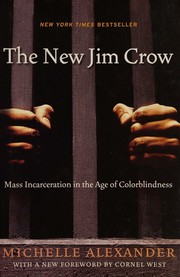
The New Jim Crow

πŸ“˜ The New Jim Crow

The New Jim Crow: Mass Incarceration in the Age of Colorblindness is a 2010 book by Michelle Alexander, a civil rights litigator and legal scholar. The book discusses race-related issues specific to African-American males and mass incarceration in the United States, but Alexander noted that the discrimination faced by African-American males is prevalent among other minorities and socio-economically disadvantaged populations. Alexander's central premise, from which the book derives its title, is that "mass incarceration is, metaphorically, the New Jim Crow". --wikipedia

β˜…β˜…β˜…β˜…β˜…β˜…β˜…β˜…β˜…β˜… 3.4 (14 ratings)
Similar? ✓ Yes 0 ✗ No 0
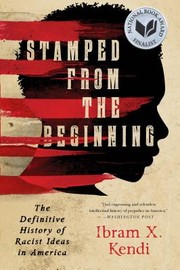
Stamped from the Beginning

πŸ“˜ Stamped from the Beginning

Some Americans insist that we're living in a post-racial society. But racist thought is not just alive and well in America -- it is more sophisticated and more insidious than ever. And as award-winning historian Ibram X. Kendi argues, racist ideas have a long and lingering history, one in which nearly every great American thinker is complicit. In this deeply researched and fast-moving narrative, Kendi chronicles the entire story of anti-black racist ideas and their staggering power over the course of American history. He uses the life stories of five major American intellectuals to drive this history: Puritan minister Cotton Mather, Thomas Jefferson, abolitionist William Lloyd Garrison, W.E.B. Du Bois, and legendary activist Angela Davis. As Kendi shows, racist ideas did not arise from ignorance or hatred. They were created to justify and rationalize deeply entrenched discriminatory policies and the nation's racial inequities. In shedding light on this history, Stamped from the Beginning offers us the tools we need to expose racist thinking. In the process, he gives us reason to hope.

β˜…β˜…β˜…β˜…β˜…β˜…β˜…β˜…β˜…β˜… 4.6 (11 ratings)
Similar? ✓ Yes 0 ✗ No 0
The Color of Law

πŸ“˜ The Color of Law

Widely heralded as a "masterful" (Washington Post) and "essential" (Slate) history of the modern American metropolis, Richard Rothstein's The Color of Law offers "the most forceful argument ever published on how federal, state, and local governments gave rise to and reinforced neighborhood segregation" (William Julius Wilson). Exploding the myth of de facto segregation arising from private prejudice or the unintended consequences of economic forces, Rothstein describes how the American government systematically imposed residential segregation: with undisguised racial zoning; public housing that purposefully segregated previously mixed communities; subsidies for builders to create whites-only suburbs; tax exemptions for institutions that enforced segregation; and support for violent resistance to African Americans in white neighborhoods. A groundbreaking, "virtually indispensable" study that has already transformed our understanding of twentieth-century urban history (Chicago Daily Observer), The Color of Law forces us to face the obligation to remedy our unconstitutional past.

β˜…β˜…β˜…β˜…β˜…β˜…β˜…β˜…β˜…β˜… 4.6 (9 ratings)
Similar? ✓ Yes 0 ✗ No 0
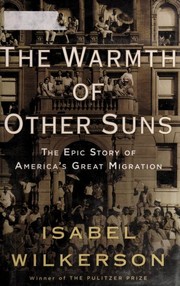
The Warmth of Other Suns

πŸ“˜ The Warmth of Other Suns

In this epic, beautifully written masterwork, Pulitzer Prize-winning author Isabel Wilkerson chronicles one of the great untold stories of American history: the decades-long migration of black citizens who fled the South for northern and western cities, in search of a better life. From 1915 to 1970, this exodus of almost six million people changed the face of America. She interviewed more than a thousand individuals, and gained access to new data and offical records, to write this definitive and vividly dramatic account of how these American journeys unfolded, altering our cities, our country, and ourselves. - Back cover.

β˜…β˜…β˜…β˜…β˜…β˜…β˜…β˜…β˜…β˜… 4.4 (9 ratings)
Similar? ✓ Yes 0 ✗ No 0
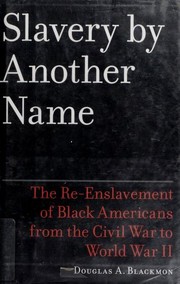
Slavery by another name

πŸ“˜ Slavery by another name

In this groundbreaking historical expose, Douglas A. Blackmon brings to light one of the most shameful chapters in American history--an "Age of Neoslavery" that thrived from the aftermath of the Civil War through the dawn of World War II.Under laws enacted specifically to intimidate blacks, tens of thousands of African Americans were arbitrarily arrested, hit with outrageous fines, and charged for the costs of their own arrests. With no means to pay these ostensible "debts," prisoners were sold as forced laborers to coal mines, lumber camps, brickyards, railroads, quarries, and farm plantations. Thousands of other African Americans were simply seized by southern landowners and compelled into years of involuntary servitude. Government officials leased falsely imprisoned blacks to small-town entrepreneurs, provincial farmers, and dozens of corporations--including U.S. Steel--looking for cheap and abundant labor. Armies of "free" black men labored without compensation, were repeatedly bought and sold, and were forced through beatings and physical torture to do the bidding of white masters for decades after the official abolition of American slavery.The neoslavery system exploited legal loopholes and federal policies that discouraged prosecution of whites for continuing to hold black workers against their wills. As it poured millions of dollars into southern government treasuries, the new slavery also became a key instrument in the terrorization of African Americans seeking full participation in the U.S. political system.Based on a vast record of original documents and personal narratives, Slavery by Another Name unearths the lost stories of slaves and their descendants who journeyed into freedom after the Emancipation Proclamation and then back into the shadow of involuntary servitude. It also reveals the stories of those who fought unsuccessfully against the re-emergence of human labor trafficking, the modern companies that profited most from neoslavery, and the system's final demise in the 1940s, partly due to fears of enemy propaganda about American racial abuse at the beginning of World War II.Slavery by Another Name is a moving, sobering account of a little-known crime against African Americans, and the insidious legacy of racism that reverberates today.

β˜…β˜…β˜…β˜…β˜…β˜…β˜…β˜…β˜…β˜… 5.0 (3 ratings)
Similar? ✓ Yes 0 ✗ No 0
The lynching

πŸ“˜ The lynching

"The New York Times bestselling author of The Kennedy Women chronicles the powerful and spellbinding true story of a brutal race-based killing in 1981 and subsequent trials that undid one of the most pernicious organizations in American history--the Ku Klux Klan. On a Friday night in March 1981 Henry Hays and James Knowles scoured the streets of Mobile in their car, hunting for a black man. The young men were members of Klavern 900 of the United Klans of America. They were seeking to retaliate after a largely black jury could not reach a verdict in a trial involving a black man accused of the murder of a white man. The two Klansmen found nineteen-year-old Michael Donald walking home alone. Hays and Knowles abducted him, beat him, cut his throat, and left his body hanging from a tree branch in a racially mixed residential neighborhood. Arrested, charged, and convicted, Hays was sentenced to death--the first time in more than half a century that the state of Alabama sentenced a white man to death for killing a black man. On behalf of Michael's grieving mother, Morris Dees, the legendary civil rights lawyer and cofounder of the Southern Poverty Law Center, filed a civil suit against the members of the local Klan unit involved and the UKA, the largest Klan organization. Charging them with conspiracy, Dees put the Klan on trial, resulting in a verdict that would level a deadly blow to its organization. Based on numerous interviews and extensive archival research, The Lynching brings to life two dramatic trials, during which the Alabama Klan's motives and philosophy were exposed for the evil they represent. In addition to telling a gripping and consequential story, Laurence Leamer chronicles the KKK and its activities in the second half the twentieth century, and illuminates its lingering effect on race relations in America today. The Lynching includes sixteen pages of black-and-white photographs"--

β˜…β˜…β˜…β˜…β˜…β˜…β˜…β˜…β˜…β˜… 4.0 (1 rating)
Similar? ✓ Yes 0 ✗ No 0
The condemnation of blackness

πŸ“˜ The condemnation of blackness


β˜…β˜…β˜…β˜…β˜…β˜…β˜…β˜…β˜…β˜… 4.0 (1 rating)
Similar? ✓ Yes 0 ✗ No 0
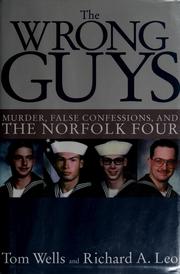
The wrong guys

πŸ“˜ The wrong guys
 by Tom Wells


β˜…β˜…β˜…β˜…β˜…β˜…β˜…β˜…β˜…β˜… 0.0 (0 ratings)
Similar? ✓ Yes 0 ✗ No 0
Swift justice

πŸ“˜ Swift justice


β˜…β˜…β˜…β˜…β˜…β˜…β˜…β˜…β˜…β˜… 0.0 (0 ratings)
Similar? ✓ Yes 0 ✗ No 0
Who killed my daughter?

πŸ“˜ Who killed my daughter?


β˜…β˜…β˜…β˜…β˜…β˜…β˜…β˜…β˜…β˜… 0.0 (0 ratings)
Similar? ✓ Yes 0 ✗ No 0
At the hands of persons unknown

πŸ“˜ At the hands of persons unknown

It is easy to shrink from our country's brutal history of lynching. Lynching is called the last great skeleton in our nation's closet: It terrorized all of black America, claimed thousands upon thousands of victims in the decades between the 1880s and the Second World War, and leaves invisible but deep scars to this day. The cost of pushing lynching into the shadows, however--misremembering it as isolated acts perpetrated by bigots on society's fringes--is insupportably high: Until we understand how pervasive and socially accepted the practice was--and, more important, why this was so--it will haunt all efforts at racial reconciliation."I could not suppress the thought," James Baldwin once recalled of seeing the red clay hills of Georgia on his first trip to the South, "that this earth had acquired its color from the blood that had dripped down from these trees." Throughout America, not just in the South, blacks accused of a crime--or merely of violating social or racial customs--were hunted by mobs, abducted from jails, and given summary "justice" in blatant defiance of all guarantees of due process under law. Men and women were shot, hanged, tortured, and burned, often in sadistic, picnic-like "spectacle lynchings" involving thousands of witnesses. "At the hands of persons unknown" was the official verdict rendered on most of these atrocities.The celebrated historian Philip Dray shines a clear, bright light on this dark history--its causes, perpetrators, apologists, and victims. He also tells the story of the men and women who led the long and difficult fight to expose and eradicate lynching, including Ida B. Wells, James Weldon Johnson, Walter White, and W.E.B. Du Bois. If lynching is emblematic of what is worst about America, their fight may stand for what is best: the love of justice and fairness and the conviction that one individual's sense of right can suffice to defy the gravest of wrongs. This landmark book follows the trajectory of both forces over American history--and makes the history of lynching belong to us all.From the Hardcover edition.

β˜…β˜…β˜…β˜…β˜…β˜…β˜…β˜…β˜…β˜… 0.0 (0 ratings)
Similar? ✓ Yes 0 ✗ No 0
A lynching in the heartland

πŸ“˜ A lynching in the heartland

""The first sounds the prisoners heard were murmurs and bits of conversation. Beginning around 6:30 P. M. on Thursday, August 7, 1930, the words grew louder as more and more people gathered on the sidewalk, street, and yard in front of the Grant County Jail in Marion, Indiana, 'Get'em,' some shouted."". "So begins James H. Madison's gripping story about a hot summer evening in the Midwest, where three black teenagers, accused of murdering a young white man and raping his white girlfriend, waited for justice in an Indiana jail. As the sun set a mob dragged the three prisoners from the jail to the courthouse square and lynched two of them. No one in Marion was ever punished for these murders.". "A Lynching in the Heartland is the story of that horrible night, and how Marion's black and white citizens dealt with the tragedy. Yet Madison has written much more than a book about lynching - this is a book about America's long and violent struggles with its color line."--BOOK JACKET.

β˜…β˜…β˜…β˜…β˜…β˜…β˜…β˜…β˜…β˜… 0.0 (0 ratings)
Similar? ✓ Yes 0 ✗ No 0
O.J. is innocent and I can prove it!

πŸ“˜ O.J. is innocent and I can prove it!


β˜…β˜…β˜…β˜…β˜…β˜…β˜…β˜…β˜…β˜… 0.0 (0 ratings)
Similar? ✓ Yes 0 ✗ No 0
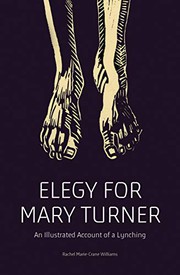
Elegy for Mary Turner

πŸ“˜ Elegy for Mary Turner

A lyrical and haunting depiction of American racial violence and lynching, evoked through stunning full-color artwork. In late May 1918 in Valdosta, Georgia, ten black men and one black woman, Mary Turner, eight months pregnant at the time, were lynched and tortured by mobs of white citizens. Through hauntingly detailed full-color artwork and collage, Elegy for Mary Turner names those who were killed, identifies the killers, and evokes a landscape in which the NAACP investigated the crimes when the state would not, when white citizens baked pies and flocked to see black corpses, and when black people fought to make their livesβ€”and their mourningβ€”matter. With introductions from C. Tyrone Forehand, great grand-nephew of Mary and Hayes Turner, whose family has long campaigned for the deaths to be remembered; abolitionist activist and educator Mariame Kaba, reflecting on the violence visited on black women’s bodies; and historian Julie Buckner Armstrong, who opens a window onto the broader scale of lynching’s terror in American history.

β˜…β˜…β˜…β˜…β˜…β˜…β˜…β˜…β˜…β˜… 0.0 (0 ratings)
Similar? ✓ Yes 0 ✗ No 0

Some Other Similar Books

Fear of a Black State by Tressie McMillan Cottom
The Heat of the Moment by Derek R. Ford

Have a similar book in mind? Let others know!

Please login to submit books!