Books like The modularity of mind by Jerry A. Fodor


First publish date: 1983
Authors: Jerry A. Fodor
★ ★ ★ ★ ★ 0.0 (0 community ratings)

The modularity of mind by Jerry A. Fodor

How are these books recommended?

The books recommended for The modularity of mind by Jerry A. Fodor are shaped by reader interaction. Votes on how closely books relate, user ratings, and community comments all help refine these recommendations and highlight books readers genuinely find similar in theme, ideas, and overall reading experience.


Have you read any of these books?
Your votes, ratings, and comments help improve recommendations and make it easier for other readers to discover books they’ll enjoy.

Books similar to The modularity of mind (7 similar books)

Cognitive Psychology by 6619010|Kathleen M. Galotti book cover

πŸ“˜ Cognitive Psychology

Faculty-level textbook covering cognitive psychology through case studies and applied examples.

β˜…β˜…β˜…β˜…β˜…β˜…β˜…β˜…β˜…β˜… 3.3 (6 ratings)
Similar? ✓ Yes 0 ✗ No 0
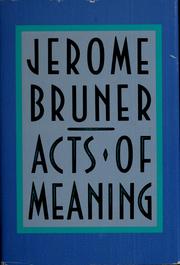
Acts of meaning by 8850134|Jerome S. Bruner book cover

πŸ“˜ Acts of meaning

The book explores how cognition is tied to meaning, challenging the dominant computational model of mind.

β˜…β˜…β˜…β˜…β˜…β˜…β˜…β˜…β˜…β˜… 5.0 (1 rating)
Similar? ✓ Yes 0 ✗ No 0
Mental models by 14210585|Dedre Gentner book cover

πŸ“˜ Mental models


β˜…β˜…β˜…β˜…β˜…β˜…β˜…β˜…β˜…β˜… 0.0 (0 ratings)
Similar? ✓ Yes 0 ✗ No 0
Cognition by 8831684|John G. Benjafield book cover

πŸ“˜ Cognition


β˜…β˜…β˜…β˜…β˜…β˜…β˜…β˜…β˜…β˜… 0.0 (0 ratings)
Similar? ✓ Yes 0 ✗ No 0
Computation and cognition by 2531650|Zenon W. Pylyshyn book cover

πŸ“˜ Computation and cognition


β˜…β˜…β˜…β˜…β˜…β˜…β˜…β˜…β˜…β˜… 0.0 (0 ratings)
Similar? ✓ Yes 0 ✗ No 0
Toward a science of consciousness III by 803880|Stuart R. Hameroff book cover

πŸ“˜ Toward a science of consciousness III

A collection of papers from a science conference focusing on consciousness and its study.

β˜…β˜…β˜…β˜…β˜…β˜…β˜…β˜…β˜…β˜… 0.0 (0 ratings)
Similar? ✓ Yes 0 ✗ No 0
Cognition in the Wild by 10144732|Edwin Hutchins book cover

πŸ“˜ Cognition in the Wild

Edwin Hutchins combines his background as an anthropologist and an open-ocean racing sailor and navigator in this account of how anthropological methods can be combined with cognitive theory to produce a new reading of cognitive science. His theoretical insights are grounded in an extended analysis of ship navigation - its computational basis, its historical roots, its social organization, and the details of its implementation in actual practice aboard large ships. The result is an unusual interdisciplinary approach to cognition in culturally constituted activities outside the laboratory - "in the wild.". Hutchins examines a set of phenomena that have fallen between the established disciplines of psychology and anthropology, bringing to light a new set of relationships between culture and cognition. The standard view is that culture affects the cognition of individuals. Hutchins argues instead that cultural activity systems have cognitive properties of their own that differ from the cognitive properties of the individuals who participate in them. Each action for bringing a large naval vessel into port, for example, is informed by culture; thus the navigation team can be seen as a cognitive and computational system. Introducing life in the Navy and work on the bridge, Hutchins makes a clear distinction between the cognitive properties of an individual and the cognitive properties of a system. In striking contrast to the usual laboratory tasks of research in cognitive science, he adopts David Marr's paradigm and applies the principal metaphor of cognitive science - cognition as computation - to the navigation task. After comparing modern Western navigation with the method practiced in Micronesia, Hutchins explores the computational and cognitive properties of systems that involve multiple individuals. He then turns to an analysis of learning or change in the organization of cognitive systems at several scales. . Hutchins's conclusion illustrates the costs of ignoring the cultural nature of cognition and points to ways in which contemporary cognitive science can be transformed by new meanings and interpretations.

β˜…β˜…β˜…β˜…β˜…β˜…β˜…β˜…β˜…β˜… 0.0 (0 ratings)
Similar? ✓ Yes 0 ✗ No 0

Some Other Similar Books

The Mind's New Science: A History of the Cognitive Revolution by Howard Gardner
Philosophy of Mind: A Guide and Anthology by David J. Chalmers
The Cognitive Structure of Scientific Revolutions by Thomas S. Kuhn
Mind and Brain: The Collected Articles of J. J. C. Smart by J. J. C. Smart
Understanding the Brain: From Behavior to Concepts by John E. Dowling
The Embodied Mind: Cognitive Science and Human Experience by Francisco J. Varela, Evan Thompson, Eleanor Rosch
Kant and the Claims of the Material World by W. H. Walsh
The Problem of Cognitive Penetrability by Michael Tye
The Physical Basis of Consciousness by William Seager
Computationalism and the Philosophy of Mind by Mark SPrevak

Have a similar book in mind? Let others know!

Please login to submit books!