Books like Locking up our own by James Forman


In Locking Up Our Own, Yale law scholar and former public defender James Forman Jr. investigates the paradox within African American political leadership that helped fuel the nation’s war on crime. He profiles black mayors, judges, police chiefs, and activists who, amid rising crime rates, embraced tough‑on‑crime policies—stringent drug and gun laws, aggressive traffic stops in low‑income neighborhoods, and other measures that intensified mass incarceration. Drawing on his defense experience and a focus on Washington, D.C., Forman offers a compassionate examination of individuals trapped in the conflict between public safety and civil rights. The book presents an analytical, historically grounded view of the criminal justice system and its deep‑seated racial implications.
First publish date: 2017
Genre: Politics & Government/Public Policy
Authors: James Forman
★ ★ ★ ★ ★ 4.0 (1 community ratings)

Locking up our own by James Forman

How are these books recommended?

The books recommended for Locking up our own by James Forman are shaped by reader interaction. Votes on how closely books relate, user ratings, and community comments all help refine these recommendations and highlight books readers genuinely find similar in theme, ideas, and overall reading experience.


Have you read any of these books?
Your votes, ratings, and comments help improve recommendations and make it easier for other readers to discover books they’ll enjoy.

Books similar to Locking up our own (10 similar books)
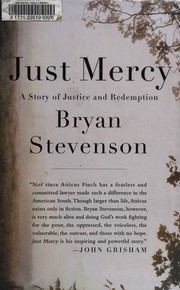
Just Mercy by 11772924|Bryan Stevenson book cover

📘 Just Mercy

Justice lawyer Bryan Stevenson recounts his battle against wrongful convictions, life‑sentence juvenile cases, and systemic bias while seeking reform of America’s criminal justice system.

★★★★★★★★★★ 4.2 (24 ratings)
Similar? ✓ Yes 0 ✗ No 0
So you want to talk about race by 11860495|Ijeoma Oluo book cover

📘 So you want to talk about race

Ijeoma Oluo’s guide gives Americans—and people of color—clear, practical tools to discuss race, privilege, police brutality, and micro‑aggressions, making the complex racial landscape accessible and actionable for all readers.

★★★★★★★★★★ 4.3 (21 ratings)
Similar? ✓ Yes 0 ✗ No 0
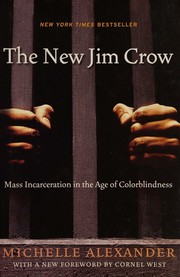
The New Jim Crow by 11061674|Michelle Alexander book cover

📘 The New Jim Crow

Michelle Alexander argues that mass incarceration has become a contemporary system of racial control, striking disproportionately at African‑American men and other disadvantaged groups while perpetuating a new form of Jim Crow.

★★★★★★★★★★ 3.4 (14 ratings)
Similar? ✓ Yes 0 ✗ No 0
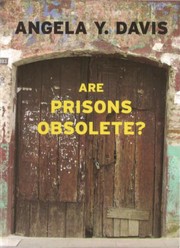
Are Prisons Obsolete? by 8314612|Angela Y. Davis book cover

📘 Are Prisons Obsolete?

A call to abolish the prison system as the dominant way of responding to America's social ills.

★★★★★★★★★★ 4.5 (10 ratings)
Similar? ✓ Yes 0 ✗ No 0
The End of Policing by 9294918|Alex S. Vitale book cover

📘 The End of Policing

A critique of policing that examines its historical expansion and proposes alternatives such as drug legalization and harm reduction to reduce crime and injustice.

★★★★★★★★★★ 4.5 (4 ratings)
Similar? ✓ Yes 0 ✗ No 0
From the war on poverty to the war on crime by 11956250|Elizabeth Kai Hinton book cover

📘 From the war on poverty to the war on crime

"In the United States today, one in every 31 adults is under some form of penal control, including one in eleven African American men. How did the "land of the free" become the home of the world's largest prison system? Challenging the belief that America's prison problem originated with the Reagan administration's War on Drugs, Elizabeth Hinton traces the rise of mass incarceration to an ironic source: the social welfare programs of Lyndon Johnson's Great Society at the height of the civil rights era. Johnson's War on Poverty policies sought to foster equality and economic opportunity. But these initiatives were also rooted in widely shared assumptions about African Americans' role in urban disorder, which prompted Johnson to call for a simultaneous War on Crime. The 1965 Law Enforcement Assistance Act empowered the national government to take a direct role in militarizing local police. Federal anticrime funding soon incentivized social service providers to ally with police departments, courts, and prisons. Under Richard Nixon and his successors, welfare programs fell by the wayside while investment in policing and punishment expanded. Anticipating future crime, policy makers urged states to build new prisons and introduced law enforcement measures into urban schools and public housing, turning neighborhoods into targets of police surveillance. By the 1980s, crime control and incarceration dominated national responses to poverty and inequality. The initiatives of that decade were less a sharp departure than the full realization of the punitive transformation of urban policy implemented by Republicans and Democrats alike since the 1960s."--Provided by publisher.

★★★★★★★★★★ 0.0 (0 ratings)
Similar? ✓ Yes 0 ✗ No 0
The color of success by 11861330|Ellen D. Wu book cover

📘 The color of success

"The Color of Success tells of the astonishing transformation of Asians in the United States from the "yellow peril" to "model minorities"--Peoples distinct from the white majority but lauded as well-assimilated, upwardly mobile, and exemplars of traditional family values--in the middle decades of the twentieth century. As Ellen Wu shows, liberals argued for the acceptance of these immigrant communities into the national fold, charging that the failure of America to live in accordance with its democratic ideals endangered the country's aspirations to world leadership. Weaving together myriad perspectives, Wu provides an unprecedented view of racial reform and the contradictions of national belonging in the civil rights era. She highlights the contests for power and authority within Japanese and Chinese America alongside the designs of those external to these populations, including government officials, social scientists, journalists, and others. And she demonstrates that the invention of the model minority took place in multiple arenas, such as battles over zoot suiters leaving wartime internment camps, the juvenile delinquency panic of the 1950s, Hawaii statehood, and the African American freedom movement. Together, these illuminate the impact of foreign relations on the domestic racial order and how the nation accepted Asians as legitimate citizens while continuing to perceive them as indelible outsiders. By charting the emergence of the model minority stereotype, The Color of Success reveals that this far-reaching, politically charged process continues to have profound implications for how Americans understand race, opportunity, and nationhood"--

★★★★★★★★★★ 0.0 (0 ratings)
Similar? ✓ Yes 0 ✗ No 0
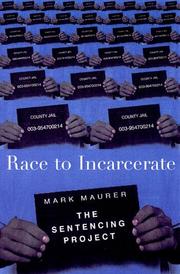
Race to incarcerate by 6726941|Marc Mauer book cover

📘 Race to incarcerate
 by Marc Mauer

Race to Incarcerate traces three decades of U.S. prison expansion, examining race, class, and policy, and argues for humane alternatives.

★★★★★★★★★★ 0.0 (0 ratings)
Similar? ✓ Yes 0 ✗ No 0
Lockdown America by 7020162|Christian Parenti book cover

📘 Lockdown America


★★★★★★★★★★ 0.0 (0 ratings)
Similar? ✓ Yes 0 ✗ No 0
On the Run by 11619115|Alice Goffman book cover

📘 On the Run


★★★★★★★★★★ 0.0 (0 ratings)
Similar? ✓ Yes 0 ✗ No 0

Some Other Similar Books

The New Jim Crow: Mass Incarceration in the Age of Colorblindness by Michelle Alexander
The Meaning of Freedom: And Other Difficult Dialogues by Angela Y. Davis
Punishment and Inclusion: Race, Membership, and the Limits of American Liberalism by Andrew Dilulio
Mass Incarceration on Trial: A Remarkable Court Battle by Marie Gottschalk
Invisible Punishment: The Collateral Consequences of Mass Imprisonment by ihsaan Gardee, Maya Schenwar
Are Prisons Necessary? by Angela Y. Davis
The Prison and the Gallows: The Politics of Mass Incarceration in America by Marie Gottschalk
Punishment and Society: A Critical Introduction by Jonathan Simon

Have a similar book in mind? Let others know!

Please login to submit books!