Books like Futuhat-i-Alamgiri by Ishwardas Nagar


First publish date: 1995
Authors: Ishwardas Nagar
★ ★ ★ ★ ★ 0.0 (0 community ratings)

Futuhat-i-Alamgiri by Ishwardas Nagar

How are these books recommended?

The books recommended for Futuhat-i-Alamgiri by Ishwardas Nagar are shaped by reader interaction. Votes on how closely books relate, user ratings, and community comments all help refine these recommendations and highlight books readers genuinely find similar in theme, ideas, and overall reading experience.


Have you read any of these books?
Your votes, ratings, and comments help improve recommendations and make it easier for other readers to discover books they’ll enjoy.

Books similar to Futuhat-i-Alamgiri (6 similar books)

Shah Jahan by 7824414|Fergus Nicoll book cover

📘 Shah Jahan


★★★★★★★★★★ 5.0 (1 rating)
Similar? ✓ Yes 0 ✗ No 0
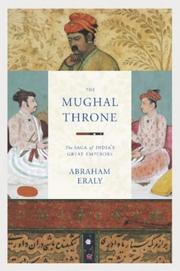
The Mughal throne by 6395557|Abraham Eraly book cover

📘 The Mughal throne

The Mughal rule marked to the last Golden age of India, epitomized by the peerless grandeur and beauty of the Taj Mahal. Complex and talented, the Mughals built a great empire, raising the elite urban culture of India to its pinnacle. Yet the end of the Mughal rule would be as chaotic and ruinous as its dramatic rise. This book is an excellent introduction to this. And the sometimes forgotten moment of multicultural assimilation it represented. From Babur, born in 1483, to Aurangzeb, who died in 1707, Eraly gives a richly readable account of one of the most crucial and misrepresented periods of Indian history. - Back cover.

★★★★★★★★★★ 0.0 (0 ratings)
Similar? ✓ Yes 0 ✗ No 0
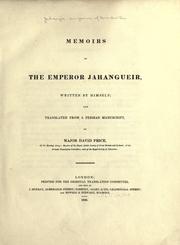
Jahāngīrnāmah by 1051093|Jahangir Emperor of Hindustan book cover

📘 Jahāngīrnāmah

Chiefly on the history of the Mogul Empire during the times of Jahangir, Emperor of Hindustan, 1569-1627.

★★★★★★★★★★ 0.0 (0 ratings)
Similar? ✓ Yes 0 ✗ No 0
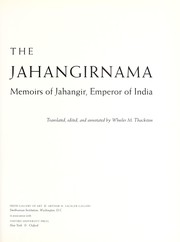
The Jahangirnama by 1051093|Jahangir Emperor of Hindustan book cover

📘 The Jahangirnama

"Wheeler Thackston's new translation of The Jahangirnama, copublished with the Freer Gallery of Art and the Arthur M. Sackler Gallery, Smithsonian Institution, presents a portrait of a remarkable emperor during the course of his reign (1605-27)."--BOOK JACKET. "Emperor Jahangir is probably best known in the West as the father of Shahjahan, who built the Taj Mahal. Jahangir's reign was one of great prosperity, and his passion for art and nature encouraged an artistic flowering that rivaled European art during the rule of the Medicis. Jahangir's memoirs provide not only the history of his reign, but also his reflections on art, politics, and life, including the suicide of one of his wives, and selections of poetry written by members of his harem. This book includes a selection of exquisite full-color paintings, drawings, and objects that specifically illustrate the passages they accompany."--BOOK JACKET.

★★★★★★★★★★ 0.0 (0 ratings)
Similar? ✓ Yes 0 ✗ No 0
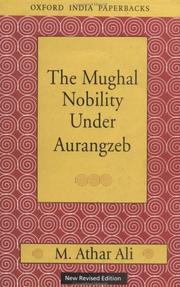
The Mughal nobility under Aurangzeb by 12016543|M. Athar Ali book cover

📘 The Mughal nobility under Aurangzeb


★★★★★★★★★★ 0.0 (0 ratings)
Similar? ✓ Yes 0 ✗ No 0
Aurangzeb by 11875554|Audrey Truschke book cover

📘 Aurangzeb

The Mughal emperor Aurangzeb Alamgir is one of the most hated men in Indian history. Widely reviled as a religious fanatic who sought to violently oppress Hindus, he is even blamed by some for setting into motion conflicts that would result in the creation of a separate Muslim state in South Asia. In her lively overview of his life and influence, Audrey Truschke offers a clear-eyed perspective on the public debate over Aurangzeb and makes the case for why his often-maligned legacy deserves to be reassessed. Aurangzeb was arguably the most powerful and wealthiest ruler of his day. His nearly 50-year reign (1658-1707) had a profound influence on the political landscape of early modern India, and his legacy-real and imagined-continues to loom large in India and Pakistan today. Truschke evaluates Aurangzeb not by modern standards but according to the traditions and values of his own time, painting a picture of Aurangzeb as a complex figure whose relationship to Islam was dynamic, strategic, and sometimes contradictory. This book invites students of South Asian history and religion into the world of the Mughal Empire, framing the contemporary debate on Aurangzeb's impact and legacy in accessible and engaging terms.

★★★★★★★★★★ 0.0 (0 ratings)
Similar? ✓ Yes 0 ✗ No 0

Some Other Similar Books

Tarikh-i-Firishta by Mohammad Qasim Firishta
Akbarnama by Abul Fazl
Padshah Nama by Nusrat Ali Khan
Humayun Nama by Nur-ud-Din Muhammad
Tabaqat-i-Akbari by Nizamuddin Ahmad
Muntakhab-ut-Tawarikh by Al-Badavi
Sirat-i-Firoz Shahi by Firoz Shah
Ain-i-Akbari by Abul Fazl
Jahangirnama by Jahangir

Have a similar book in mind? Let others know!

Please login to submit books!