In this major and comprehensive work, hailed by Le Monde as a "monumental study," Hermann Langbein shatters the myth that all prisoners of concentration camps during World War II passively let themselves be slaughtered. A prisoner himself and one of the leaders of resistance at Auschwitz, Langbein painstakingly documents the detailed account of the history of the camps and the story of resistance.
Spanning the initial years to the chaotic weeks before liberation, Against All Hope is the first systematic presentation of organized resistance. Deeply moving, it is an unforgettable testament to the resilience and determination of the human spirit.
. As the camps were being established, Langbein examines the composition of the initial prisoners; a mixture of political prisoners (Reds), convicted criminals (Greens), Jews, and "anti-socials" and reveals the brutal struggle for camp domination between the Reds and Greens. With analytic detail, he presents the history and nature of the individual camps and the inmate self-government.
In "The Actors," Langbein recognizes for the first time the various inmate groups, Germans, Austrians, Poles, Russians, Communists, Socialists, Jehovah's Witnesses, Gypsies and Jews, and how they related to resistance.
Langbein portrays the incredible impossibility of resistance against the all-powerful total domination of the Nazi camp administration. The prisoners were to be morally broken, psychically disabled, and even physically destroyed. To resist against this systematic demoralization, its isolation from the rest of the world, and its intention to exterminate, was inconceivable.
Through chronic malnutrition, beatings, torture, and the permanent terrorism of the SS, the prisoners were led to believe "there is only one way out of here: through the chimney." And yet, resistance, individual initiatives and organized action, to aid fellow inmates, to escape, to revolt, to thwart management campaigns, to mitigate the horrendous crimes were accomplished.
In this historical documentary, with haunting accuracy, Langbein describes the acts of resistance and rebellion and the final phase of the camps, including death marches and liberation.
Langbein explains that he wrote this "final study" so that the heroic resistance and the resilience of the human spirit would be recognized. He writes, "in all camps many people who were subject to boundless terror, with no hope of help from the outside, did try to resist and were not discouraged by repeated disappointments or incriminating decisions that such activities required.
The fact that there was such resistance is convincing proof that while an inhumane regime can murder people, it cannot completely stamp out human impulses of the part of those allowed to live. This experience fills me with optimism."
The books recommended for …und nicht wie die Schafe zur Schlachtbank by
Hermann Langbein are shaped by reader interaction.
Votes on how closely books relate, user ratings, and community comments all help
refine these recommendations and highlight books readers genuinely find similar
in theme, ideas, and overall reading experience.
Have you read any of these books?
Your votes, ratings, and comments help improve recommendations and make it easier
for other readers to discover books theyβll enjoy.
Books similar to …und nicht wie die Schafe zur Schlachtbank (13 similar books)
Psychiatrist Viktor Frankl recounts his survival in Nazi concentration camps and develops logotherapy, teaching that suffering can be transformed into meaning and a renewed purpose.
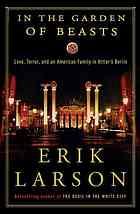
William E. Dodd, America's first ambassador to Nazi Germany, arrives in Berlin in 1933 to chronicle the early rise of Hitlerβand the diplomatic tightrope his nation must navigate.
A 1935 semiβsatirical political novel in which a Vermont newspaperman confronts President Berzelius "Buzz" Windrip, a charismatic leader who transforms his populist campaign into a fascist dictatorship and opens concentration camps.
Hannah Arendtβs seminal study charts the rise of totalitarianism from 19thβcentury antiβSemitism and European colonialism to the emergence of Nazi Germany and Stalinist Russia, examining propaganda, terror, and mass mobilization.
Elie Wiesel chronicles the harrowing realities of his childhood in Nazi concentration camps, and how witnessing the loss of family and friends transformed his faith.
The Nazi War Economy by Adam Tooze Survival in Auschwitz by Primo Levi The Holocaust: A New History by Deborah Dwork and Robert Jan van Pelt Hiroshima by John Hersey Resistance: The Underground War Against Hitler, 1939-1945 by exists Survival in Auschwitz by Primo Levi The Holocaust: A New History by Deborah E. Lipstadt The Holocaust: The Human Tragedy and the Price of Truth by Martin Gilbert From the Ashes of Auschwitz by Ellen S. Kennedy Auschwitz: A Medical Doctor's Perspective by Herman Rosenblat
Have a similar book in mind? Let others know!
Please login to submit books!
Is it a similar book?
Thank you for sharing your feedback. Please also let us know why you're thinking this is a similar (or not similar) book.