Books like The making of Adolf Hitler by Eugene Davidson
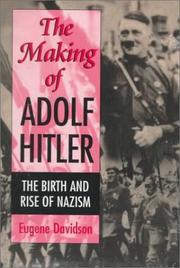

First publish date: 1977
Authors: Eugene Davidson
★ ★ ★ ★ ★ 0.0 (0 community ratings)

The making of Adolf Hitler by Eugene Davidson

How are these books recommended?

The books recommended for The making of Adolf Hitler by Eugene Davidson are shaped by reader interaction. Votes on how closely books relate, user ratings, and community comments all help refine these recommendations and highlight books readers genuinely find similar in theme, ideas, and overall reading experience.


Have you read any of these books?
Your votes, ratings, and comments help improve recommendations and make it easier for other readers to discover books they’ll enjoy.

Books similar to The making of Adolf Hitler (8 similar books)
The Rise and Fall of the Third Reich by 7121516|William L. Shirer book cover

πŸ“˜ The Rise and Fall of the Third Reich

A comprehensive history of Nazi Germany from 1933 to 1945, detailing the rise of Adolf Hitler and the collapse of the Third Reich during World War II.

β˜…β˜…β˜…β˜…β˜…β˜…β˜…β˜…β˜…β˜… 4.2 (13 ratings)
Similar? ✓ Yes 0 ✗ No 0
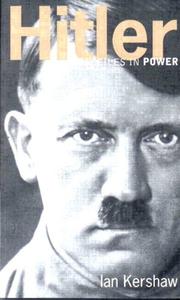
Hitler (Profiles in Power) by 6639973|Ian Kershaw book cover

πŸ“˜ Hitler (Profiles in Power)

Ian Kershaw's Hitler offers an intimate and compelling biography of Adolf Hitler, focusing on his rise to power through vivid descriptions of key events and figures in Germany's history. The author's research is supported by many previously untapped sources, bringing us closer to understanding the mysterious and controversial figure that Hitler was.

β˜…β˜…β˜…β˜…β˜…β˜…β˜…β˜…β˜…β˜… 3.4 (5 ratings)
Similar? ✓ Yes 0 ✗ No 0
The unmakingof Adolf Hitler by 9331023|Eugene Davidson book cover

πŸ“˜ The unmakingof Adolf Hitler

Because Adolf Hitler's legacy is the indelible memory of the most unlamented tyranny of the twentieth century, his rise and downfall continue to baffle the world. How could Hitler, who was foreign-born, who failed to graduate from high school, and who had a philosophy that was accepted by only a shifting minority, go on to become the chancellor of Germany with sole control over it, its people, and much of Europe? And, after he reached such heights, what were the contributing factors that led to Hitler's undoing and ultimate suicide? Renowned author Eugene Davidson attempts to answer those questions and more in this powerful sequel to his critically acclaimed The Making of Adolf Hitler. This new book, which includes dozens of photos from German collections, covers literally every aspect of Hitler's life from his success after he came to power in 1933 to his self-destruction. . Davidson describes in detail Hitler's remarkable successes - his stratagems in reviving morale and undoing the lopsided treaties and his shrewd moves to take advantage of the fatal miscalculations of the coalition that had been aligned against the Reich. Davidson analyzes the rousing speeches, which Hitler wrote himself, as well as his ruthless methods for obtaining power, concluding that Hitler seized power from a hopelessly demoralized society. Once Hitler had brutally improved Germany's desperate state, there followed mortal errors and fateful mistakes of judgment arising from his own inadequacies. Compelling, well researched, and eminently readable, The Unmaking of Adolf Hitler strives to explain how and why Hitler's empire collapsed as a result of his own actions.

β˜…β˜…β˜…β˜…β˜…β˜…β˜…β˜…β˜…β˜… 5.0 (1 rating)
Similar? ✓ Yes 0 ✗ No 0
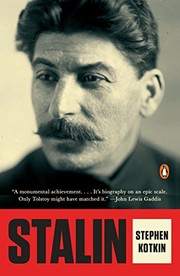
Stalin by 10109883|Stephen Kotkin book cover

πŸ“˜ Stalin

"A magnificent new biography that revolutionizes our understanding of Stalin and his world. It has the quality of myth: a poor cobbler's son, a seminarian from an oppressed outer province of the Russian empire, reinvents himself as a top leader in a band of revolutionary zealots. When the band seizes control of the country in the aftermath of total world war, the former seminarian ruthlessly dominates the new regime until he stands as absolute ruler of a vast and terrible state apparatus, with dominion over Eurasia. While still building his power base within the Bolshevik dictatorship, he embarks upon the greatest gamble of his political life and the largest program of social reengineering ever attempted: the collectivization of all agriculture and industry across one sixth of the earth. Millions will die, and many more millions will suffer, but the man will push through to the end against all resistance and doubts. Where did such power come from? In Stalin, Stephen Kotkin offers a biography that, at long last, is equal to this shrewd, sociopathic, charismatic dictator in all his dimensions. The character of Stalin emerges as both astute and blinkered, cynical and true believing, people oriented and vicious, canny enough to see through people but prone to nonsensical beliefs. We see a man inclined to despotism who could be utterly charming, a pragmatic ideologue, a leader who obsessed over slights yet was a precocious geostrategic thinker--unique among Bolsheviks--and yet who made egregious strategic blunders. Through it all, we see Stalin's unflinching persistence, his sheer force of will--perhaps the ultimate key to understanding his indelible mark on history. Stalin gives an intimate view of the Bolshevik regime's inner geography of power, bringing to the fore fresh materials from Soviet military intelligence and the secret police. Kotkin rejects the inherited wisdom about Stalin's psychological makeup, showing us instead how Stalin's near paranoia was fundamentally political, and closely tracks the Bolshevik revolution's structural paranoia, the predicament of a Communist regime in an overwhelmingly capitalist world, surrounded and penetrated by enemies. At the same time, Kotkin demonstrates the impossibility of understanding Stalin's momentous decisions outside of the context of the tragic history of imperial Russia. The product of a decade of intrepid research, Stalin is a landmark achievement, a work that recasts the way we think about the Soviet Union, revolution, dictatorship, the twentieth century, and indeed the art of history itself"--

β˜…β˜…β˜…β˜…β˜…β˜…β˜…β˜…β˜…β˜… 0.0 (0 ratings)
Similar? ✓ Yes 0 ✗ No 0
Becoming Hitler by 6948488|Thomas Weber book cover

πŸ“˜ Becoming Hitler


β˜…β˜…β˜…β˜…β˜…β˜…β˜…β˜…β˜…β˜… 0.0 (0 ratings)
Similar? ✓ Yes 0 ✗ No 0
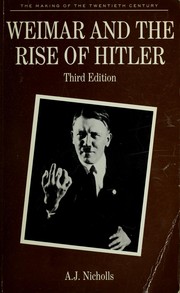
Weimar and the rise of Hitler by 9706415|Anthony James Nicholls book cover

πŸ“˜ Weimar and the rise of Hitler

An analytical survey of the Weimar Republic (1918‑1933) and Adolfβ€―Hitler’s rise, examining political structures, economic crises, and the legacy of the Wilhelmine Empire that shaped Germany’s path to National Socialism.

β˜…β˜…β˜…β˜…β˜…β˜…β˜…β˜…β˜…β˜… 0.0 (0 ratings)
Similar? ✓ Yes 0 ✗ No 0
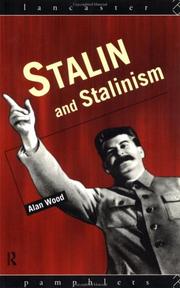
Stalin and Stalinism by 10532050|Wood, Alan book cover

πŸ“˜ Stalin and Stalinism
 by Wood, Alan


β˜…β˜…β˜…β˜…β˜…β˜…β˜…β˜…β˜…β˜… 0.0 (0 ratings)
Similar? ✓ Yes 0 ✗ No 0
Bismarck and the German Empire, 1871-1918 by 10146439|Lynn Abrams book cover

πŸ“˜ Bismarck and the German Empire, 1871-1918


β˜…β˜…β˜…β˜…β˜…β˜…β˜…β˜…β˜…β˜… 0.0 (0 ratings)
Similar? ✓ Yes 0 ✗ No 0

Some Other Similar Books

Hitler: A Biography by Ian Kershaw
Hitler's Empire: Nazi Rule in Occupied Europe by Mark Mazower
The Holocaust: The Human Tragedy by Martin Gilbert
The Third Reich: A History of Nazi Germany by William Shirer
Hitler: Ascent 1889-1939 by Volker Ullrich
Hitler's Willing Executioners: Ordinary Germans and the Holocaust by Daniel Jonah Goldhagen
The Nazi Seizure of Power: The Experience of Totalitarianism, 1922-1945 by William Sheridan Allen
Hitler and the Power of Aesthetics by TomΓ‘Ε‘ Kulka
Adolf Hitler: A Life in Pictures by Ian Sayer

Have a similar book in mind? Let others know!

Please login to submit books!