Books like Language and myth by Ernst Cassirer


In this important study Ernst Cassirer analyzes the non-rational thought processes that go to make up culture. He demonstrates that beneath both language and myth there lies an unconscious "grammar" of experience, whose categories and canons are not those of logical thought. He shows that this prelogical "logic" is not merely an undeveloped state of rationality, but something basically different, and that this archaic mode of thought still has enormous power over even our most rigorous thought, in language, poetry and myth. The author analyzes brilliantly such seemingly diverse (yet related) phenomena as the metaphysics of the Bhagavat Gita, the Melanesian concept of Mana, the Naturphilosophie of Schelling, modern poetry, Ancient Egyptian religion, and symbolic logic. He covers a vast range of material that is all too often neglected in studies of human thought. These six essays are of great interest to the student of philosophy or the philosophy of science, the historian, or the anthropologist. They are also remarkably timely for students of literature, what with the enormous emphasis placed upon "myth" in modern literary speculation. This book is not superficial speculation by a dabbler, but a penetrating study by one of the most profound and sensitive philosophic minds of our time.
First publish date: 1946
Authors: Ernst Cassirer
★ ★ ★ ★ ★ 0.0 (0 community ratings)

Language and myth by Ernst Cassirer

How are these books recommended?

The books recommended for Language and myth by Ernst Cassirer are shaped by reader interaction. Votes on how closely books relate, user ratings, and community comments all help refine these recommendations and highlight books readers genuinely find similar in theme, ideas, and overall reading experience.


Have you read any of these books?
Your votes, ratings, and comments help improve recommendations and make it easier for other readers to discover books they’ll enjoy.

Books similar to Language and myth (5 similar books)

The Power of Myth by 7823229|Joseph Campbell book cover

πŸ“˜ The Power of Myth

Joseph Campbell explores mythology as the world’s song, discussing its relevance for modern life, faith, and culture with interviewer Bill Moyers in this engaging dialogue.

β˜…β˜…β˜…β˜…β˜…β˜…β˜…β˜…β˜…β˜… 4.1 (13 ratings)
Similar? ✓ Yes 0 ✗ No 0
The hero with a thousand faces by 7823229|Joseph Campbell book cover

πŸ“˜ The hero with a thousand faces

Joseph Campbell’s classic study of myth examines how recurring hero narratives shape human experience and inspire modern storytelling, from ancient folklore to contemporary cinema.

β˜…β˜…β˜…β˜…β˜…β˜…β˜…β˜…β˜…β˜… 4.4 (7 ratings)
Similar? ✓ Yes 0 ✗ No 0
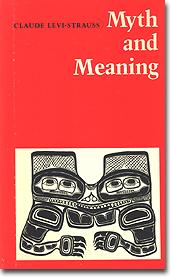
Myth and meaning by 8068466|Claude Lévi-Strauss book cover

πŸ“˜ Myth and meaning


β˜…β˜…β˜…β˜…β˜…β˜…β˜…β˜…β˜…β˜… 3.0 (2 ratings)
Similar? ✓ Yes 0 ✗ No 0
Rules and Representations by 7476011|Noam Chomsky book cover

πŸ“˜ Rules and Representations

Noam Chomsky argues that a biologically built universal grammar underlies all human languages, exploring its rules, representations, and the possible existence of similar grammars in perception, art, science, and the unconscious.

β˜…β˜…β˜…β˜…β˜…β˜…β˜…β˜…β˜…β˜… 0.0 (0 ratings)
Similar? ✓ Yes 0 ✗ No 0
How Philosophers Saved Myths by 6250506|Luc Brisson book cover

πŸ“˜ How Philosophers Saved Myths

This study explains how the myths of Greece and Rome were transmitted from antiquity to the Renaissance. Luc Brisson argues that philosophy was ironically responsible for saving myth from historical annihilation. Although philosophy was initially critical of myth because it could not be declared true or false and because it was inferior to argumentation, mythology was progressively reincorporated into philosophy through allegorical exegesis. Brisson shows to what degree allegory was employed among philosophers and how it enabled myth to take on a number of different interpretive systems throughout the centuries: moral, physical, psychological, political, and even metaphysical. How Philosophers Saved Myths also describes how, during the first years of the modern era, allegory followed a more religious path, which was to assume a larger role in Neoplatonism. Ultimately, Brisson explains how this embrace of myth was carried forward by Byzantine thinkers and artists throughout the Middle Ages and Renaissance; after the triumph of Chistianity, Brisson argues, myths no longer had to agree with just history and philosophy but the dogmas of the Church as well.

β˜…β˜…β˜…β˜…β˜…β˜…β˜…β˜…β˜…β˜… 0.0 (0 ratings)
Similar? ✓ Yes 0 ✗ No 0

Some Other Similar Books

Myth, Language, and the Human Condition by Mircea Eliade
Myth and the Modern World by Philip S. Gorski
The Origins of Mythology by Joseph Campbell
The Mythic Mind by Mary Louise Anning
Language, Myth, and the Search for Meaning by Michael B. Schiffer
Myth and Reality by Clarence J. Glacken

Have a similar book in mind? Let others know!

Please login to submit books!